Chile Talks Tough on Crime Then Opens Sex Offenders’ Prison Cells
Chile’s sentence reductions for 56 convicted child sex offenders have divided President José Antonio Kast’s governing coalition, exposing the distance between punitive campaign promises, contested legal interpretations and a presidency increasingly determined to protect its authority despite mounting public anger.
A Signature With Consequences
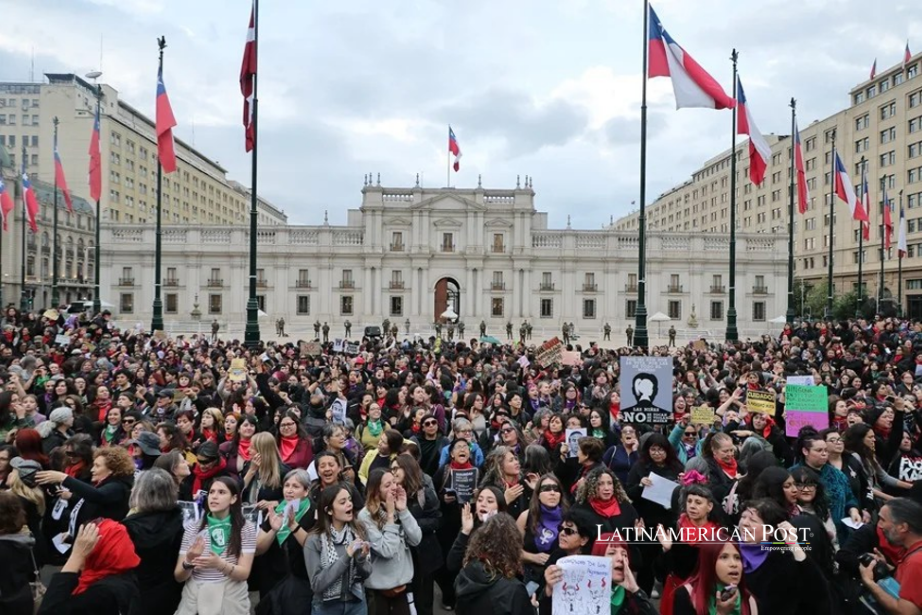
Outside La Moneda on Tuesday, hundreds of women performed “Un violador en tu camino,” turning Chile’s presidential palace into the backdrop for a demand to dismiss Justice Minister Fernando Rabat. For families confronting an offender’s shortened sentence, the controversy concerns when fear might return to an ordinary street.
The 56 beneficiaries received good-behavior reductions through decrees signed between March and September. Kast’s government defends those decisions as compliance with existing law. Yet that explanation raises the central question: why did an administration promising tougher punishment accept an interpretation that shortened these prisoners’ sentences?
The number 56 counts offenders, not victims, and says nothing about the length of the reductions or the safeguards accompanying release. It cannot establish the scale of future risk. It does identify dozens of decisions for which the government owes an individual explanation.
A 2022 law excluded people convicted of sexual offenses against children from these benefits. Rabat argues that applying the exclusion to earlier cases would violate the prohibition on retroactive punishment. Legal certainty matters, even when defendants inspire revulsion. Governments cannot disregard constitutional protections because a prisoner is politically indefensible.
But whether this restriction governs punishment or the administration of a prison benefit is disputed. Gabriel Boric’s preceding government resisted reductions and defended refusals in court. CIPER’s review of 113 legal challenges found 19 ended with the benefit denied. That sample cannot predict the outcome of these 56 cases, but it disproves the suggestion that resistance was invariably futile.
The plausible explanation begins with legal formalism and a failure of political judgment. Rabat treated a contested interpretation as an obligation. His ministry’s signatures converted that interpretation into earlier release dates, contradicting the administration’s security message.

The Dictatorship’s Long Reach
The benefits also reached at least two prisoners implicated in crimes against humanity committed during Augusto Pinochet’s 1973-1990 dictatorship. In Chile, that detail places an administrative controversy inside the unfinished struggle over punishment for state violence.
Rabat previously participated in Pinochet’s legal defense. That history makes his handling of sentence reductions particularly sensitive. It warrants scrutiny of the criteria applied across cases, while establishing no common political motive for every beneficiary.
A conservative government can demand harsh punishment for present-day crime while opposing what it considers retroactive restrictions on older sentences. Those positions can coexist as legal doctrine. Politically, however, a broad interpretation benefiting both child sex offenders and dictatorship-era prisoners invites questions about whose interests that doctrine serves.
The scandal therefore reaches deeper than an embarrassing exception to a security platform. It tests whether protection means the same thing when victims confront ordinary criminal violence and when they confront violence associated with the state.
Good behavior behind bars also measures something different from safety outside them. Following institutional rules can help a prison function; it cannot, by itself, demonstrate rehabilitation. For a socially conservative government, that distinction should be central to protecting children and explaining how releases serve public safety.
Respecting a prisoner’s rights and protecting a survivor are simultaneous state duties. The government must explain what discretion existed, why it used that discretion as it did, and how victims’ safety entered the decision.
Keeping Control, Losing Trust
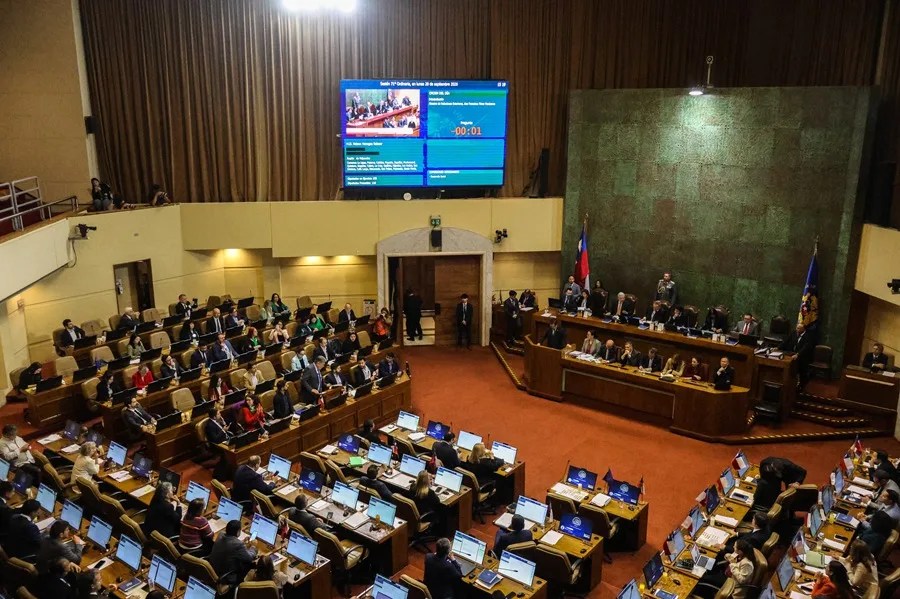
Kast’s decision to retain Rabat requires a separate explanation. From Rome, after meeting Italian Prime Minister Giorgia Meloni, he insisted that appointing and dismissing ministers belongs to the president. His response shifted attention from the decrees to who commands the government.
Keeping Rabat allows Kast to present the crisis as a legal problem requiring legislation. Dismissing him could validate the opposition’s accusation of ministerial failure and encourage coalition partners to demand greater influence over cabinet decisions. Presidential authority has become an additional stake in the dispute.
Pending legislation offers a route to clearer rules. It cannot replace an explanation for the decrees already signed. A promise to prevent another controversy does little for survivors trying to understand the one they have already endured.
The dismissal of deputy justice minister Luis Silva sharpened that impression. Silva lost his job after publishing an unauthorized video defending himself and assigning responsibility upward. Rabat remained. The visible sanction fell on a breach of internal discipline, while responsibility for the underlying decisions remained politically unresolved.
That calculation is increasingly costly. Renovación Nacional, the UDI and Evópoli have criticized the handling of the crisis. Their objections show that concern extends beyond Kast’s left-wing opponents. These parties must defend their own security credentials while sharing responsibility for his administration.
Approval below 30 percent leaves little room for such friction. The figures do not establish that this scandal alone caused the decline. They do show a president confronting the controversy without a comfortable reserve of public trust.
Feminist lawyer Margarita Peña told EFE that the decisions threatened victims’ rights and society’s peace of mind. Her argument identifies the government’s greatest difficulty: security also depends on the confidence that institutions will take a survivor’s vulnerability seriously.
The available record points to disputed legal reasoning, inadequate political scrutiny, and a subsequent defense of presidential control. Tough rhetoric could not resolve those failures. The women outside La Moneda are asking whom that control protects.