Malvinas Bill Raises Penalties, but Who Will Actually Help Argentina Enforce Them?

Argentina’s proposed Malvinas sovereignty law would raise prison terms and widen sanctions. Britain rejects Argentine jurisdiction, while Washington’s talk of reviewing its position leaves it unclear who would help Buenos Aires turn tougher criminal penalties into real changes on the water.
A Court Order Meets the Sea
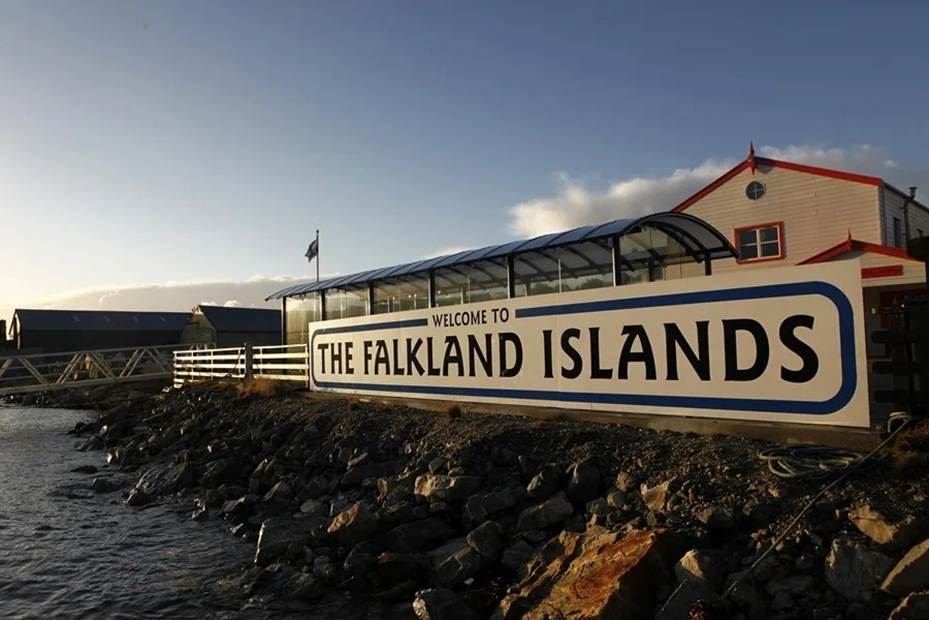
Before the new bill reached Congress, Argentine war veterans and environmental lawyers had secured a court order against offshore drilling. On September 16, Judge Mariel Borruto ordered the developers of Sea Lion, near the Malvinas, also known as the Falkland Islands, to halt work. The islands remain under British administration and are claimed by Argentina.
But the judge acknowledged that enforcement depended on international cooperation and the companies’ conduct, the Associated Press reported. A ruling in Tierra del Fuego and a stopped operation offshore are different events.
That question surrounds President Javier Milei’s National Sovereignty Defense Bill, submitted September 17, 2026. His office called it a milestone toward recovering the Malvinas, South Georgia and the South Sandwich Islands. For now, it is a legislative proposal, not an agreement with the government administering those territories.
The bill would replace the sanctions regime established in 2011 under Cristina Fernández. According to EFE, prison terms for unauthorized exploration would rise from five to ten years, and from 12 to 15 years. The proposed minimum would exceed the existing maximum.
That minimum increases by 140 percent. For extraction, transportation and storage, the range would climb from ten to 15 years to 15 to 20 years, raising the maximum by one third. These figures measure proposed punishment, not the probability that a defendant abroad would serve it.
The scope also expands beyond hydrocarbons to fishing and other renewable and nonrenewable resources. Companies, shareholders, and essential suppliers would face liability. The government’s stated objective is to make unauthorized operations costly enough that participants stop them.

London’s Answer, Washington’s Question
Britain’s position is not unclear. It opposes Argentina’s asserted jurisdiction. In guidance published September 15, London backed resource development authorized by the island authorities and said it saw no legal basis for foreign courts to enforce Argentine measures against participating businesses. London grounds its position in the islanders’ right to determine their political status.
That is a specific obstacle, not merely an absence of encouragement. The authority supporting the companies’ licenses is rejecting the authority behind Argentina’s proposed penalties.
Washington presents a different question. On August 31, President Donald Trump said he was reviewing the American position on the islands. Reuters subsequently reported that he had suggested reconsidering Washington’s traditionally neutral stance. Those statements did not commit the United States to recognizing Argentine sovereignty or enforcing Argentine sanctions.
A review is not a settlement.
Support for negotiations and practical enforcement are not interchangeable. An American offer to facilitate talks would leave open whether Washington would restrict financing, assist a legal proceeding or support any particular outcome. Even a change in diplomatic language would require separate decisions to become operational assistance.
For Buenos Aires, therefore, the missing commitment needs a precise definition. Is the objective a negotiating channel, cooperation against an oil project, or recognition of sovereignty? Each would address a different part of the dispute. None automatically supplies the others.
Where the Sanctions Could Reach
Argentina nevertheless has a potential source of leverage closer to home: access to its own economy. Under the proposal described by EFE, companies disqualified over island activities could lose the ability to operate throughout Argentina, not simply in the disputed area.
Consider the difference between a supplier with substantial mainland contracts and a company with no Argentine operations. Both might face the same penalty, but their exposure would differ. Assessing deterrence requires knowing what business each could lose, where its assets are, and whether replacement suppliers are available.
That commercial calculation does not require British agreement in every instance. Collecting penalties abroad, however, raises separate questions about recognition and cooperation. London’s rejection makes it particularly important not to confuse Argentina’s domestic market powers with accepted jurisdiction around the islands.
The dispute also reaches people outside corporate offices. The islands’ roughly 3,500 residents have long lived in an economy dependent on fishing, AP reports. Expanding sanctions to renewable resources therefore broadens the issue beyond a future oilfield. It brings an existing livelihood into a confrontation over whose permission makes their daily economic activity lawful.
The existing court case illustrates the distinction. Borruto requested information on contractors, financing, and insurance, according to EFE. Navitas, meanwhile, said the island government had validly issued its licenses and that it did not expect Argentina’s actions to affect development significantly. Those are competing positions, not evidence that construction has stopped.
The legislation also reaches beyond resource disputes. Its proposed National Security Council, chaired by the president, would coordinate diplomacy, economic policy, defense and intelligence. El País reports that provisions involving military protection of strategic facilities and terrorism registration have drawn objections from a veterans’ organization and opposition lawmakers.
Those domestic powers and offshore enforcement present separate questions for Congress. Their effects would have to be examined through implementation, court decisions and corporate conduct, not merely through proposed sentences.
For the veterans who brought the Sea Lion case, the requested remedy was concrete: stopping the project pending Argentine environmental review. The unresolved question is equally concrete. Should Buenos Aires change its law, which governments, courts, or companies will change what they actually do?
Also Read: Cuba Blames Washington for Its Humanitarian Crisis, but Havana Cannot Claim Innocence