Ecuador Turns Pacific Fishing Boats Into Test of Washington’s New Security Order

Six Ecuadorian fishing vessels destroyed by U.S. forces have turned a counternarcotics campaign into a regional test of sovereignty, evidence and military power. Ecuador welcomes Washington’s help, but freed fishermen and unanswered questions complicate an increasingly consequential security partnership.
The Photographs Changed the Story
The photographs are more unsettling than the grainy strike videos that preceded them. On the deck of the Conquista 2, fishermen stand with their hands raised as an American military boat approaches. U.S. Marines carry rifles. The Ecuadorians appear suddenly small against the machinery arriving alongside them.
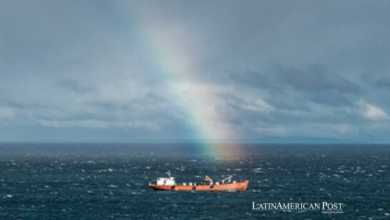
Marine Forces South released the images after operations against the Conquista 2 and María Candelaria, while the 24th Marine Expeditionary Unit published photographs from the August 28 interception of Los Tres Hermanos. In each documented operation, crews were removed before the vessels were destroyed. At least six Ecuadorian boats have been sunk since August 28, according to EFE and U.S. Southern Command statements.
Washington says these were not ordinary fishing boats. U.S. intelligence allegedly identified them as floating refueling stations supporting cocaine-trafficking speedboats operating from Ecuador’s coast and linked to Los Choneros, one of Ecuador’s oldest and most powerful criminal organizations.
That allegation fits a real security emergency. Ecuador has experienced an extraordinary expansion of organized criminal violence as gangs battle over ports, prisons and cocaine-export routes. President Daniel Noboa has responded since 2024 with an increasingly militarized campaign against groups his government classifies as terrorist organizations.
But the photographs create a problem that military footage from the air did not. They show identifiable men who can later appear before judges, hire lawyers and contest what the intelligence said about them.
That has already happened.
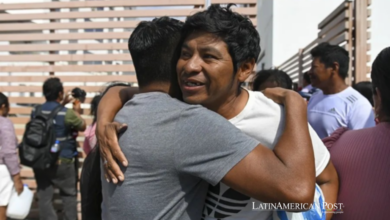
In at least two cases, Ecuadorian judges released crew members after authorities failed to present sufficient indications of criminal conduct. Thirty-two others from the Conquista 2 and María Candelaria were conditionally released while an investigation into alleged illicit association continued. Their lawyers dispute the accusations, and relatives have insisted some of the men were simply fishermen earning a living at sea.
The contradiction does not prove that the U.S. intelligence was wrong. Intelligence may include sources or surveillance that prosecutors cannot immediately disclose or transform into admissible evidence. But it exposes the difference between military certainty and judicial proof.
That distinction matters when the penalty imposed on the vessel is irreversible.

Ecuador Becomes Washington’s Pacific Security Partner
Secretary of State Marco Rubio entered that argument during his visit to Quito this week, saying the United States had no intention of killing fishermen and describing the maritime campaign as an effort to dismantle criminal organizations that operate with the capabilities and violence of terrorist groups, according to EFE.
His visit placed the boat sinkings inside something much bigger.
Rubio announced plans to seek $45 million in new security assistance for Ecuador, including additional maritime capabilities. Washington has also moved to deepen intelligence and countercrime cooperation with governments across the Pacific side of South America. Rubio’s regional trip included Colombia and Peru, while Peru announced this week that it would join the U.S.-led Shield of the Americas security initiative.
Ecuador therefore looks increasingly like a laboratory for a more assertive U.S. regional strategy.
For Noboa, the attraction is obvious. Ecuador confronts criminal organizations whose financial networks, weapons supply chains and cocaine routes operate beyond its borders. Los Choneros have been associated by authorities with Mexico’s Sinaloa Cartel. An Ecuadorian government acting alone cannot easily disrupt a maritime logistics chain stretching from South American ports toward Central America, Mexico and the United States.
American intelligence, aircraft, ships and surveillance capabilities alter that equation.
Yet partnership produces dependency as well as capacity. When American Marines board an Ecuadorian vessel and American forces subsequently destroy it, responsibility becomes shared even if Quito authorized or coordinated the operation.
That is geopolitically significant in a region where the presence of U.S. forces carries historical weight.
Latin American governments have spent generations navigating the tension between wanting U.S. security assistance and resisting the appearance of diminished sovereignty. The drug war intensified that contradiction. Colombia accepted extensive American assistance under Plan Colombia, while Mexico has periodically restricted U.S. security activity when cooperation became politically associated with interference.
Ecuador is now moving conspicuously toward the cooperation side of that divide.

The Drug War Moves Into Murkier Waters
The case of the Don Rufo demonstrates why operational details will matter.
U.S. forces intercepted and destroyed the vessel on September 8 after identifying it as another suspected floating refueling station. Six crew members were initially handed to Ecuadorian authorities. But ten others had moved away from the intervention site in smaller boats and were later located by Ecuador’s navy, according to the account provided by Ecuadorian authorities.
That unusual sequence raises practical questions about what happens between interception, detention and destruction. If a ship itself is evidence, destroying it can eliminate material that defense lawyers, prosecutors or investigators might otherwise examine.
That tension is especially important because drug-trafficking logistics are deliberately ambiguous. A vessel carrying fuel can support fishing operations, smuggling operations or both. Coastal economies often contain informal networks in which legitimate commerce and criminal logistics overlap.
The judiciary therefore becomes essential.
A prosecutor needs to establish what particular crew members knew, not merely what a vessel may have supplied. Association with a suspicious boat cannot automatically establish participation in organized crime. Conversely, releasing a suspect for insufficient evidence does not establish that intelligence concerning the broader network was fabricated.
Maintaining those distinctions is precisely what separates a security campaign governed by law from one governed only by suspicion.
The wider geopolitical stakes are considerable. If the Ecuador operations become an effective model, Washington could seek similar partnerships elsewhere as trafficking organizations adapt routes through the eastern Pacific. If they become associated instead with opaque intelligence, weak prosecutions or excessive force, governments facing domestic opposition may become more reluctant to authorize comparable operations.
Ecuador is thus participating in more than another chapter of the hemisphere’s long drug war.
It is helping define how far military power can move into a space once dominated by police interdiction.
For communities along Ecuador’s coast, that strategic debate is painfully immediate. A boat may be a criminal logistics platform to intelligence analysts in Washington and Quito. To a family in Manta, it may also be the place where a father, brother or son earns his living.
Both realities can exist in the same ocean.
The credibility of this new security doctrine will depend on proving which one existed aboard each vessel before another hull disappears beneath the Pacific.
Also Read: Guatemala Races to Save War Victims’ Files Before History Crumbles into Silence