Colombian Soccer Rolls Out the Red Carpet but Cannot Turn Back Time

James Rodríguez and Juan Cuadrado bring famous names and genuine trophies back to Colombian soccer. But their returns invite harder questions about aging, opportunity and cost. Clubs are signing today’s players, not purchasing another chance to relive their greatest seasons.
The Applause Needs an Asterisk
James Rodríguez supplied the ending a homecoming script demands. On Wednesday at El Campín, his cross found Juan Manuel Zapata in the 98th minute, giving Atlético Nacional a 3-2 victory over Internacional de Bogotá. EFE reported that James had entered in the 58th minute. It was an irresistible headline.
Keep the assist. Lose the coronation. A decisive substitute appearance demonstrates usefulness in that match, not the stamina, consistency or tactical fit required across a season. Nor does it establish that Colombia has become the preferred destination for players still sought everywhere else.
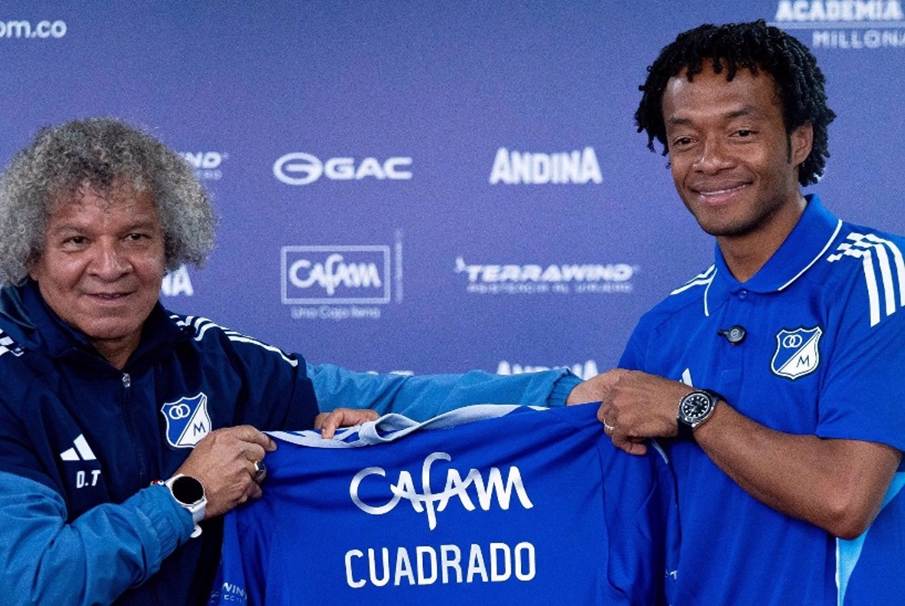
James is 35. Cuadrado, newly presented by Millonarios after playing for Pisa, is 38. Cuadrado described returning as a family decision and a longstanding dream, according to EFE. That deserves respect. It is not evidence that Millonarios has recruited the Juventus version of him.
The announcements do not document competing offers. Claiming Colombia was their only option would therefore go beyond the evidence. But treating their arrival as proof of the league’s growing strength makes the opposite mistake. A welcome destination can also be a practical refuge as careers wind down.
By the time Nacional signed him through June 30, 2027, Reuters counted 14 clubs across 12 countries in James’s career. A passport crowded with former employers is not automatically proof of failure. But it is no substitute for evidence of a stable role that consistently benefits the whole team. Nacional is buying whatever contribution remains available now, not the accumulated prestige of every club that once printed his name on a shirt.
Skepticism should not erase their achievements. Real Madrid records 125 appearances, 37 goals, and nine trophies for James, including two Champions League titles. This was not a career spent winning nothing.
Cuadrado’s Juventus record offers substantial evidence of sustained contribution: 314 appearances and 11 trophies across eight seasons. His history should not be flattened into James’s pattern of short stays. Neither man, however, can spend an old medal on a new result.
São Paulo Supplies the Warning
São Paulo is the more relevant warning for Nacional than an old Madrid photograph. James left Brazil in August 2024 after 22 appearances and two goals. Globo reported that he had failed to convince three successive coaches during his year at the club.
And São Paulo did win. The club lifted the 2023 Copa do Brasil while James was in the squad, but he played no minutes in either final, UOL reported. A championship on a résumé and a decisive contribution to winning it are not interchangeable.
The financial distinction is sharper. Ge estimated his cost at roughly 15 million reais despite his arrival without a transfer fee. Divided by 22 appearances, that is approximately 682,000 reais per appearance. This is a crude spending ratio, not an audited net loss; it excludes any unquantified commercial return. Still, free hardly meant cheap.
The same report said terminating his contract relieved São Paulo of another 20 million reais in obligations. The estimated avoided spending exceeded what it had already spent. Moving on had become financially valuable.
Why the repeated restarts? Jonathan Wilson’s Guardian analysis linked James’s club difficulties to defensive demands and tactical fit, contrasting them with his international influence.
James supplied six assists and won the best player award at the 2024 Copa América. His ability had not disappeared. But that tournament revival, alongside his Brazilian difficulties, exposed the central recruitment question: can a club turn occasional brilliance into dependable work across an entire season?

The Contract Must Outlast the Ovation
Cuadrado arrived with Millonarios second on 16 points, four behind América de Cali, EFE reported. Those points were already earned. His task is to improve an existing team, not receive credit for its position merely by joining it.
Neither the presentation nor the debut report supplies enough financial detail to establish these signings as bargains. The calculation must weigh wages and availability against measurable sporting and commercial returns. A famous name can attract attention without providing value equal to its cost.
The choice also involves the player waiting behind the veteran. Experience can help a younger teammate; it can also occupy his minutes. Mentorship isn’t something a club gets automatically with an international résumé. It needs a role, time, and evidence that somebody is actually learning.
For Colombian supporters, affection need not mean surrendering judgment. Wanting to see an admired player close to home is entirely reasonable. Demanding that directors distinguish that pleasure from a sporting improvement is reasonable too. The fan buying a ticket deserves more than a reunion photograph.
The deeper ambition should be a league capable of sustaining excellent players and developing their successors, not one that mistakes their eventual return for proof that its work is finished. A productive veteran can contribute to that project. He cannot substitute for it.
James earned his debut applause. Cuadrado earned recognition for a substantial career. Their new contracts deserve a separate accounting. Colombian soccer owes its legends gratitude, not immunity from scrutiny. Welcome them warmly, then ask the question the applause cannot answer: what can they deliver now?
Also Read: Argentine Rugby Star Aramburu’s Killing Brings French Extremism and Grief to Court