Ecuador Resets the Curfew Clock as Homicide Figures Tell a Longer Story
Ecuador’s latest curfew restricts nighttime movement as authorities pursue criminal groups. But homicide figures and an expert’s warning pose a harder question: whether temporary controls produce lasting security, or merely interrupt violence that communities face well beyond the restricted hours.
Five Hours Under Restriction
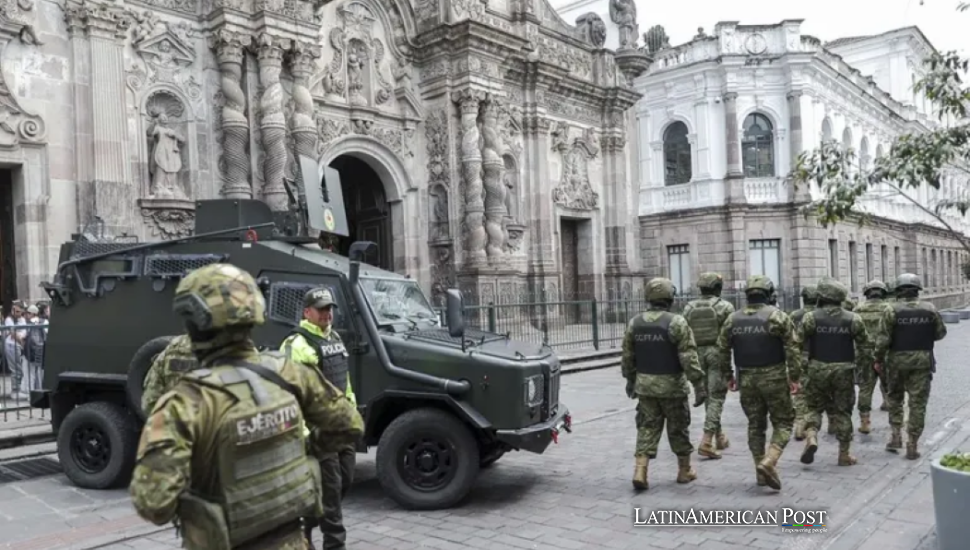
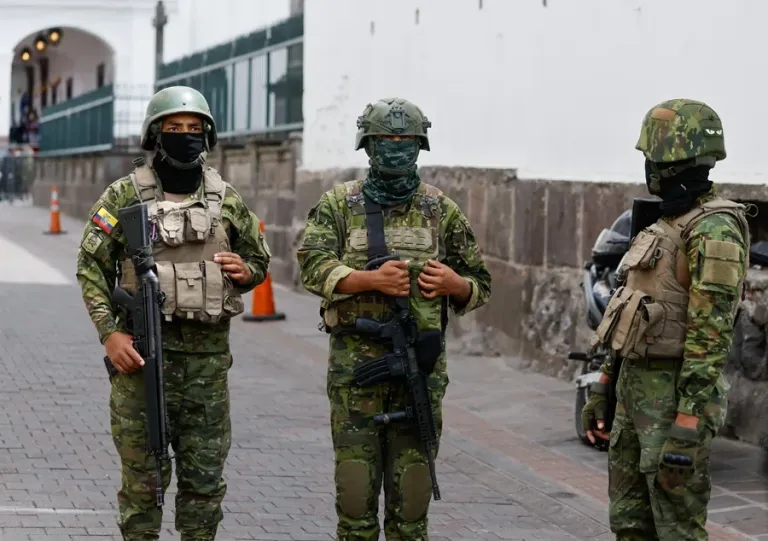
In four Ecuadorian provinces, the difference between an ordinary journey home and a curfew violation is once again a matter of minutes. Beginning September 17, nighttime movement is restricted from midnight until 5 a.m. Police and soldiers patrol streets and raid areas where authorities say criminal groups are hiding.
The new restrictions cover El Oro, Manabí, Guayas and Los Ríos. EFE describes the operation as a 15-day measure, the third curfew period of 2026, following rounds in March and May. These coastal territories sit at the center of the government’s campaign against violence associated with drug trafficking.
The curfew falls within a broader 60-day emergency declaration covering eight provinces and three municipalities. The two measures have different boundaries and durations. Pichincha, whose capital is Quito, falls under the emergency declaration but not this four-province curfew. Restrictions on nighttime movement and expanded security powers are related, but they are not identical.
Public security consultant Katherine Herrera told EFE that temporary reductions can give security forces room to conduct other operations. Her qualification matters: an operational opening is not the same as a sustained reduction in killings. She argues that curfews alone do not dismantle the organizations responsible.
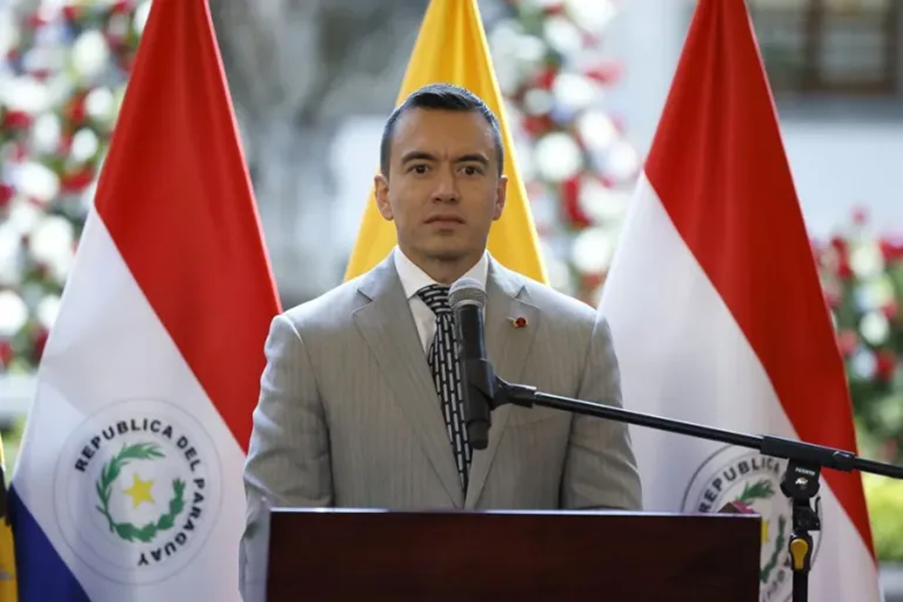
President Daniel Noboa declared an internal armed conflict in January 2024 and designated criminal organizations as terrorist groups. Since then, repeated emergency decrees have restricted movement and protections for homes and communications. Homicides declined in 2024, then reached a record 9,283 in 2025, despite further curfews.
That annual total amounts to approximately 25 killings a day. It describes the scale of bereavement, not the isolated effect of one policy. The chronology nevertheless establishes something narrower: the earlier decline did not continue through the following year.
Four Fewer Deaths, a Different Calculation
The monthly figures offer a closer view. Following May’s curfew in nine provinces and four municipalities, Interior Ministry numbers cited by EFE show 697 homicides in May, 693 in June and 704 in July. The apparent June improvement was four deaths, or about 0.6 percent.
But June had one fewer day.
Dividing those totals by the days in each month changes the picture. May averaged about 22.5 killings daily; June averaged 23.1, up roughly 2.7 percent. July’s daily average was approximately 22.7, lower than June’s despite its higher monthly total. The calendar complicates a simple fall-and-rebound narrative.
Across those three months, 2,094 people were killed. Neither raw totals nor daily averages establish what would have happened without restrictions. That requires information about locations, timing, seasonal patterns, and comparable areas. These monthly figures do not isolate the curfew’s contribution from other changes.
EFE also reports that June and July exceeded their corresponding 2025 totals. Herrera describes another difficulty: groups can relocate to other provinces or resume operating after restrictions expire. Government decrees acknowledge their adaptability. A quieter restricted area may therefore coexist with danger elsewhere, rather than signify a nationwide reduction.
Arrest totals present a similar measurement problem. EFE reports that many people detained during curfews are held for violating movement restrictions, although authorities also announce captures of gang members and leaders. Those categories describe different outcomes. Counting them together cannot establish how much criminal capacity has been removed.
What Remains After the Patrol
Quito shows why the question extends beyond the coast. On July 21, three universities voiced concern about robberies, assaults, and students reportedly being drugged near their campuses. Eight days later, police found a body hanging from a bridge on Avenida Simón Bolívar. The incidents brought security concerns into familiar daily routes.
On August 3, Noboa announced 2,000 additional police officers and 2,000 soldiers for the capital, alongside 100 vehicles and motorcycles and 20 drones. The deployment targeted commuting hours, schools, transport stops, and commercial areas. Its stated purpose was to protect where residents actually move, not just restrict when they can.
The distinction is practical. Quito’s announced patrol windows ran from 4 a.m. to 11 a.m. and from 5 p.m. to 2 a.m. They covered journeys to work and study. Yet personnel and equipment figures measure resources committed; without subsequent results, they do not establish whether those journeys became safer.
Herrera’s proposed strategy connects street operations with criminal and prison intelligence, investigations into assets, and tighter weapons controls. She also emphasizes effective state services and sentence enforcement. In her account, tackling impunity and corruption matters because arrests alone leave other parts of an organization’s operation unresolved.
Her emphasis on assets introduces an economic question: whether operations interrupt only the people carrying out crimes, or also the financing that allows a criminal organization to replace them.
“They are waging a tactical war, but not a strategic war,” Herrera told EFE. She credits some government steps but says others remain intentions. Her distinction is between conducting individual operations and maintaining the institutional capacity to disrupt criminal organizations after those operations have ended.
For the student waiting outside a campus or the worker heading home, the distinction becomes concrete: fewer hours outside and less danger outside are different conditions. The unanswered question is whether any security gained during restricted nights remains when ordinary movement resumes.
Also Read: Four Students Murdered in Seven Months as Protests Interrupt Morelos Independence Parade