Latin American Allies Await Military Aid as Washington Changes Its Global Bearings
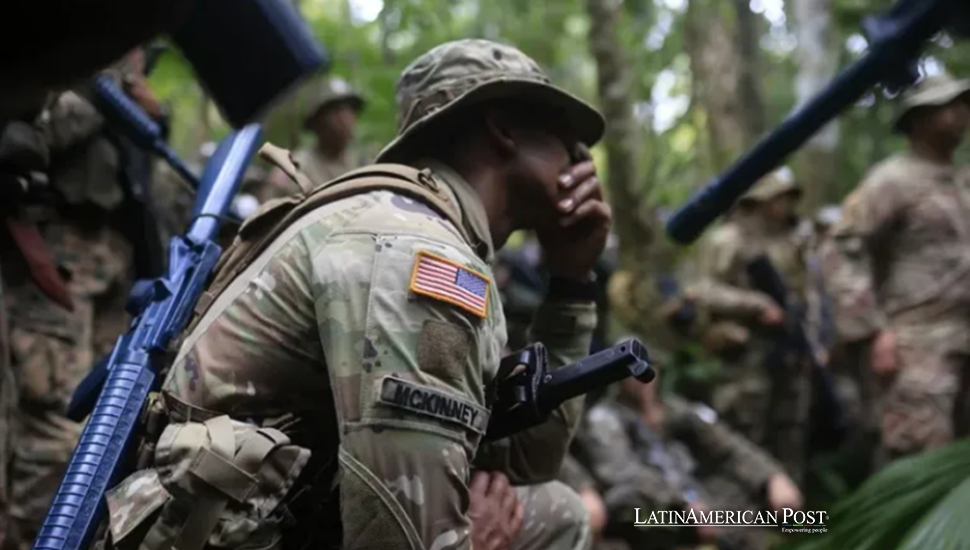
Trump’s planned $52 million military aid transfer to four Latin American partners links counternarcotics cooperation with competition over strategic infrastructure. For the region, the stakes extend beyond equipment to sovereignty, commercial relationships and the terms of closer alignment with Washington.
A Transfer With a Longer Reach
In Peru, reported extortion cases climbed from 2,421 in 2019 to 26,734 in 2025, according to official figures cited by The Associated Press. That is roughly elevenfold growth in reports, not a precise measure of crimes committed. Behind the security agreements is that everyday pressure.
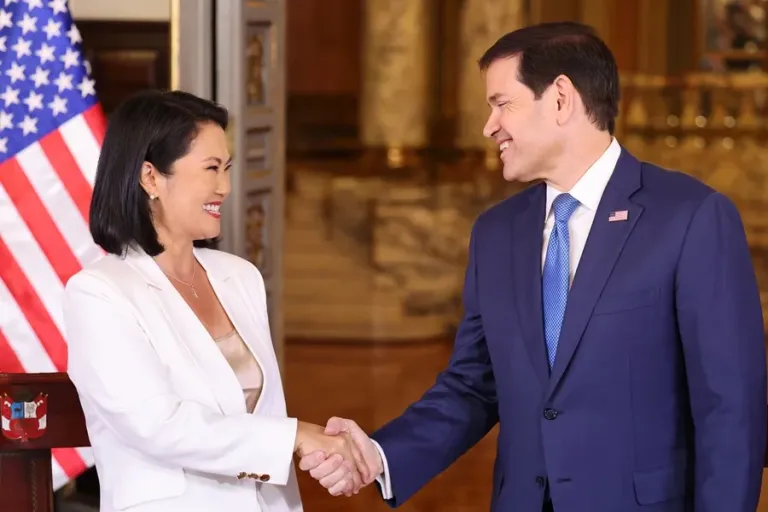
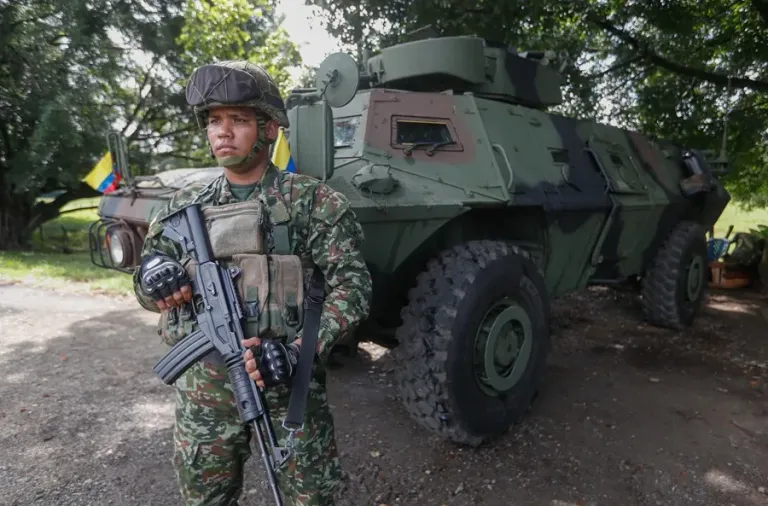
On September 15, the State Department notified Congress of plans to redirect $52 million from Slovakia, North Macedonia, Tunisia and Iraq to Panama, Peru, Ecuador and Colombia. The announcement followed Secretary of State Marco Rubio’s visits to the three South American recipients, EFE reported.
The money comes through Foreign Military Financing, which supports purchases of U.S. defense equipment, services and training. It is not unrestricted budget support. Washington is financing partner capabilities while also directing business toward American suppliers, two functions built into the same transaction.
The department says the transfer will combat “narcoterrorism,” protect the Panama Canal and reduce recipients’ potential dependence on U.S. adversaries. It also says Congress directed nearly 80% of this financing program toward the Middle East over the past decade, according to EFE.
That figure describes one program, not all American military assistance or overseas deployments. Reassigning $52 million changes where existing money goes; it does not itself increase the global pot. The reporting did not provide country allocations or equipment packages, making the scale of each recipient’s gain uncertain.
The transfer also does not end financing for the four original recipients, AP reported. For Slovakia and North Macedonia, both NATO members, a reduced allocation is not the same thing as withdrawal from a defense commitment.
Equipment Comes With Relationships
The wider design is explicit in the administration’s 2025 National Security Strategy. It calls for a “Trump Corollary” to the Monroe Doctrine, greater military attention to the hemisphere and reduced outside influence over strategic assets. It favors aligned partners while leaving room for cooperation with governments holding different views.
The historical reference carries specific weight. The State Department’s historical account explains that Theodore Roosevelt’s 1904 corollary turned a doctrine opposing European intervention into a rationale for U.S. intervention in Latin America. Today’s financing announcement does not establish an equivalent intervention, but the administration has explicitly revived that vocabulary.
Procurement creates another, quieter form of connection. U.S. security cooperation training treats spare parts, maintenance, and logistical support as commitments extending throughout equipment’s working life. A purchase can therefore generate recurring institutional contact long after the original diplomatic visit.
For recipients, compatible equipment can simplify cooperation; reliance on a supplier also makes future support decisions consequential. The financing can reduce dependence on one defense relationship while deepening another. It does not eliminate the need for support.
EFE reports that all four recipients accepted participation in a U.S.-led operational framework contemplating joint military action. In Lima, Rubio said Washington would not act inside partner countries without their approval, AP reported. That assurance makes host-country consent central to the stated arrangement.
That consent debate runs alongside an ongoing dispute over force. Rubio defended U.S. maritime strikes against suspected traffickers during his Ecuador visit, while human rights organizations have described such attacks as extrajudicial killings, Reuters reported. The distinction matters for recipient countries: cooperating on surveillance is not necessarily the same commitment as participating in lethal operations against suspected criminal groups.
Buying equipment and authorizing operations remain separate questions. The published accounts do not specify command arrangements, missions, or accountability procedures. Those details would determine how cooperation functions where people actually live, beyond the language of strategic partnership.
Security Partners, Different Trading Maps
Panama illustrates why this is more than a counternarcotics story. The canal recorded 13,404 transits in fiscal 2025, according to its authority. Protecting that route concerns commercial continuity as well as security. Panama assumed full control in 1999, making the distinction between assistance and control historically concrete.
The administration’s strategy connects aid to reducing adversarial influence over ports, military installations, and other infrastructure. That places commercial relationships inside security negotiations. For Latin American governments, accepting military support can therefore involve discussions that reach beyond the defense ministry.
Peru shows why strategic alignment is not necessarily commercial exclusivity. Reuters reported that its 2025 trade with China exceeded $50 billion, compared with roughly $19 billion with the United States. China’s total was more than two and a half times as large.
Those flows represent established economic relationships, not a military alliance. Their coexistence with closer U.S. security cooperation demonstrates that a country’s defense partner and principal commercial partner need not be the same. China’s embassy in Lima rejected the idea that the hemisphere belongs to anyone’s “backyard,” Reuters reported.
For Europe and the Middle East, the transfer documents competition for a finite assistance allocation, not a complete American departure. For Latin America, it links an immediate security agenda to Washington’s wider effort to shape access, procurement and infrastructure relationships.
What remains unmeasured is the distance between financing and safety. Equipment deliveries would show that procurement occurred. They would not, alone, establish whether extortion declined or families became safer. The $52 million announces a change in allocation; its consequences depend on the agreements, deployments, and public outcomes that follow.
Also Read: Cuba Blames Washington for Its Humanitarian Crisis, but Havana Cannot Claim Innocence