Mexico Activist Chases Clouds and Recruits Tourists to Save a Forgotten Volcano
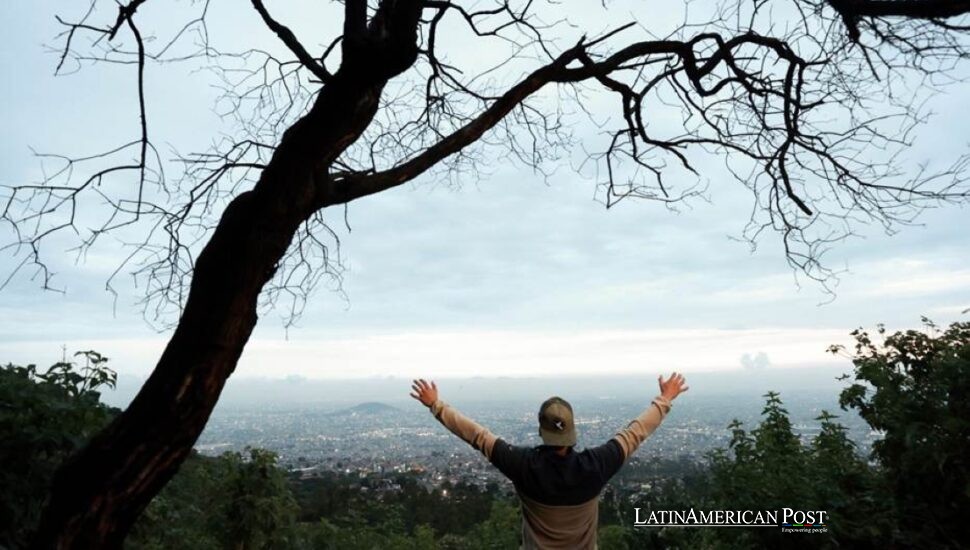
In Mexico City’s overlooked volcanic outskirts, José Varela takes tourists uphill before dawn and puts trees in their hands. His campaign to protect Tetlalmanche connects threatened land, scarce neighborhood shade and the right to feel proud of where you live.
A Tree Before Sunrise
At four in the morning, José Varela loads ash saplings into a truck. The tourists meeting him about two kilometers from Tetlalmanche are preparing to climb a volcano. He has another task for them, too. Each receives a young tree to plant later along the streets of his neighborhood.
“Welcome to Iztapalapa, a place of art, culture and nature,” he tells the group, in a scene witnessed by EFE. It is an introduction meant to challenge the association of his home with crime and insecurity. “Nobody should feel ashamed of where they come from.”
His own introduction to the mountain was less organized. At 13, Varela slipped away from school without permission and climbed toward the clouds. He discovered that the familiar rise was a monogenetic volcano, the highest in the Sierra de Santa Catarina, rather than just another hill.
The surprise became a question he could not put aside. How could something so substantial remain so poorly understood by people living nearby?
“Nobody believed me when I said it was a volcano,” he told EFE. “Nobody saves what they don’t know.”
Varela, now a tourism graduate, founded Inlandmex three years ago. During a ten-hour outing, EFE followed his effort to connect visits to the mountain with planting in Iztapalapa. His ambition is to establish what he describes as the district’s first urban forest planted by tourists. For now, it grows tree by tree.
Green Space, Missing Time
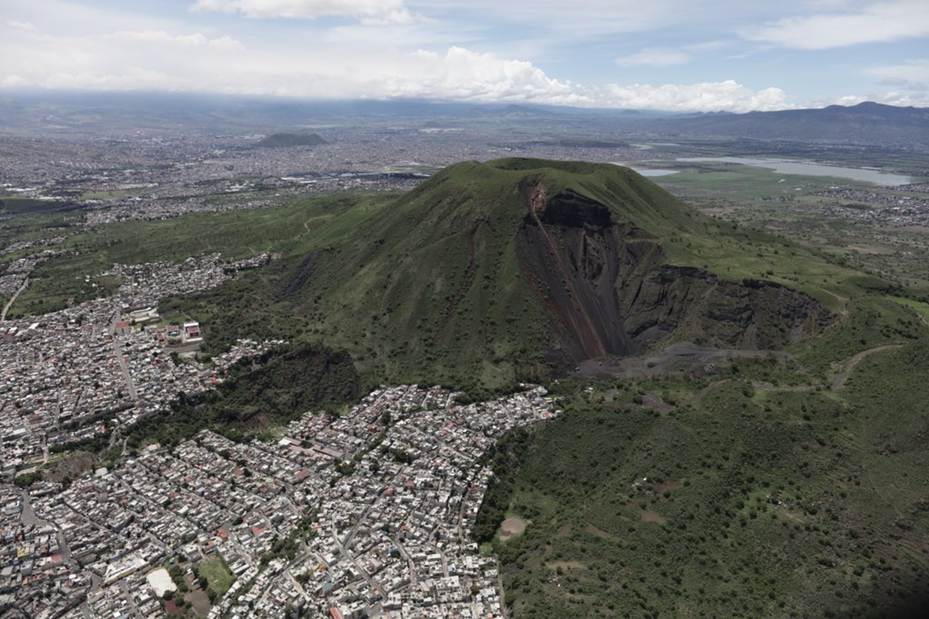
Tetlalmanche lies between Iztapalapa and Tláhuac, two districts with some of Mexico City’s lowest green-space coverage. The figures cited in EFE’s reporting put their averages below five square meters per resident, roughly 54 square feet. That average does not reveal whether the nearest usable patch is accessible.
For someone returning exhausted from work, green space matters at street level. A shaded sidewalk and a distant reserve answer different needs. One can improve an ordinary walk; the other requires time that a daily commute may already have claimed.
A volcano within sight is not necessarily a place someone has time to visit. Varela estimates that only one in ten neighbors knows Tetlalmanche. He links that unfamiliarity to the pressures of life on the city’s margins: residents can spend around four hours daily traveling to and from work.
Across a five-day workweek, that would consume 20 hours. The mountain may be nearby, but a demanding commute can put it effectively out of reach. His explanation shifts the question from why residents are uninterested to what their routines allow.
His visitors, meanwhile, have set aside time for an excursion. Inlandmex asks them to put some of that time into a neighborhood whose residents may have little to spare. The exchange links leisure to a task that remains useful after the visitor leaves.
Varela does not want that attention to become tourism that overwhelms local life or pushes residents aside. He explicitly rejects touristification and gentrification. His proposed connection to outsiders begins with planting streets and recognizing the landscape already belonging to the community, rather than treating it as a place awaiting discovery by somebody else.
A Crater Worth Keeping
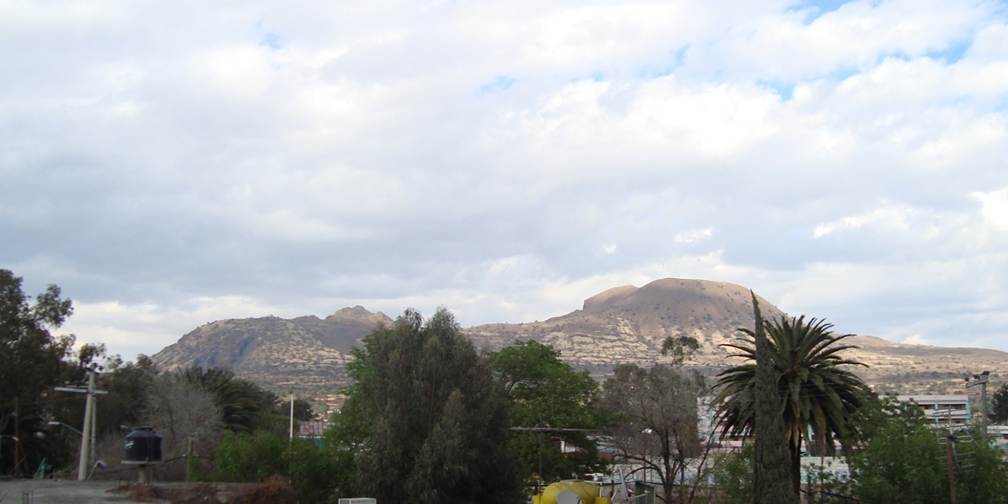
Near the reserve’s lower slopes, the outing passes evidence of expanding informal settlement and erosion associated with quarrying. Varela describes urban encroachment and illegal extraction of stone as continuing threats despite the Sierra’s protected status. For him, attracting attention is part of defending its seven volcanoes.
Before sunrise, the group approaches Tetlalmanche’s crater at about 2,820 meters, or 9,250 feet, above sea level. The clouds that drew him uphill as a schoolboy are now part of the experience he shares.
“If nothing is done, this crater will disappear; it could fracture,” he warns in EFE’s account. The threat he describes would affect far more than a view. The volcanic ground also has a practical role: absorbing rainfall runoff, helping limit flooding and contributing to the city’s groundwater recharge.
A line of crosses and graves interrupts the route. Varela calls them the reserve’s guardians. Their presence complicates the notion of an unknown landscape. He describes a strong attachment among the people who do climb here; unfamiliarity is not the absence of local memory.
With help from hundreds of tourists, Varela has planted more than 500 trees in his neighborhood’s streets. That is a planting count, not a measurement of surviving canopy. Young trees must remain alive and grow before their shade can replace the heat he associates with bare concrete.
He says local authorities have cut down some of them. The account provides no number or explanation for those removals, leaving the extent of that loss unclear. His street planting and the protection of the crater are related ambitions, not interchangeable accomplishments: saplings cannot by themselves halt quarrying.
For Varela, reaching the summit is only part of the journey. Attention to a spectacular landscape has to reach the streets beneath it. He wants visitors to remember Iztapalapa as somewhere people live, with trees that need room to grow, not simply as a dramatic backdrop for an early morning climb.
The climb ends. The work of keeping a tree alive does not.
Also Read: In Colombia, Five Presidential Confidants Link Faith, Finance, Oil and Artificial Intelligence