Stanford Uses AI to Erase Hispanic Student, Then Removes the Posters Too
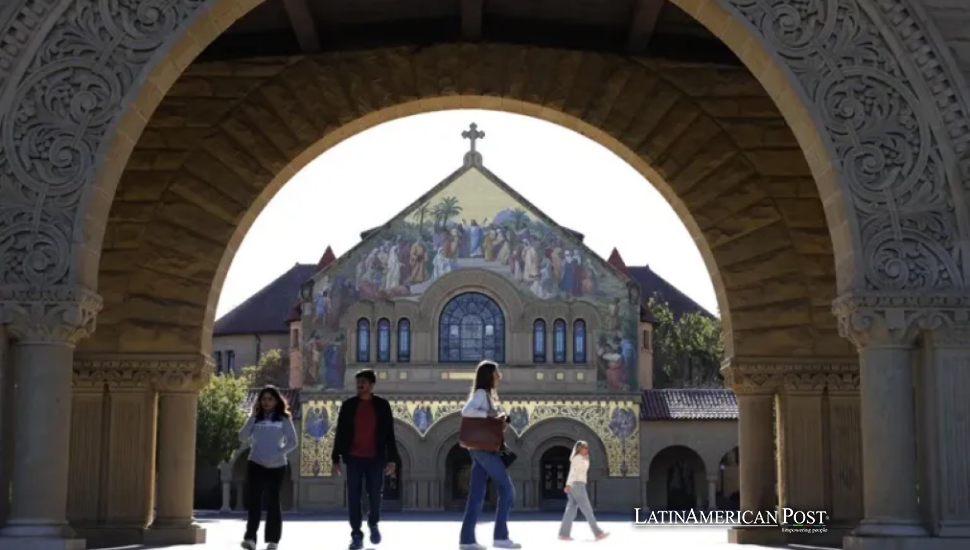
Stanford removed promotional posters after artificial intelligence replaced a Hispanic student and altered two classmates. The university acknowledged violating its own rules, but the episode leaves a more personal question about who controls how real students appear in campus life.
The Student Who Disappeared
Billy Ramirez was there when the photograph was taken. He disappeared afterward.
The Stanford student had appeared alongside two classmates in an image later used to advertise the university’s Residential & Dining Enterprises. In the promotional version, an artificial intelligence tool had replaced him with a generated image of a Black female student. His companions remained, but their features had been modified.
Three people had supplied the original photograph with something no software could manufacture: their actual presence. The published version treated that presence as something that could be revised.
The Stanford Review brought the alteration to light and interviewed Ramirez, whose account was subsequently reported by EFE. His first reaction was amusement. Then came a less comfortable recognition. The university had changed not merely how he looked, but whether he appeared at all.
“Seeing my identity altered and being left out of the image made me feel, in a way, silenced and erased from a representation that was supposed to include me,” Ramirez told the student newspaper, in remarks relayed by EFE.
His reaction changed as the meaning of the edit settled in. The oddity was easy to laugh at; the decision behind it was harder to dismiss. An institution presenting its students had replaced his contribution to that picture with somebody who had never actually been there.
The injury he described concerned belonging as it was publicly represented. He knew he had been there. Anyone seeing only the poster would have had no reason to know.
Three Faces, a Different Record
The numbers are small but revealing. Of three original subjects, one was replaced and two were altered. Every person in the source photograph was affected, although only Ramirez was removed outright. Counting faces would have missed the most consequential change: three figures remained, but they no longer documented the same group.
That is a distinction between numerical representation and faithful representation. A poster can retain the same number of people while changing who gets to be seen. An apparent demographic composition cannot tell viewers whether anyone depicted actually participated in the scene.
Ramirez’s Hispanic identity matters because his was the real presence that disappeared. But this was not a dispute between a Hispanic student and a Black classmate competing for space. The replacement was generated. No real student had gained the experience or recognition that the image appeared to document.
Nor does the reporting establish why that particular replacement was selected, who requested it or which AI system produced it. Those gaps limit conclusions about motive. The altered image alone cannot establish an institutional campaign against Hispanic students or a wider pattern across Stanford’s promotional material.
What it establishes is narrower and concrete: a real Hispanic student became absent from an image meant to show university life. The incident does not require an invented explanation of racial intent to make his account of exclusion consequential.
The alterations to the other two students also keep the issue from being reduced to a simple replacement count. Remaining in the frame did not mean remaining unchanged. Their appearances, too, became material for an edit rather than a straightforward record.

The Posters Come Down
Stanford subsequently confirmed that artificial intelligence had been used and acknowledged that the alterations and lack of disclosure violated university policy. In a statement cited by ABC and reported by EFE, the institution said it had reviewed the matter and removed the posters.
That acknowledgment moved the central fact beyond the student’s complaint. The university was no longer being asked merely whether an image looked unusual. It accepted that the technology had been used in a way its own rules did not permit.
The remaining question is how the image reached publication. EFE’s account does not identify who approved the poster or whether anyone compared the edited version with the original. Those are different questions from which software was used. They concern the decisions that allowed a changed account of student life to become an official university advertisement.
Removal addresses circulation. Disclosure addresses what an audience understands. Neither, on its own, answers the separate question of what the photographed students were willing to have done with their likenesses. The reporting does not establish what permissions were sought before the image was changed.
The distinction is practical rather than abstract. A label identifying an AI alteration could alert viewers that a picture is no longer documentary. It would not tell them whether Ramirez agreed to disappear, or whether his classmates agreed to have their features rewritten.
Stanford’s location in Silicon Valley adds an uncomfortable setting to the episode. This was not a hypothetical classroom debate about synthetic media. It was ordinary university promotion, the kind of material intended to make institutional life look recognizable and welcoming.
The original photograph already contained students who belonged to that life. The public explanation confirms the rule violation but does not explain what problem replacing one of them was supposed to solve.
The posters have been taken down. What Ramirez described losing was not his place at Stanford, but his place in its account of itself.
Also Read: Latin America Chases Space Race Billions but Must First Deliver on Earth