Mexico Investigates Claudia Tacoronte’s Murder as Other Victims’ Families Still Wait for Answers
Mexico’s prosecution of Claudia Tacoronte’s killing as femicide has renewed scrutiny of other students’ deaths. Advocates say the rapid response contrasts with cases facing delays, while official figures expose difficult questions about how murdered and missing women are counted nationwide.
One Arrest, Other Unanswered Names
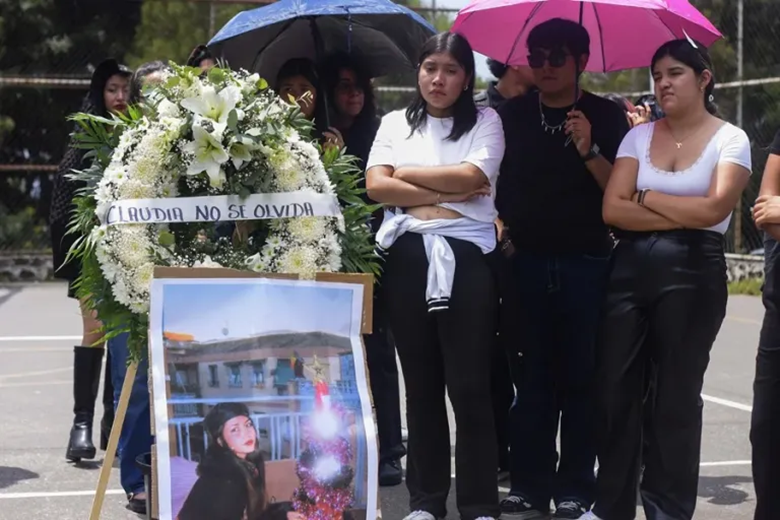
Claudia Tacoronte had barely begun her academic stay in Morelos. The community she joined was already mourning other young women. Before the Spanish student was killed in Cuautla, four students connected to the Autonomous University of the State of Morelos had disappeared and been found dead since April 2025.
Her case moved quickly—federal authorities detained a suspect known as El Trompas Thursday in an operation. By Friday, a judge had authorized criminal proceedings for femicide. That decision allows the prosecution to advance; it is not a conviction.
The earlier cases followed different paths. Aylín Rodríguez, 20, was found dead in April 2025; her boyfriend was detained. Kimberly Ramos, 18, was found dead in March 2026; a fellow student described as her former partner was arrested. Both cases were being prosecuted as femicides, EFE reported.
For Karol Toledo, 18, found dead in March, and Michelle Fuentes, 15, found dead in June, EFE reported no public information about arrests. Their names complicate any account of Claudia’s killing as an isolated rupture in an otherwise ordinary academic year.
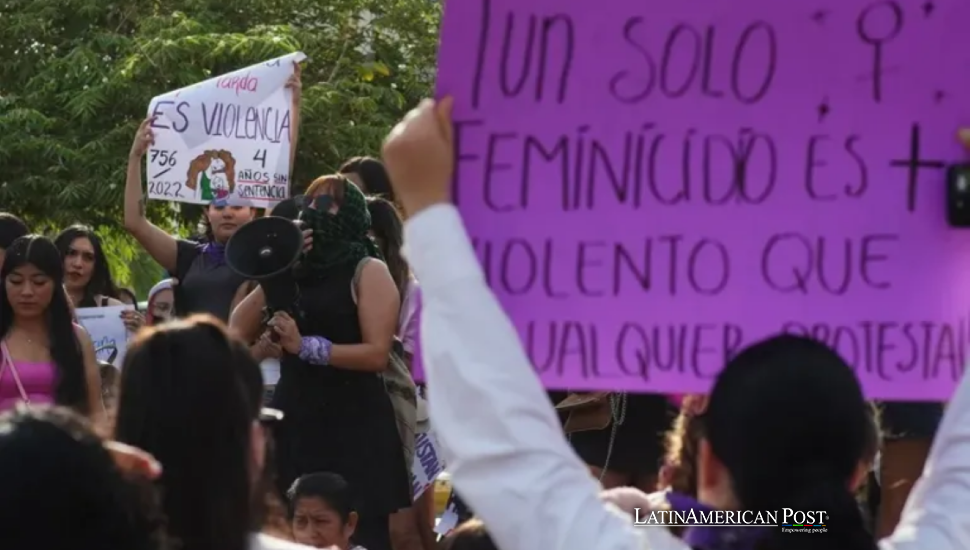
Authorities “do not react this way when it is a local woman,” the Cuautla collective Heroicas e Históricas told EFE. The group attributes the speed to international scrutiny and describes families that lack the money to keep pursuing cases with prosecutors.
For the families described by the collective, grief comes with another demand on already limited resources: keeping an investigation moving. A court appearance, a conversation with a prosecutor, another effort to obtain information can compete with paid work and household responsibilities. The arrest announced in Claudia’s case is a visible milestone. The work required to reach one often attracts far less public notice.
The comparison does not establish why individual investigations advanced differently. But it makes the collective’s question concrete: what happens to a family’s case when no international audience is waiting for an answer?
What the Case File Calls It
Prosecutors say the injuries and circumstances of Tacoronte’s attack support a femicide charge, despite the suspected theft. Their position is that a robbery allegation does not exhaust the explanation of the violence. Whether the charge is proved remains a question for the proceedings.
María de la Luz Estrada, director of the National Citizen Observatory on Femicide, described the response as “atypical” in an interview with EFE. She says killings involving extreme violence or other indications of gender motives are frequently classified without applying femicide protocols.
“Many femicides are recorded as suicide, accident or homicide,” she said. In four recent Mexico City cases the observatory accompanied, three were initially treated as accidents and one as suicide. These are selected cases, not a representative national sample. They illustrate the classification problems Estrada describes but do not measure their prevalence.
National figures cited by EFE recorded 1,250 female victims of femicide or intentional homicide between January and July 2026. Of those, 380 were classified as femicides and 870 as intentional homicides: 30.4% and 69.6%, respectively.
That split does not prove the larger category consists of concealed femicides. It does mean that counting only officially classified femicides excludes nearly seven in ten victims in this combined total. Distinguishing the offenses requires evidence about circumstances, not merely counting the sex of those killed.
Across those 212 days, the combined total averages approximately 5.9 deaths daily. The observatory’s separate estimate of ten women murdered daily concerns 2015–2025. Different periods and potentially different coverage make a direct claim of improvement unwarranted without reconciling the underlying records.
The Women Still Missing
Disappearance introduces another uncertainty: families may not know whether the person they are seeking is alive. Estrada told EFE that criminal activity in some territories compounds the difficulty of getting young women’s disappearances investigated.
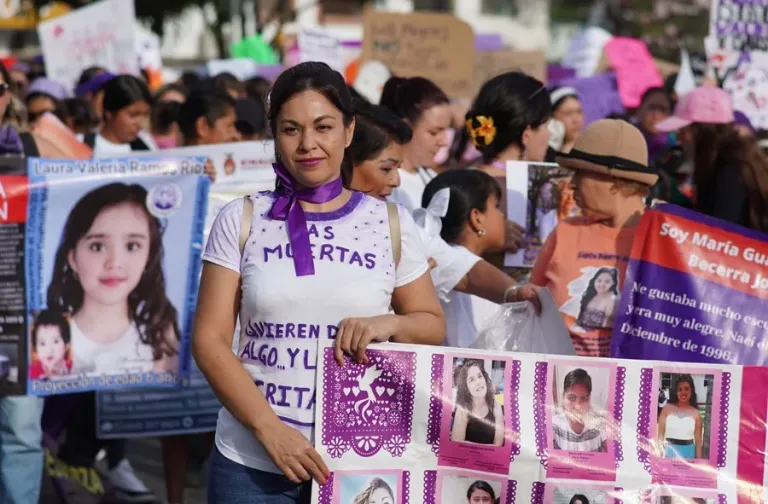
Between January and July, 1,125 women were reported missing and remained unlocated in the national registry snapshot cited by EFE. That is about 5.3 unresolved disappearances per day over the period, not necessarily the total number originally reported missing. It also cannot be added to the homicide count as confirmed deaths.
The same reporting put the accumulated number of missing women at 27,431. Among those with recorded ages, 67% were between 10 and 34. The qualification matters: women without recorded ages cannot be assigned to that distribution.
Teenagers aged 15–19 formed the largest group, with 5,555 cases. Among children aged 10–14, the registry showed 2,298 missing girls and 1,829 boys. Girls accounted for almost 56% of those cases, the only age bracket in which females outnumbered males.
Those figures identify a concentration of recorded cases, not the cause of every disappearance. They nevertheless place the deaths around the Morelos university alongside a broader pattern involving adolescents and young adults.
EFE’s report cites 26 gender-violence alerts across 23 states. Estrada also criticized what she described as the removal of six-month accountability reports required from authorities under alert. Her concern joins the collective’s argument about cases that continue after public attention fades.
Claudia’s prosecution is now advancing. For other families, the unanswered questions begin earlier: where a daughter is, how she died, and whether investigators are asking the right questions.
Also Read: The Malvinas War Ended, but Britain and Argentina Still Battle Over Tomorrow