Chile Unwraps 222 Smuggled Fossils Declared as Household Glassware Instead of History
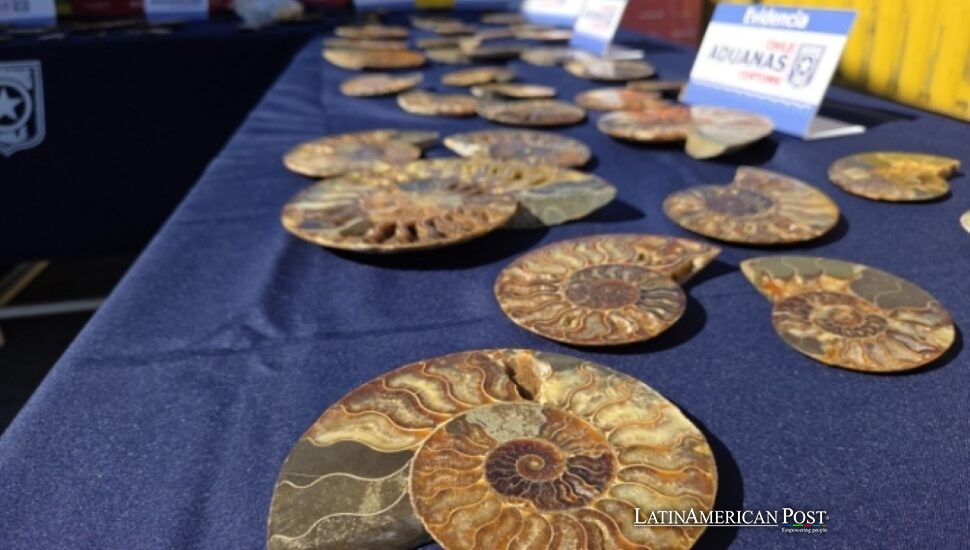
Chilean customs officers found 222 marine fossils inside a shipment declared as jewelry and household ornaments. The 110-million-year-old pieces, attributed to Madagascar, arrived from China, leaving specialists to protect their ancient history while Chilean authorities consider a possible journey home.
Older Than the Paperwork
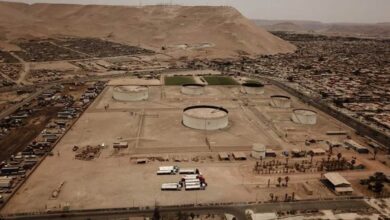
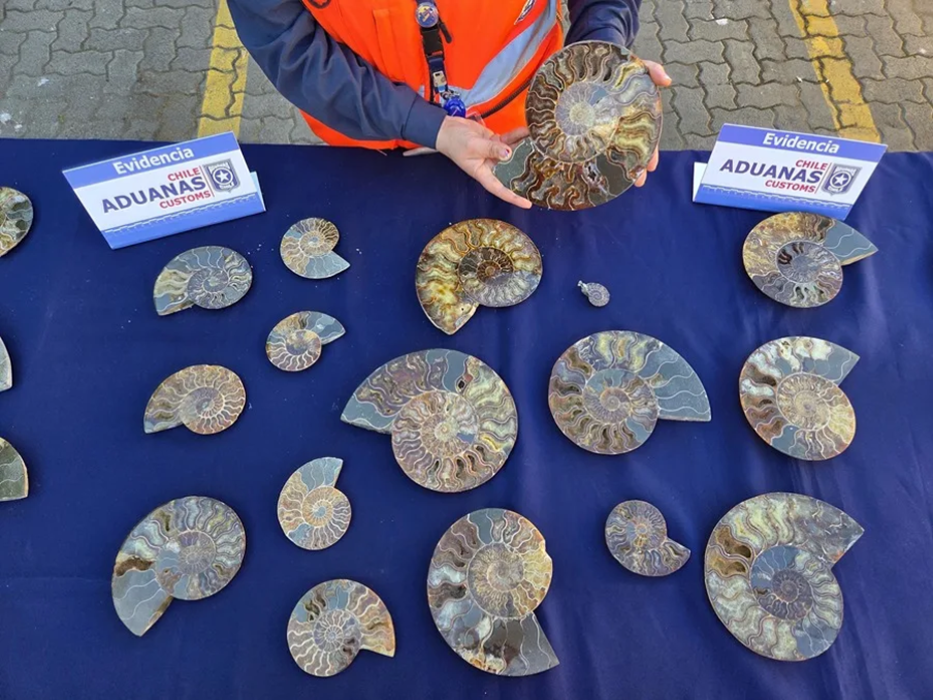
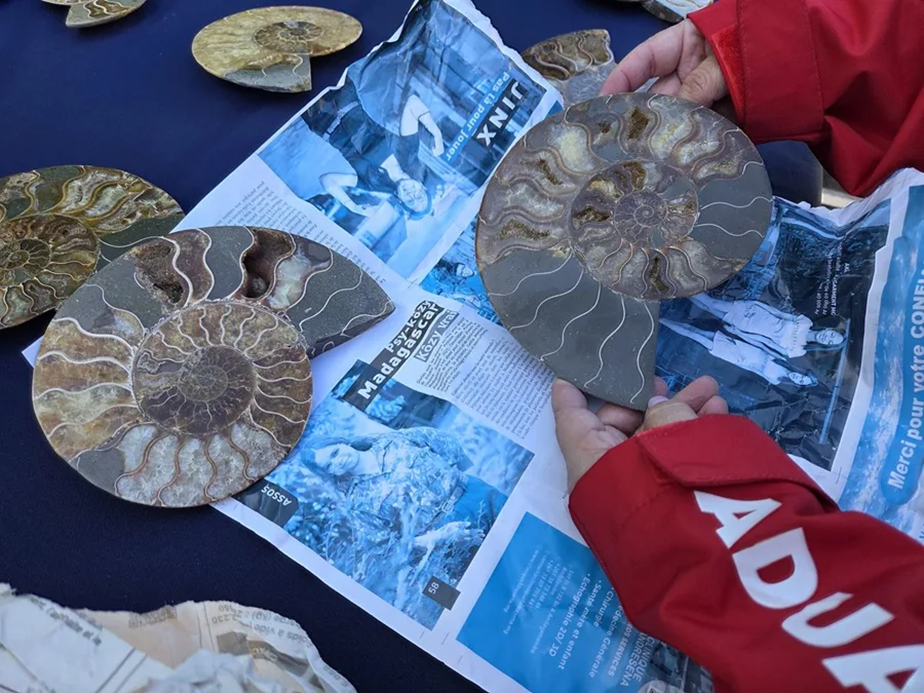
The wrapping was ordinary: newspapers and magazines, folded around objects packed into boxes. The contents were anything but. At the port of San Antonio, in Chile’s Valparaíso region, customs officers found 222 ammonite fossils where the declaration described chains, pendants and household glass decorations.
The shipment had left China in a container. Chilean customs announced the discovery Friday, according to EFE. What might have passed through commerce as accessories instead required the attention of museum specialists and national heritage officials.
Specialists at the Natural History and Historical Museum of San Antonio, known as MUSA, confirmed that the pieces were genuine. Chile’s National Cultural Heritage Service attributed them to Madagascar, citing the distinctive sheen of their veins and leaflike patterns on their surfaces.
Their reported age of 110 million years places them in the Lower Cretaceous, within the Mesozoic era popularly associated with dinosaurs. These are marine fossils, however. The story preserved in the pieces concerns ancient sea life, not dinosaur bones.
The paperwork offered none of that history. A customs description should identify an object’s place in commerce. Here, the declared category omitted the very characteristics that made specialist examination necessary: authenticity, geological age, and possible foreign heritage status.
The specialists’ findings separated an object’s appearance from its identity and origin. A decorative object can be valued for how it looks; an authentic fossil also raises questions about where it came from and how it ended up in a shipping container.
The difference was visible on the material itself. Veins and surface patterns had survived the journey even when an accurate description had not.
Three Countries, an Unfinished Trail
The case connects three countries, but the evidence supplies different kinds of information about each. China was the shipment’s departure point. Chilean specialists identified Madagascar as the origin. Chile is where customs intercepted the cargo.
Those roles cannot be collapsed into a single account of responsibility. Departure from a Chinese port does not establish where the fossils were excavated, who removed them, or who arranged their export. Nor does it identify the nationality of anyone responsible for the false declaration.
Madagascar’s government has yet to confirm the pieces’ origin. Chilean authorities are awaiting that response as part of safeguarding the material and considering a possible request for its return. Scientific attribution and official confirmation therefore sit at different stages of the case.
The number, 222, describes the size of the intercepted consignment. It does not measure the wider trade or reveal how many similar shipments have passed unnoticed. No monetary valuation accompanies the reporting. The geological age establishes antiquity, not market value or financial loss.
Nonetheless, recovering hundreds of objects together has practical consequences. Protecting the cargo means tracking individual pieces, not simply announcing a container seizure. A possible return concerns this material, whose identity and origin must remain connected to the record of its interception.
The shipment’s declaration grouped the objects into familiar commercial categories. Heritage protection requires a more particular account, one that follows the actual fossils rather than the merchandise they were described as.
For Latin America, the shipment illustrates a role beyond defending objects taken from its own territory. A Chilean port has become the place where another country’s possible natural heritage is being held. The immediate question is not how to add it to Chile’s collections, but what should happen next.
Custody Before a Homecoming
“This is about protecting heritage that is regulated by special laws,” Ángelo Vergara, San Antonio’s regional customs director, told Chilean media in remarks reported by EFE. He also cited international protections involving UNESCO and the World Customs Organization.
EFE’s account identifies Chile’s National Monuments Law as the domestic framework protecting paleontological material. Authorities also invoked UNESCO’s 1970 convention against the illicit import, export and transfer of ownership of cultural property.
The discovery thus concerns more than correcting an inaccurate description on an import form. Objects declared as household goods are now being handled as material with scientific and heritage significance. Their next destination is a question for authorities, not simply another shipping instruction.
But identifying the relevant protections is not the same as announcing a completed restitution. Chile is safeguarding the fossils while the exchange with Madagascar remains unfinished.
The authorities’ account leaves the commercial side of the journey unresolved. It identifies neither an importer nor an intended buyer and provides no outcome of prosecution. The discovery establishes what was in the boxes; it does not reveal whose decisions put the fossils on that route.
Authentic pieces reached a Pacific port under descriptions that would have made them appear unrelated to the heritage officials now involved. Local museum expertise helped establish that the discrepancy concerned natural history rather than simply the wrong merchandise.
A return, should Madagascar request one and the process proceed, would give the objects another shipping itinerary. This time, their description would carry the history that the original paperwork omitted.
For now, the fossils have been recognized. Where they belong, and how they might get there, remains the work ahead.
Also Read: Stanford Uses AI to Erase Hispanic Student, Then Removes the Posters Too