Colombia Confronts Armed Groups: Esparta Offensive Seeks to Restore Sovereignty at Venezuela Border
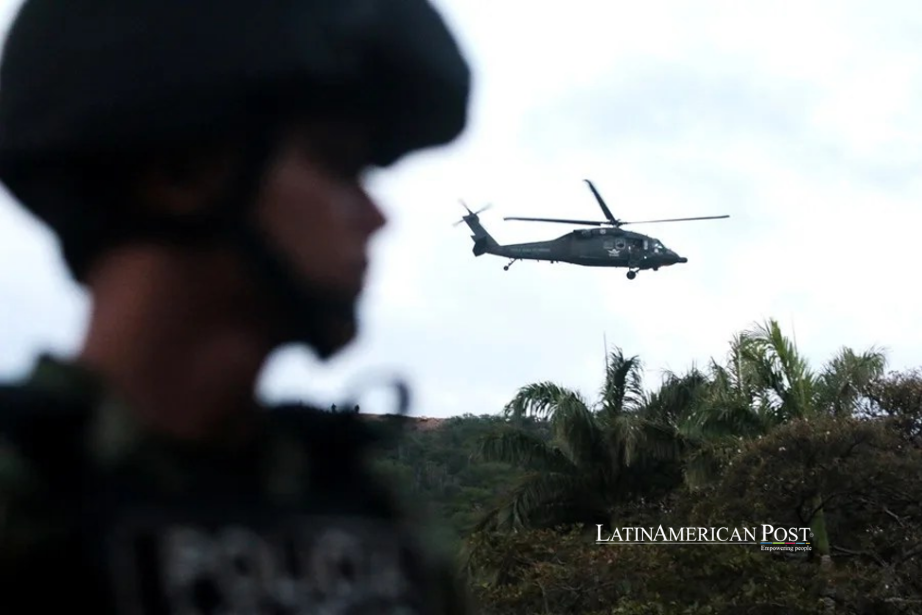
Colombia’s Esparta offensive promises troops, river patrols and drone defenses to its Venezuelan frontier, where armed groups threaten commerce and civilian life. Restoring control is essential, but lasting success depends on whether military pressure can translate into durable state authority.
A Border Colombia Cannot Abandon
Miguel Castellanos, a former government secretary, was murdered in Cúcuta on October 26. His killing belongs to a recent succession of attacks in Colombia’s principal border city with Venezuela. For residents, the national debate over sovereignty has an immediate meaning: whether public life can continue without armed organizations deciding its limits.
President Abelardo de la Espriella launched the military and police campaign Esparta there Tuesday, November 3. He ordered commanders to recover the initiative against the ELN, the FARC dissidents’ 33rd Front and other armed organizations competing over territory and illegal revenues in Norte de Santander, particularly Catatumbo.
Colombia needs to act because tolerating that competition means surrendering practical authority. Armed groups that control movement, intimidate communities, and finance themselves through illicit commerce acquire powers that belong to public institutions.
The question becomes who can enforce a decision, protect a witness, or keep a road open.
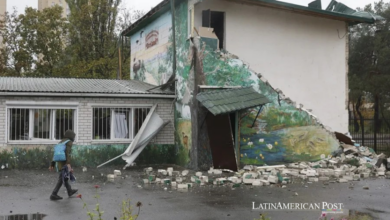
The human cost already exceeds anything suggested by the phrase “border insecurity.” By late 2025, 101,587 people had been displaced in the Catatumbo crisis, approximately 27% of the subregion’s population. That scale disrupts entire communities, with consequences for schools, farming, and the cities receiving displaced families.
A political distinction also deserves defense. The 33rd Front is an armed dissident organization, not the entire former FARC or the civilians who supported its peace agreement. Protecting communities and former combatants who entered civilian life strengthens the state’s credibility. Treating them as interchangeable with gunmen would undermine it.
The ELN and FARC emerged from Colombia’s revolutionary left, yet shared ideological ancestry has not prevented a violent struggle over who governs territory and captures its income. That matters geopolitically: treating the frontier solely as a confrontation between left and right misses the armed economy beneath it. Bogotá must dismantle systems of coercion that can survive both ideological slogans and repeated changes of command.
What Twelve Hundred Personnel Can Change
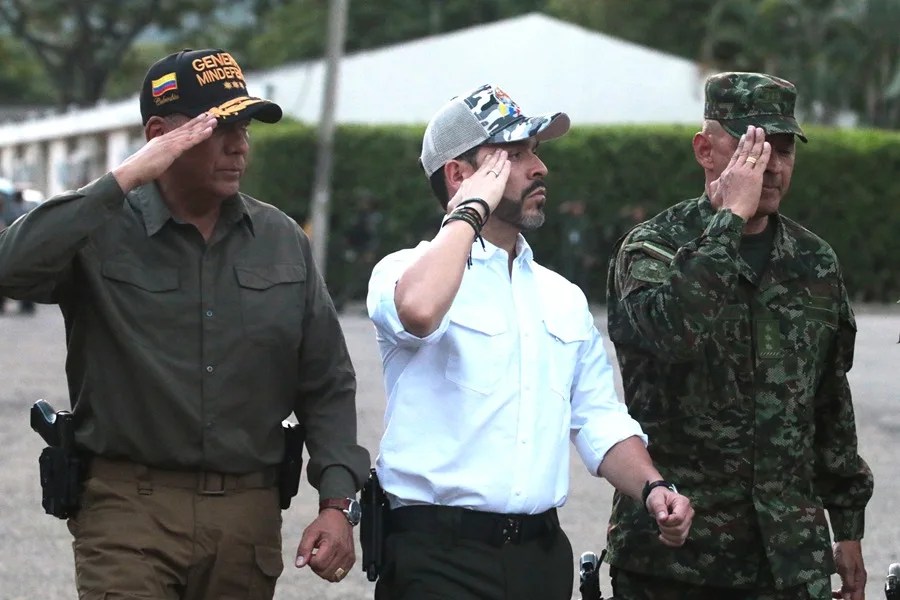
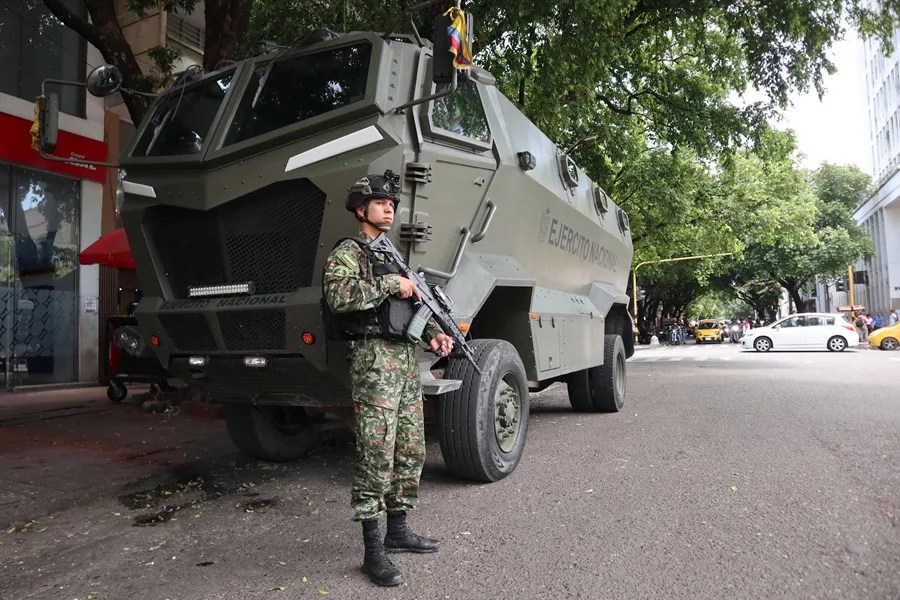
Defense Minister Jorge Mora announced approximately 1,200 Army and police personnel, with a Marine component expected to reinforce river control. Equipment to counter drones will also arrive. In Cúcuta, the Urban Security Operational Block, known as Bosur, will target criminal structures and serious urban offenses.
The combination makes geographic sense. Rivers offer movement beyond formal crossings and roads. Urban networks connect violence to financing, recruitment, and distribution. A campaign confined to rural camps could leave those connections intact; an urban crackdown alone could leave the armed organizations’ territorial bases untouched.
Drone defenses address another imbalance. Relatively accessible aircraft can give irregular forces surveillance and attack capabilities that complicate conventional patrols. Their incorporation into the response acknowledges that recovering territory now requires protection against threats above it, alongside control of routes through it.
Yet 1,200 is a deployment figure, not a measure of restored sovereignty. The announcement does not establish how many personnel will remain, how they will be distributed, or how civilian institutions will follow. Concentrating forces can quickly disrupt an organization. Sustaining security across dispersed settlements demands logistics, intelligence and continuity.
De la Espriella’s instruction to attack financing is therefore crucial. Removing commanders while leaving extortion systems and trafficking revenues intact creates opportunities for successors. Investigators, prosecutors and financial scrutiny must make the business harder to operate. Otherwise, a successful raid can change the name collecting payments without changing the resident’s predicament.
Venezuela Is Part of the Equation
The international boundary creates the campaign’s central geopolitical problem. Colombian authority stops where armed networks may continue. Pressure on one side can push fighters, supplies, and illicit business across the border, producing apparent local gains while preserving the organization’s ability to return.
This concern has a documented history. Human Rights Watch reported in 2025 that the ELN had benefited for years from complicity by Venezuelan security forces. That finding makes cooperation a matter requiring verification, not diplomatic reassurance. It does not establish responsibility for every subsequent attack or justify treating Venezuela’s civilian population as an enemy.
Bogotá therefore needs pressure and communication in tandem. Stronger territorial control could improve its bargaining position with Caracas, while working channels would help address movements and incidents across the boundary. A rupture that prevents practical coordination could give armed networks more room precisely when Colombia is trying to restrict it.
Trade makes that calculation concrete. Formal bilateral commerce reached $1.17 billion in 2025, up 4.1% from 2024, yet remained far below the more than $7 billion recorded in 2008. An indiscriminate border shutdown would put that recovery at risk. Keeping legitimate crossings functioning supports employment and reduces dependence on clandestine routes.
For the wider region, Esparta tests whether a country can weaken transnational armed economies without exporting violence to its neighbors. Traffickers can change corridors; displaced families need somewhere to go. Regional cooperation should therefore follow financial networks and protect civilians, alongside interdiction.
Colombia needs this campaign because leaving coercive power to armed groups is already a policy with victims. Its success will depend on what follows the deployment: protected witnesses, functioning courts, viable rural livelihoods, and families able to return safely. Sovereignty means returning home without asking a gunman’s permission.