Chilean TV Legend Don Francisco Gives Yesterday a New Slot on Sunday
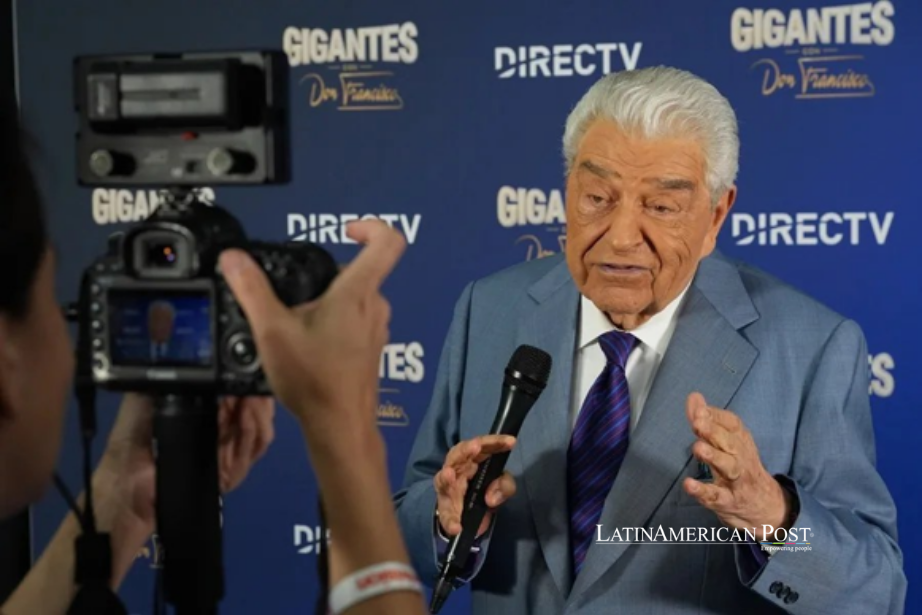
At 85, Don Francisco returns to Miami television with “Gigantes con Don Francisco,” pairing celebrity interviews with memories of “Sábado Gigante.” His comeback asks whether a shared family ritual can survive in a media landscape built around increasingly individual screens.
A Sunday for Saturday People
Don Francisco discusses television, but the people he summons aren’t on the guest list. They are the parents and relatives who once watched with his audience, some of them now gone. Speaking to EFE at TelevisaUnivision’s Miami studios, he describes a return built around those absences, without wanting to remain trapped inside them.
“I would like to combine today with the memory and evocation of yesterday,” the Chilean presenter tells EFE—his new series of specials premieres Sunday, October 11, with Mexican singer Lucero. The title promises giants. The emotional invitation is more intimate: remember who used to be in the room.
Born Mario Kreutzberger in December 1940, he returns to the studio associated with the Miami years of “Sábado Gigante.” That program began in Chile in 1962, reached American television from Miami in 1986, and ended in 2015. Its 53-year run earned Guinness recognition for longevity among television variety shows.
Those dates complicate the familiar story of a Latin American entertainer finding success in the United States. The program had already existed for 24 years before it expanded to Miami. Almost half its eventual lifespan preceded that move. Chile was not a preliminary footnote to an American achievement. It was where the format developed the experience it carried north.
For someone who remembers watching with a parent, an old clip can carry two histories: the entertainer’s public career and the family’s private life. The recording preserves a familiar performance. The viewer may remember the person sitting beside the television.
Eleven years after the finale, the invitation has changed. These are specials, not a restoration of the old Saturday marathon. Returning to the same studio offers continuity without requiring the audience to pretend that its routines, or the people sharing them, have stayed intact.
Followers Are Not Families
Kreutzberger recalls the Miami years in the language of habit. “We were here for 30 years, every Saturday,” he tells EFE, rounding nearly three decades into the measure that matters to him: repeated encounters. The catchphrases, including “¿Qué dice el público?” and “¡Fuera!”, belonged to a relationship renewed week after week.
His current digital following is substantial: nearly 6 million on Facebook and 2.7 million on Instagram. Together, that amounts to roughly 8.7 million platform follows, not necessarily separate people. Someone can follow both accounts. Neither figure tells a broadcaster how many followers will watch a complete television interview.
That distinction is central to this comeback. Familiarity can draw attention without producing the sustained viewing a new program needs. A recognizable face in a feed and a presenter invited into the household for an extended conversation are different relationships. The available numbers establish scale, not a guaranteed transfer between them.
He has adapted nonetheless, including through his podcast, “Mi decálogo del éxito.” To EFE, he explains that broadcasting was not his original trade. He trained to make patterns for men’s clothing, then found greater pleasure in communicating with people. The career change is less a formula for personal reinvention than a revelation: his preferred material became the conversation.
Yet he also argues that traditional television needs regulation to survive the proliferation of channels. His remarks leave the proposed regulatory remedy largely undefined. That omission matters. Protecting a broadcaster’s business and protecting the public value of Spanish-language programming are not automatically the same objective. Affection for an institution cannot settle how it should be supported.

An Icon Who Calls Himself a Worker
The guest choices suggest how the specials intend to connect generations without simply replaying old footage. Lucero opens the series, while planned conversations include Puerto Rican singer Luis Fonsi and Mexican goalkeeper Guillermo “Memo” Ochoa. Their different careers offer routes into present experience, rather than requiring every exchange to circle back to the host’s past.
They also preserve a particular cultural geography: a Chilean interviewer in Miami meeting performers and public figures from elsewhere in Latin America. The shared language makes that encounter possible without making the participants interchangeable. A Mexican soccer memory and a Puerto Rican musical career don’t become the same story just because they reach the same audience.
Celebrity affection can fill a studio, but an interview has to offer something beyond mutual congratulations. The guests’ present lives must remain interesting even to viewers who never watched the old show. Nostalgia can invite viewers without becoming a prerequisite.
Lucero describes him to EFE as a legend and an icon, then exaggerates that admiration for comic effect. “He shouldn’t run for president, because I’d vote for him,” she jokes. The affection is unmistakable. The man receiving it, however, seems more comfortable discussing his work than accepting the pedestal that comes with it.
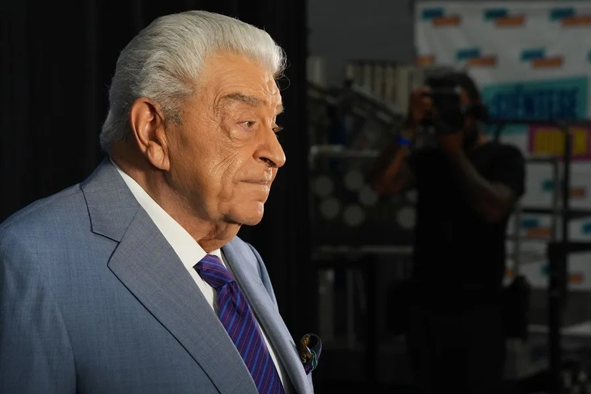
Despite a 2005 Emmy and a Hollywood Walk of Fame star, he offers EFE a shorter description. “I never felt like a leader. I felt like a worker in entertainment,” he says. At 85, returning to the studio is an opportunity to make that distinction tangible again. The audience may arrive looking for yesterday. His job is to give it a conversation worth watching today.