El Salvador Takes On Haiti’s Gangs, but Who Controls the Road Home?
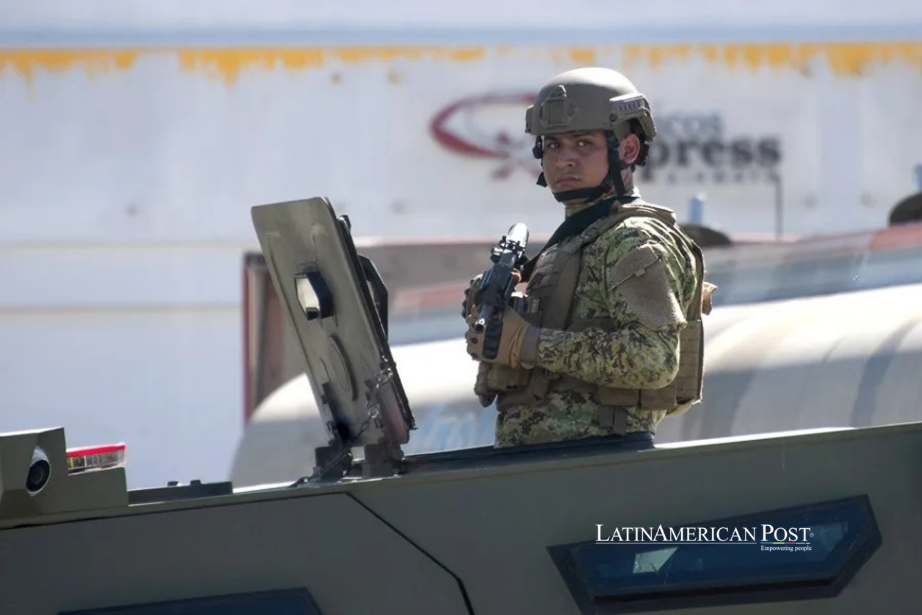
El Salvador sent troops to Haiti to find four missing men. Now Nayib Bukele has the Dominican president’s backing and is in dispute with American diplomats, while Haitians trying to get home have their own idea of who controls the capital.
The Fare to Carrefour
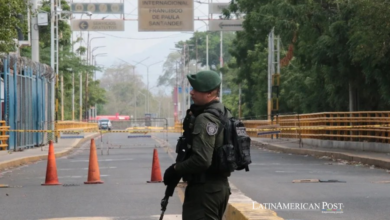
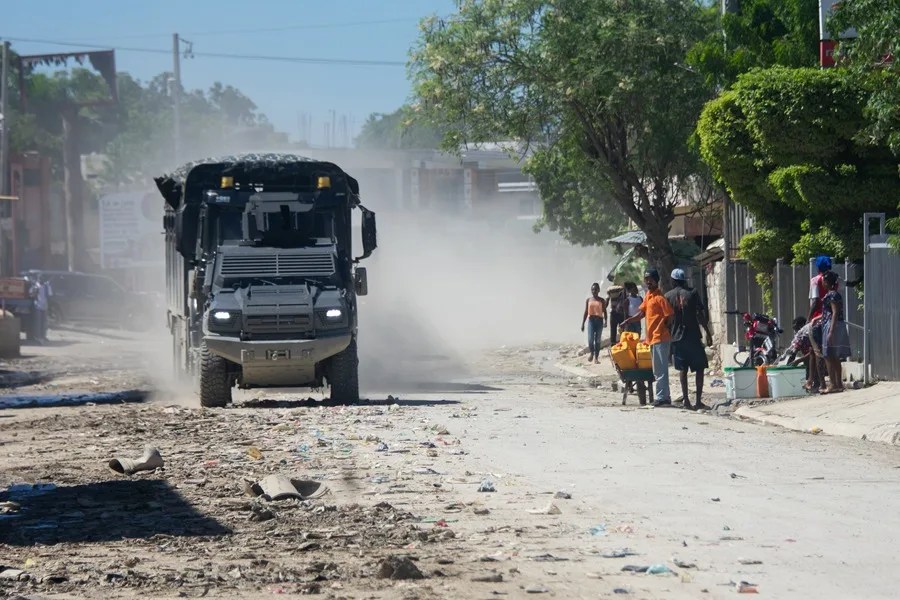
Hundreds of people bound for Carrefour spent part of Tuesday, November 10, waiting in the Champ de Mars, a square in downtown Port-au-Prince. Haitian police and soldiers had gone into Martissant, on the southern approach to the capital. Barricades in nearby Fontamara stopped traffic. While passengers waited for the road to clear, schools at the other end of their journey were sending children home, the Haitian daily Le Nouvelliste reported.
That day, Prime Minister Alix Didier Fils-Aimé thanked Salvadoran President Nayib Bukele for helping Haiti regain territory. He credited Haiti’s police and army, the multinational Gang Suppression Force and the Salvadoran troops. His statement left open which neighborhoods Haitian officers could now hold once their foreign partners moved on.
On March 18, Haitian officers in Martissant reached a police station they had abandoned in June 2021. A community representative told United Nations investigators the armored vehicles came and went. Three months later, drivers went on strike after gangs added a ninth toll on the Carrefour route. The official fare was 75 gourdes. Drivers still carrying passengers charged up to 250, more than three times the price the government had set.
In parts of Delmas and Tabarre, the multinational force kept up patrols. By August, residents were coming back, and small businesses were reopening. Those gains predate Bukele’s reinforcements. The prime minister offered no count of families able to return after the new troops arrived.
Four Families Still Waiting
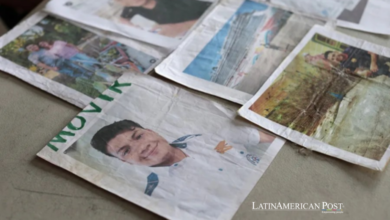
Edimar Rosales, 23, broke the news of the October 18 ambush to his family. Relatives in Ahuachapán, in western El Salvador, received audio and video messages from him as the attack unfolded; one of them told Univision. Rosales and three fellow aviation technicians disappeared in the Santo neighborhood of Croix-des-Bouquets. Their unit supported medical evacuations for the multinational force. In early November, Haitian police announced that searchers had found the men’s burned vehicle. All four remain missing.
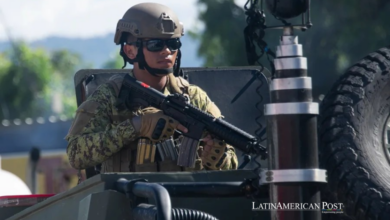
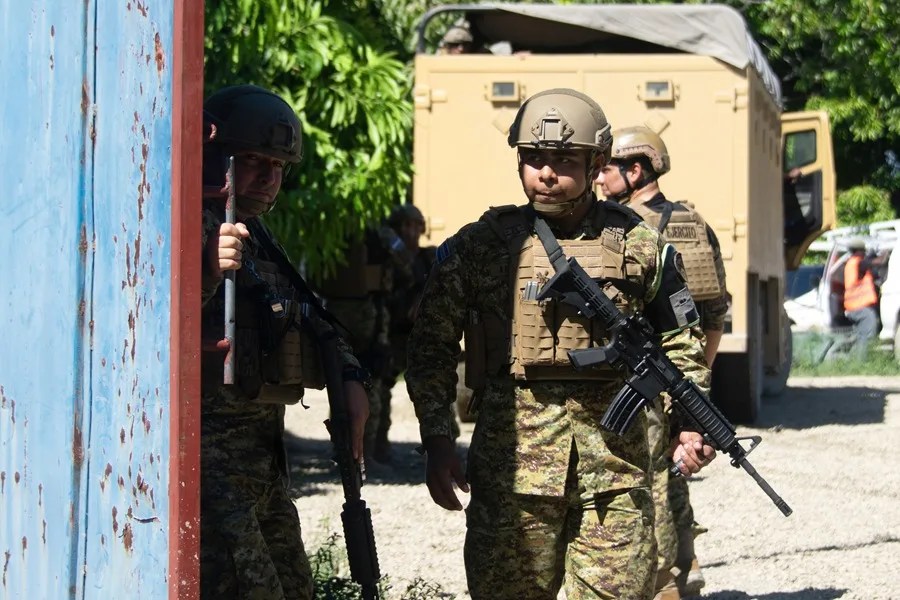
On October 19, the multinational force reported just over 2,000 personnel from six countries, barely a third of its authorized strength a year into its mandate. Within ten days of the ambush, Bukele alone had sent roughly that many soldiers. By early November, about 2,500 Salvadorans were in Haiti. Fils-Aimé could turn to one willing president while the international mission waited for other governments to honor their pledges.
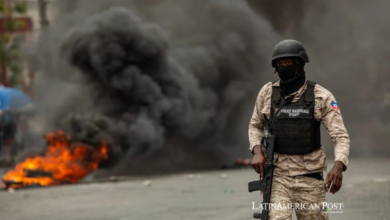
On Sunday, Haitian police and Salvadoran troops destroyed a house belonging to Wilson Joseph, leader of the 400 Mawozo gang. Joseph survived. Gang bosses in Haiti regularly move among several homes. For a merchant facing an extortion demand, what matters is whether Joseph’s men can still come around to collect. Neither government has reported that the attack interrupted that business.
At home, the fall in killings has made security Bukele’s strongest electoral asset. His government counted 82 homicides in 2025, down from 114 the year before. Rights groups have documented widespread arbitrary arrests under his state of emergency. With a presidential election due in February, Bukele has been sharing footage from Haiti in Spanish and Haitian Creole. Salvadorans have a financial stake, too. Vice President Félix Ulloa says the national budget is paying for the search. The soldiers have no date to come home.
Santo Domingo Backs Bukele
Brazilian generals commanded the military arm of the U.N. peacekeeping mission in Haiti from 2004 to 2017. Most of Bukele’s new arrivals operate outside the current U.N.-authorized force. Dominican President Luis Abinader says his government is supplying intelligence and logistical support. Abinader has asked the multinational force to coordinate with the Salvadorans. Haiti’s next-door neighbor wants a country that initially supplied medical evacuation crews to help set security policy on Hispaniola.
President Donald Trump backed Bukele’s intervention. Yet David Howell, Washington’s senior diplomat in Haiti, asked Fils-Aimé to halt Salvadoran operations until they coordinated with the multinational force, Axios reported. El Salvador replied that it had coordinated flights with Haiti and the international force. Fils-Aimé says Haiti is in command. Amnesty International has asked both governments to publish their agreement and explain where a Haitian injured by foreign troops can take a complaint. Ulloa told EFE that Fils-Aimé would visit El Salvador in mid-November to discuss the troops’ future.
Haiti’s gangs have patrons among the country’s political elite and get much of their weaponry from the United States. Salvadoran troops can help Haitian police get past a roadblock. Bringing the people who finance the gunmen to trial in Haiti takes prosecutors willing to pursue powerful defendants. Washington has a responsibility here, too. American investigators can pursue the suppliers before the guns leave the country.
In Kenscoff, a farming town above Port-au-Prince, an August massacre killed at least 47 people. At one September funeral, residents mourned two brothers and three of their cousins. “It will bring results,” Fils-Aimé said Tuesday, three weeks after the alliance. He said it twice. Survivors applauded. He distributed tools, fertilizer and seeds for leeks, carrots, peppers and cabbage. Come harvest, a grower will need a driver willing to take those cabbages down the mountain at a price that leaves something for the person who did the planting.