Truco: The Card Game That Rules Latin America’s Tables and What It Shares With Poker
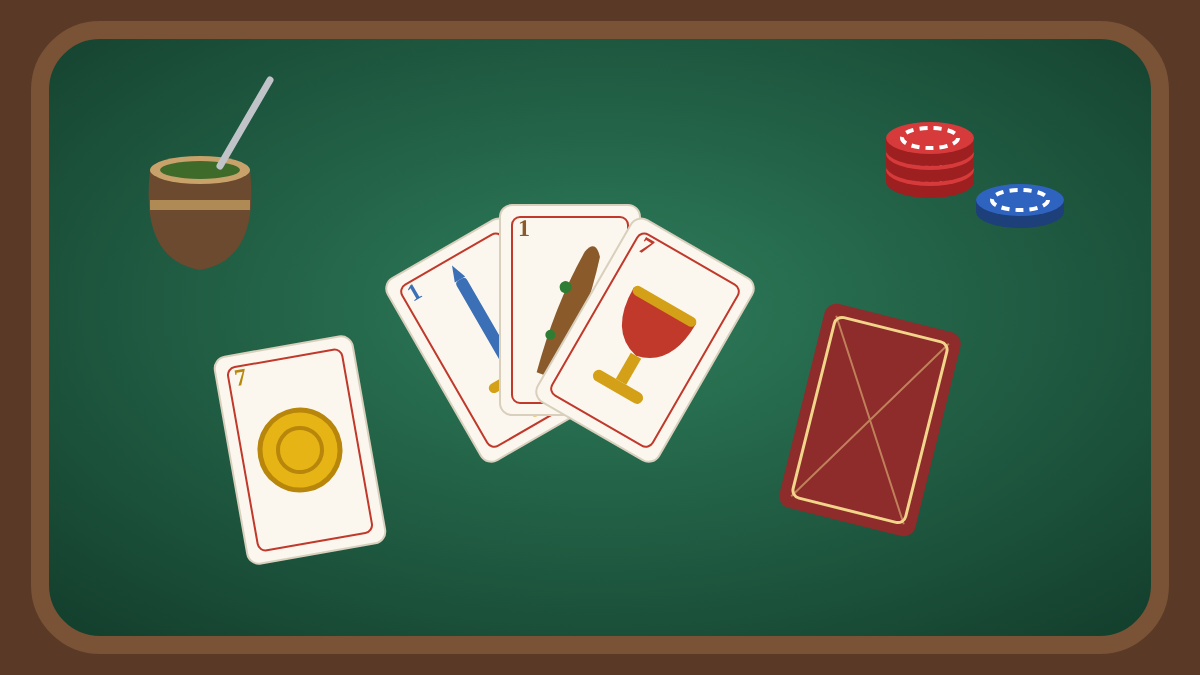
Cards hit the table. Someone raises an eyebrow. Another player confidently calls a bet despite holding what may be an awful hand. Across parts of Latin America, especially Argentina, Uruguay, Brazil, and neighboring countries, scenes like this are part of an enduring social tradition. The truco card game is not simply about having better cards. It rewards confidence, observation, timing, and the ability to convince opponents that you know more than you actually do.
That combination also explains why people familiar with poker quickly recognize something familiar in Truco. Anyone curious about online poker strategy and how competitive card play works in modern poker can find useful resources there, but long before online poker rooms became common, Latin American families and friends were already testing their nerves around Truco tables.
More Than a Card Game
Truco has deep roots in South American social life. It is particularly associated with Argentina and Uruguay, while Brazil has developed several popular versions of its own.
What makes the game memorable is not simply the cards players receive. It is everything happening around them.
A quiet player may suddenly become aggressive. Someone with a strong hand might pretend to be uncertain. Partners can communicate through gestures or expressions, while opponents watch closely for anything that reveals too much. That turns every round into a small social contest.
Unlike games where players mainly calculate probabilities and wait for favorable combinations, Truco encourages constant interaction. Players challenge one another, raise the value of a hand, reject bets, and sometimes create enough pressure to make an opponent surrender despite holding stronger cards.
Learning the rules is only the beginning. Learning how people actually play is the real challenge.
Why Truco Feels So Latin American
Calling any game representative of an entire region would be too simplistic. Latin America is far too diverse for that. Still, Truco fits naturally into the social traditions found across much of the continent.
It works almost anywhere. A deck of cards and a few people are enough. Games can start after lunch, during a family gathering, among university friends, at a neighborhood bar, or on a weekend trip. The attraction lies in the interaction.
A round may include teasing, dramatic declarations, mock outrage, jokes, and small psychological battles between people who may have played against each other hundreds of times. Experienced players know each other’s habits. They remember who tends to bluff, who becomes suspicious too easily, and who suddenly goes quiet when holding strong cards.
Those relationships become part of the strategy.
Bluffing Changes Everything
This is where the connection with poker becomes especially clear.
Poker is famous for giving players the chance to win without necessarily holding the strongest cards. A convincing bet can force an opponent to fold. Truco works differently, but deception plays a similarly important role.
A player may challenge an opponent aggressively despite having little reason for confidence. The opponent then has to decide whether that challenge reflects genuine strength or pure theater.
That decision rarely depends on cards alone.
How quickly was the challenge made? Has this player been bluffing all evening? Did their tone suddenly change? Are they trying too hard to appear relaxed?
Every small clue can influence the response.
The truco card game creates a fascinating mixture of information and uncertainty. Players know their own cards and can observe what happens at the table, but everything else must be interpreted. Poker players will recognize that tension immediately.
Reading People Matters as Much as Reading Cards
The phrase “poker face” became famous because revealing emotion can give opponents useful information. Truco sometimes takes the opposite approach.
Instead of hiding everything, players may actively create misleading signals. They talk, provoke, hesitate, joke, or display exaggerated confidence. The goal is not always to become unreadable. Sometimes it is to make an opponent read you incorrectly.
That distinction makes the game especially entertaining.
Two experienced players can turn a simple hand into a performance. One tries to establish a story about what their cards might be. The other tries to decide whether that story deserves to be believed. The same psychological principle sits at the heart of poker. Cards determine what is possible, but people determine how those possibilities are presented.
Truco Has Its Own Language
Another reason the game becomes culturally distinctive is its vocabulary.
Terms such as “envido,” “truco,” “retruco,” and “quiero” can transform an ordinary round into an escalating confrontation. Their exact role depends on the version being played, but each declaration carries consequences. The language gives the game rhythm.
Someone calls. Someone responds. The stakes rise. Suddenly, a routine hand becomes important.
Experienced players do not simply understand what the words mean. They understand when to use them. Timing can change how a declaration is interpreted. An immediate challenge may be communicating confidence. A pause may suggest uncertainty, or perhaps deliberately imitate it.
One Game, Many Versions
There is no single Truco experience shared identically across Latin America.
Argentine and Uruguayan versions differ in important ways, while Brazil has traditions such as Truco Paulista and Truco Mineiro. Card rankings, scoring systems, special combinations, and local customs can all change depending on where the game is played.
Those variations are part of its appeal.
Traditional games often survive because communities adapt them. Instead of being frozen into a single universal format, Truco has absorbed local habits and developed distinct regional identities.
Yet underneath those variations, several familiar elements remain: risk, challenges, incomplete information, social interaction, and the possibility of defeating stronger cards through better decisions.
What Truco and Poker Really Share
At first glance, comparing Truco to poker seems obvious, as both involve cards and strategic betting decisions. The deeper similarity, however, is psychological.
Both games repeatedly ask players to make decisions without complete information.
You know what you hold. You can observe what your opponents do. Everything else has to be estimated.
Patience matters because constant aggression makes a player predictable. Observation matters because previous behavior can reveal future tendencies. Risk management matters because not every battle needs to be fought.
Most importantly, successful players understand that the strength of a hand and the way that hand is represented are two different things.
A brilliant bluff works because another person believes it.
Why Truco Still Matters
Entertainment has changed dramatically, but traditional card games continue to survive.
Technology can reproduce rules. It is much harder to reproduce the atmosphere around a real table.
Truco gives people a reason to interact directly. Players look at one another, interrupt each other, laugh, complain, remember old victories, and create new rivalries. The entertainment comes as much from the people as from the cards.
That is why the truco card game remains relevant. It is not simply a traditional pastime. It is a social ritual built around strategy, personality, and the thrill of not knowing whether the person sitting across from you is telling the truth.