Why Brazil Fined Meta When Lula Drew More Instagram Views Than Bolsonaro

Lula won reelection in Brazil. His campaign still had grounds to challenge how Meta distributed its posts, a case with consequences across Latin America for candidates who depend on a private company to get a message onto a voter’s phone.
A Complaint Before the Polls Opened
Days before the October 25 presidential runoff, Luiz Inácio Lula da Silva’s campaign told Brazil’s Superior Electoral Court that Meta had limited the reach of its posts. For those trying to reelect him, the calendar gave the complaint urgency. Restore a post’s circulation a week later and many of the people it was meant to reach would already have voted.
On Tuesday, the court fined Meta 7.5 million reais, about $1.3 million, for failing to comply with orders requiring equal treatment of Lula and his challenger, Senator Flávio Bolsonaro. The judges found the evidence insufficient to conclude that the company had deliberately favored Bolsonaro. They held Meta responsible for how it treated the campaigns once those orders took effect.
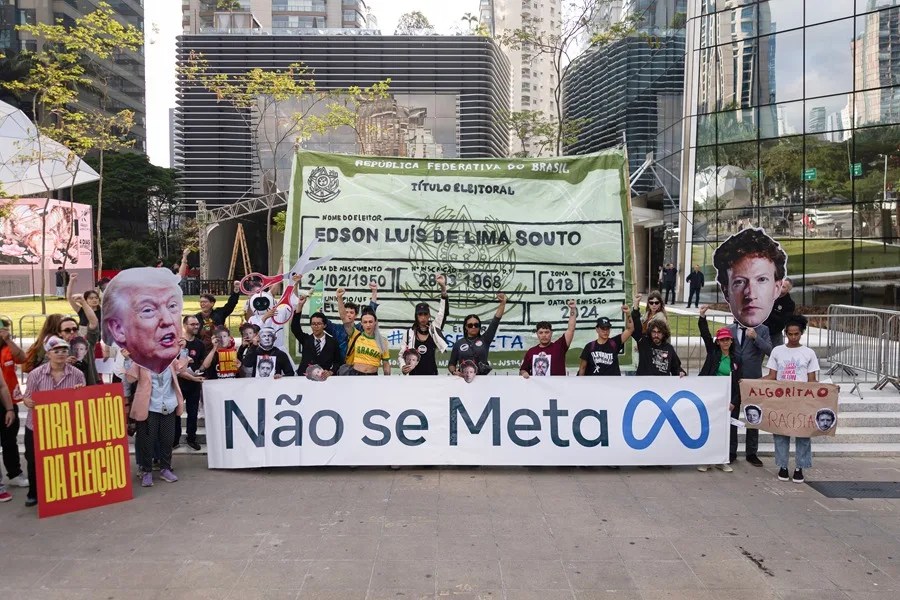
In his victory speech, as EFE reported, Lula accused social platforms of “interfering” in the election and called for tighter regulation. Meta denied trying to influence the result. It pointed to how often the campaigns posted and the different ways they tried to attract an audience. In court, the company offered its tally of the views each campaign’s Instagram posts had accumulated.

What Counts as a View
By Meta’s accounting, Lula’s Instagram content received 1.5 times as many views as Bolsonaro’s. For every 100 views of the senator’s posts, the president’s drew 150. The comparison describes a real advantage for Lula on a measure both campaigns care about. It also leaves out a number essential to understanding where that advantage came from. How many posts did each team publish during the period Meta examined?
Suppose one campaign posted twice as often as its rival and collected 50% more views overall. Its average post would have received 25% fewer views than its rival’s. The actual posting frequencies would determine whether that example resembles the Brazilian race. Averages would still leave room for a particular post to lose distribution in the final days while earlier, popular videos kept the campaign ahead overall.
There is also a person behind the number, sometimes the same person several times. Someone might replay a candidate’s remarks to catch a phrase, then show the video to a relative over dinner. An opponent might watch the same clip to prepare a rebuttal. Views tell a campaign that material circulated. A count of distinct viewers, the dates they saw it, and the decisions affecting which posts could reach them would answer different questions.
Meta also owns Facebook and WhatsApp. An Instagram recommendation can put a speech in front of a voter who has never followed the speaker. A cousin forwarding the same clip to a family WhatsApp group chooses her own. The distinction gives electoral authorities across Latin America a place to draw the line. They can ask a company to explain its decisions about a campaign’s public account while preserving the privacy of families discussing the candidates.
From Airtime to the Feed
Brazil and Mexico have long experience allocating campaign airtime on radio and television. A party disputing a broadcast can point to a scheduled slot, the seconds it was allotted, and a recording of what aired. On a phone, two neighbors can open the same app at the same hour and see different candidates. Neither voter can look at a single screen and tell whether a campaign received the treatment an electoral authority ordered.
That puts smaller parties at a particular disadvantage. A presidential campaign can ask analysts to compare posting histories and lawyers to take a complaint to court. A municipal candidate who runs an account between neighborhood meetings may have little more than a sudden drop in views to go on. A dated explanation from the platform would give either campaign something specific to challenge while there was still time to reach voters.
There is money at stake in those decisions. Where election rules permit paid political ads, a campaign can buy its way back onto people’s screens if its ordinary posts lose circulation. The platform then collects an advertising fee. A tally that groups paid and unpaid views together could make a campaign look successful even as its treasurer had to find the cash to reach voters who previously saw its posts for free.
In Paraguay, a candidate addressing voters in Guaraní could lose much of the remaining campaign simply trying to get a disputed phrase understood by someone reviewing it. Across Latin America, an appeal procedure has practical value when a candidate can use it in the campaign’s language and get an answer before polling day.
Lula now has two roles in the dispute. As a candidate, he asked judges to protect his campaign. As president, he can propose the rules under which his opponents will campaign. Requiring platforms to document decisions about political posts would give a challenger evidence to take to court. Giving a government the power to set audience targets would let it limit how far a rival’s message travels. The next campaign asking a Brazilian judge for equal treatment could well be running against the party that proposed the rules.