El Salvador’s Haiti Military Deployment: Missing Technicians, Expanding Missions, and Security Challenges
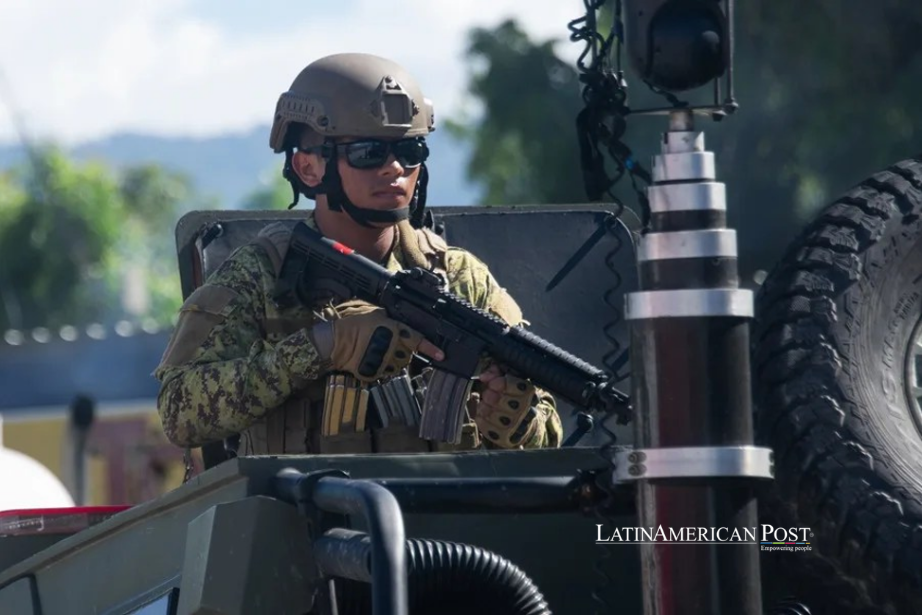
Four missing Salvadoran aviation technicians have drawn thousands of troops into Haiti’s gang war. President Nayib Bukele promises rescue and liberation, but unclear command structures, wounded civilians, and blocked roads expose the distance between deploying soldiers and rebuilding public security.
The Search Outgrows the Mission
The vehicle was found. The men were not.
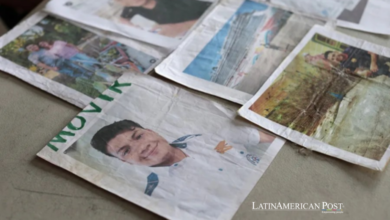
Haitian police announced on November 3 that a joint operation had recovered the burned vehicle used by four Salvadoran aviation technicians ambushed on October 18. It was in Santo, near Croix-des-Bouquets, outside Port-au-Prince. More than two weeks after their disappearance, the wreckage supplied evidence of the attack without resolving their fate.
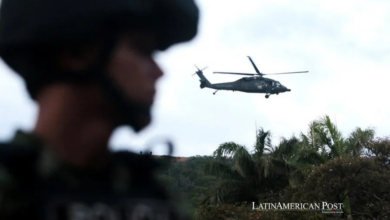
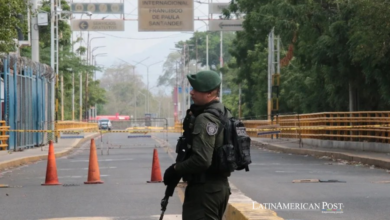
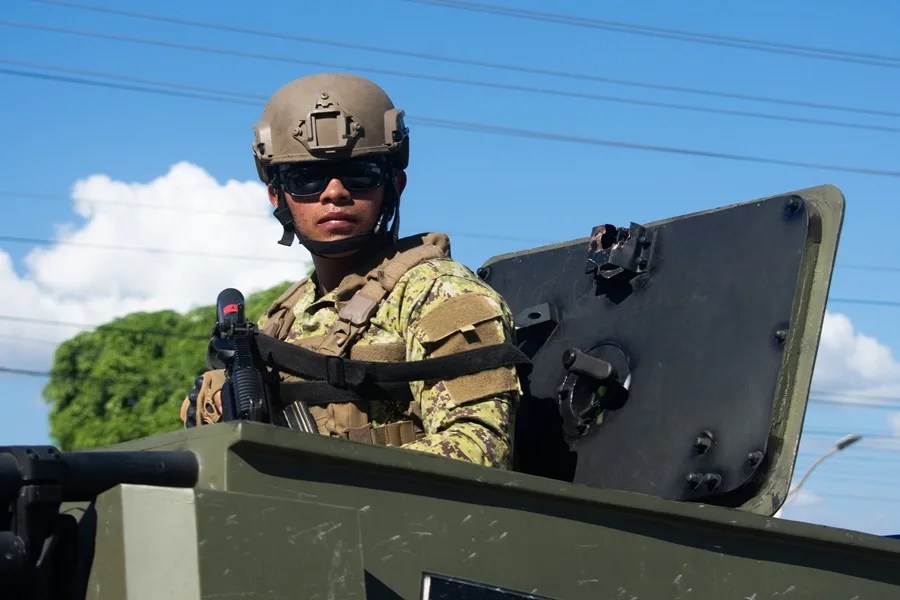
For Bukele, the response has become much larger than a search. El Salvador has deployed a force reported at more than 2,000 soldiers, accompanied by helicopters and armored vehicles. Videos posted by the president show patrols, armed operations, and residents greeting troops.
A welcome captured on camera, however, cannot tell anyone whether a neighborhood will remain safe after the convoy leaves.
The Salvadorans were originally there to help keep an international mission functioning. A 2024 authorization provided for medical evacuation support; personnel arriving in 2025 brought aviation and casualty evacuation capabilities to the Multinational Security Support mission, the predecessor of today’s Gang Suppression Force, or GSF.
The four missing men were aviation technicians. Bukele says they were returning from buying food when they were attacked. Their support duties help explain their presence, but publicly available accounts have not resolved why they entered that area without adequate protection.
The mission had already been broadening. Salvadoran legislation approved on September 29 authorized personnel, aircraft, and equipment based on operational needs. The ambush accelerated the expansion dramatically.
It also exposed an accountability problem. UN spokesman Stéphane Dujarric said approximately 200 Salvadorans operated within the GSF framework. Most of the much larger Salvadoran deployment falls outside it.
That distinction is easy to lose behind the phrase “UN-backed.” The GSF itself is a Security Council-authorized multinational force with its own command, not a UN peacekeeping operation. Working alongside it does not automatically place another contingent under its oversight.
Haitian Prime Minister Alix Didier Fils-Aimé insists his government directs the international effort. “The international force is not here to replace the state,” he said, according to The Associated Press.
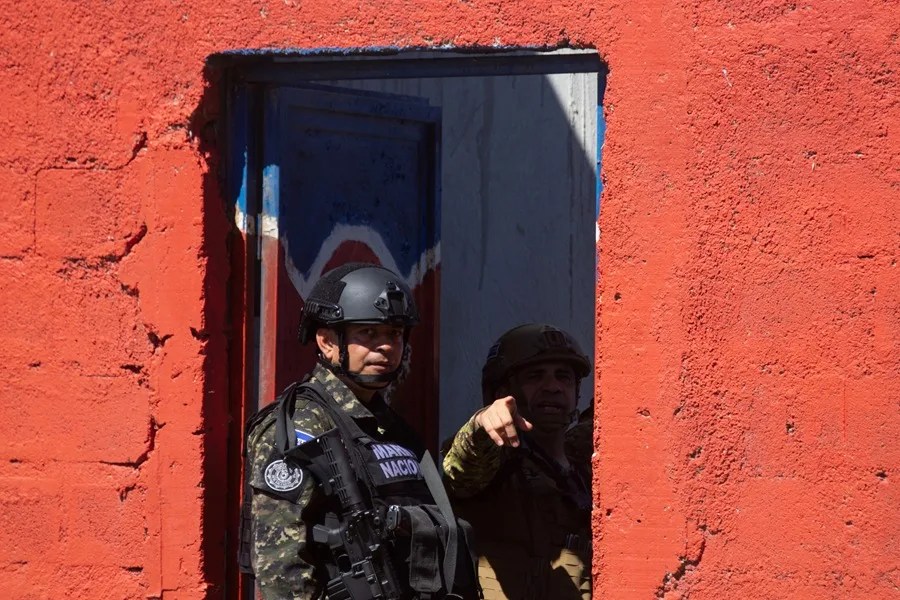
Salvadoran representatives describe coordination but have not publicly clarified the reinforcements’ full chain of command. Consent to assistance and authority over a particular raid are different questions. Residents need to know who can stop an operation, investigate a shooting and answer for a wrongful detention.
Bukele’s Formula Meets Haiti’s History
Bukele brings a reputation built on a powerful domestic result. Salvadoran authorities recorded 82 homicides in 2025, a rate of 1.3 per 100,000 people. Human Rights Watch acknowledges a marked reduction in gang violence while documenting arbitrary detention, torture, and violations of due process. Fiscalía
Both realities matter. Salvadorans who gained freedom from extortion have reasons to value security. Families seeking detained relatives have reasons to demand evidence and accountability. Exporting the presidential image without those competing experiences would turn a difficult policy record into an advertisement.
Haiti presents a different institutional problem. Bukele commands his country’s security apparatus and enjoys overwhelming political control. In Haiti, foreign troops enter a fragmented system where a transitional government must coordinate domestic forces and international contingents while trying to recover authority.
The armed groups also possess economic foundations that a patrol cannot simply remove.
Around Croix-des-Bouquets, the threat includes Chèn Méchan and powerful members of the Viv Ansanm coalition. Wilson Joseph, known as Lanmò Sanjou, leads 400 Mawozo. Vitel’Homme Innocent heads Kraze Barye. Their presence in the surrounding area does not establish who holds the missing Salvadorans.
The geography helps explain their strength. Routes eastward connect the capital’s commercial life to the Dominican border. Controlling passage allows gangs to extract payments and influence the movement of goods, weapons, and people.
UN experts describe 400 Mawozo as a major illicit arms importer, supplied through networks reaching the United States and Dominican Republic. They also document diverted ammunition from official stockpiles. A strategy concentrated on fighters must therefore confront the suppliers and financial relationships that replenish them.
Joseph has asked the UN for dialogue, telling AP he fears civilian deaths. Such an appeal neither erases his gang’s abuses nor verifies what happened to the technicians. It does show how an armed leader can seek political standing while retaining coercive power.
Bukele, meanwhile, has invoked Jean-Jacques Dessalines, Haiti’s independence leader, and promised to confront the country’s “traitors.” The language places a foreign president inside a struggle over who represents Haitian freedom.
That is charged ground. The United States occupied Haiti from 1915 to 1934. Decades later, the UN apologized for its role in the cholera catastrophe that followed the 2010 earthquake. These histories give demands for sovereign control and accountability concrete foundations.
Haitians can want protection from gangs and still insist on knowing whose orders foreign soldiers follow.
Security Must Reach Beyond the Convoy
At hospitals in Tabarre and Cité Soleil, the consequences already have names and wounds, even when military statements offer only operations and objectives.
Doctors Without Borders reported treating 30 people injured by gunfire or drone explosions between October 18 and 26, including women and children. Its statement did not identify who caused each injury. Those admissions cannot be treated as a comprehensive casualty count or attributed wholesale to Salvadoran forces.
Some of the organization’s local staff had fled their own homes and taken shelter in its accommodation. Those helping run the hospitals were themselves displaced, a reminder that keeping a hospital open also depends on keeping its workers and their families safe.
They reveal another measure of insecurity: reaching treatment.
“Some patients with gunshot wounds took several hours to reach our hospitals,” mission chief Davina Hayles said. Blocked roads and bridges delayed care. Fighting also forced the organization to suspend mobile clinics and distributions of treated water.
An operation can advance militarily while making survival harder for residents caught along its route. Protecting access to hospitals is therefore part of security itself.
Food follows the same roads. An October assessment estimated that more than 5.94 million Haitians, 53% of the population analyzed, faced crisis-level acute food insecurity or worse during September 2026 through February 2027. Within that total, 1.8 million faced emergency conditions.
This is not simply a shortage of supplies. Violence disrupts farming and trade, displaces workers and pushes prices beyond household budgets. Opening a road briefly helps little if traders cannot rely on using it tomorrow.
The political timetable offers another test. Haiti’s electoral authorities postponed the first round of national voting to July 18, 2027, with a second round scheduled for October 4. Restoring elections requires routes that voters, candidates and election workers can use without armed permission.
Rescuing the four Salvadorans remains an urgent, concrete objective. Rebuilding Haitian security is a longer undertaking that requires reliable policing, courts, civilian protection, and control of weapons supplies.
The vehicle has been recovered; the four men remain missing. Beyond that urgent search, this intervention’s success depends on whether Haitians gain something durable: the ability to leave home, buy food, and return safely without asking permission from gunmen.