Seven Convicted for the Valparaíso Wildfire That Began as a Bid for Overtime
A Chilean court convicted seven people over the 2024 wildfire that killed 138 in the Valparaíso region. The judges established why the fires were set. Bereaved families are still asking whether the local authorities could have helped more people escape.
A Few Extra Pesos
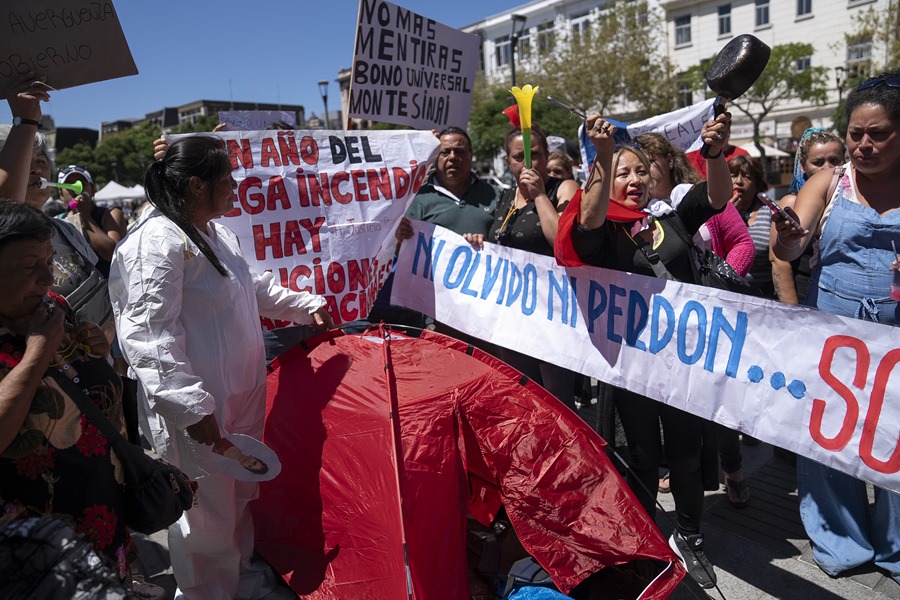
Francis Guajardo lost her father in the February 2024 wildfire. On Tuesday, after a court in Valparaíso found seven people guilty, she spoke about what the men had hoped to earn. “For a few extra pesos, for a few hours of overtime,” she said, “they took 138 people with them.” She wanted the investigation to continue. So did Mirna Maldonado, who lost both her parents. Maldonado called for investigators to examine the conduct of emergency officials and the Viña del Mar municipality.
After more than 45 days of hearings, the judges convicted seven of the nine defendants of belonging to a criminal association and setting fires that caused deaths. They acquitted Claudio Gamboa and Matías Cordero, finding the evidence too weak to establish their participation beyond a reasonable doubt. The court will announce the individual sentences on December 18. Felipe Olea, a lawyer for families of more than 65 of the dead, welcomed the convictions. His clients, he said, still wanted an accounting from the authorities who had a duty to protect their relatives.
Most of those convicted had served in organizations Chileans depend on when a hillside catches fire. They included forestry crew members and volunteer firefighters, and some had worked for the national disaster response service, Senapred. Judge Claudio Martínez described an arrangement in which the group would create emergencies it expected crews could contain. The resulting calls would generate paid work and overtime. The calculation depended on the men being right about how much fire their colleagues could handle.
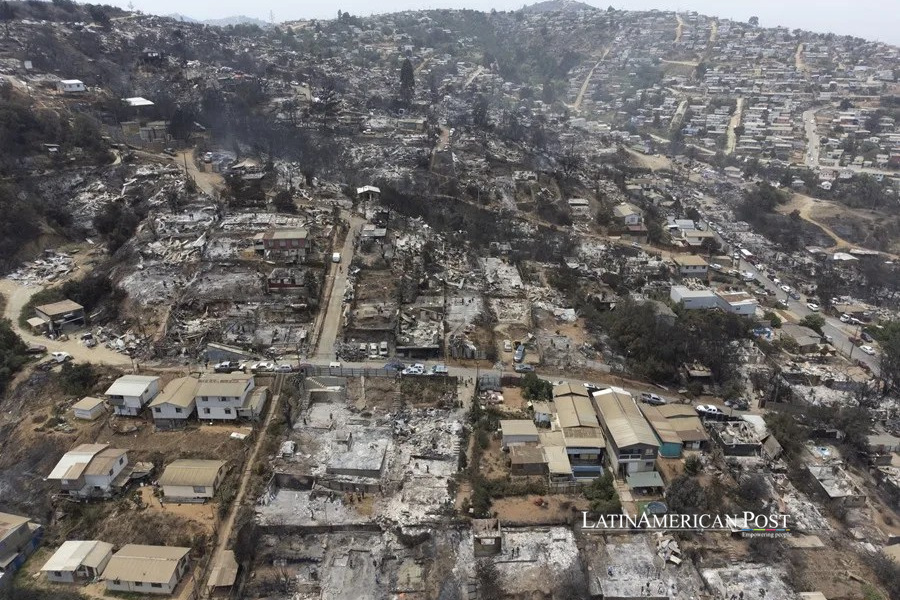
On February 2, the group set four fires in the countryside between Valparaíso and Casablanca—two spread. The blaze reached Viña del Mar, Quilpué, and Villa Alemana, burning some 9,200 hectares (nearly 23,000 acres) and affecting more than 10,000 buildings. Leaving court, prosecutor Osvaldo Ossandón said the judges had established that “a criminal association committed multiple fires.” Investigators had already spent years looking into suspicious fires near the Lago Peñuelas National Reserve. This time they could compare a cellphone’s location data with security camera footage that recorded the journey.
Where Chile’s Fire Brigades Began
In December 1850, a fire broke out in a tobacco shop on Cruz de Reyes Street in Valparaíso and spread to neighboring houses. Residents organized, and the following June, four companies began operating as Chile’s first fire department. June 30, its founding date, is still National Firefighter Day. The volunteers who sleep at stations so they can turn out at night belong to that tradition. Chile’s National Forestry Corporation, known as CONAF, employs its own crews. A forestry worker can earn overtime for a long night on a fire line. A volunteer with the local fire company can spend the same night there without earning a peso.
CONAF estimates that people cause 99.7 percent of Chile’s wildfires, a figure that includes carelessness as well as deliberate acts. It tells an investigator little about the intent of the person who started any one blaze. It also counts each fire once, whether crews put it out in a field or it reaches a neighborhood. In the 2024 disaster, Chile’s social development ministry registered 8,542 affected households comprising 22,066 people. Nine out of ten homes in its survey were destroyed. For most families in that count, going home meant first finding somewhere else to live while they rebuilt.
The Hours Before the Flames
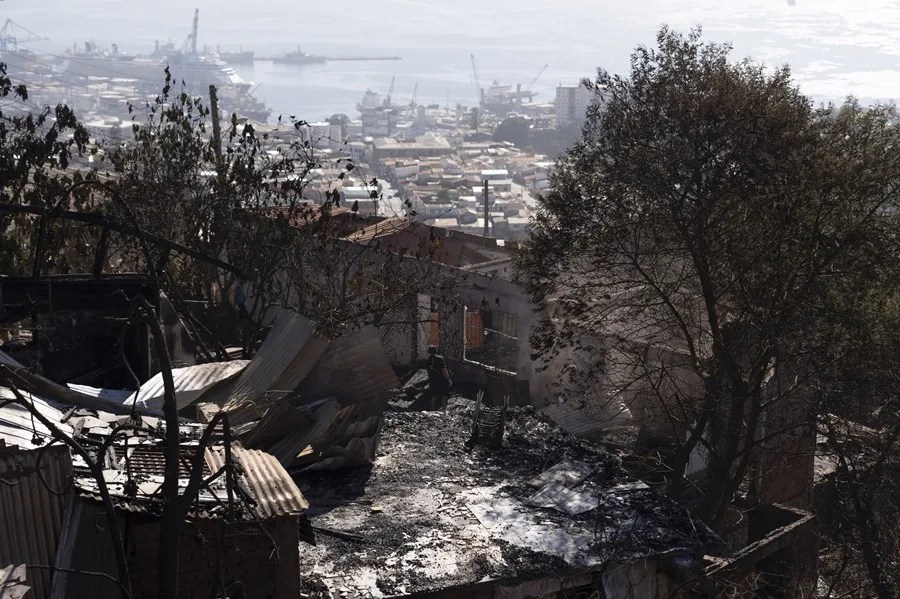
In Viña del Mar, the layout of a street mattered to people trying to leave. Researchers who surveyed the damage found that irregular roads hampered evacuation and that power and water networks failed. Some neighborhoods lacked clear routes for residents to get out and firefighters to get in. At the National Botanical Garden, the director ordered an evacuation around three that afternoon. At four, according to a staff member, the fire was still some distance off but closing fast. By six, the garden was burning.
Patricia Araya had worked in the garden’s nursery for four decades. Her mother had worked there before her. Araya lived on the grounds and was looking after two grandchildren during summer vacation. One was nine, the other a year old. Araya died there with the children and her mother, who was 92 and had difficulty walking.
As another southern summer approaches, El Niño presents a complication familiar to central Chile. Wet months encourage grass and brush to grow. Once the vegetation dries, crews have more fuel to contend with. Chile’s protection plan for the season includes regional evacuation drills. For a neighborhood on a hillside, a drill offers a chance to learn how long it takes someone who needs help walking to reach a safe place, while there is still time to change the route.
Araya’s colleagues knew her as La Pati. Among the seedlings she tended were trees grown from seeds that came from Japan. Their parent trees had survived the atomic bombing of Hiroshima. In October 2022, the garden planted 22 of the young trees. After the wildfire, director Alejandro Peirano told EFE that the flames had missed their patch of ground. The heat had scorched their leaves, but he hoped they would sprout again. Araya had spent months getting them big enough to plant.