At a Guinea Pig Wedding in Bolivia, Genetics Makes the Guest List
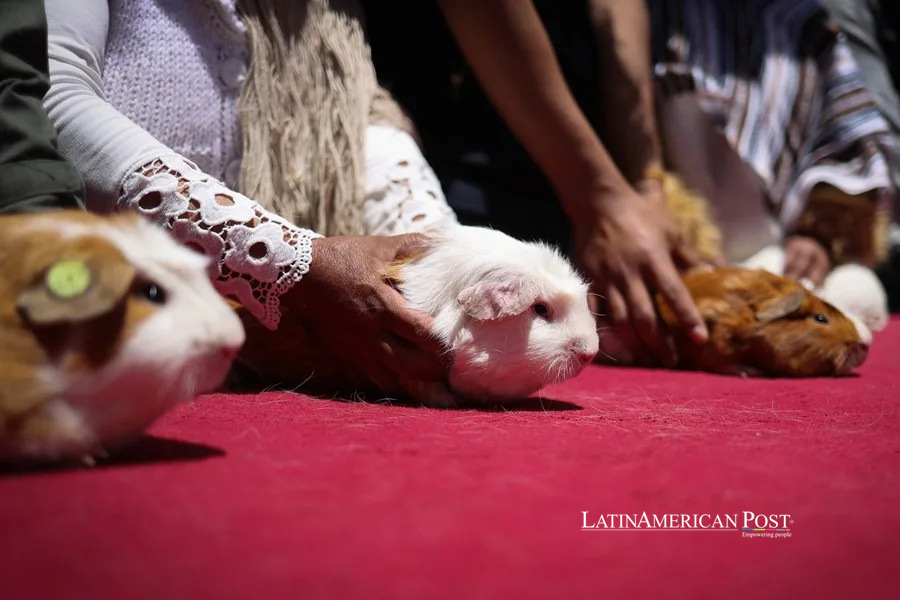
In El Alto, a guinea pig in a miner’s helmet drew applause. Bolivia’s second Gran Festival del Cuy brought breeders to a public university to consider what 14 grams of daily growth might mean for families raising animals for market.
A Bowler Hat in Miniature
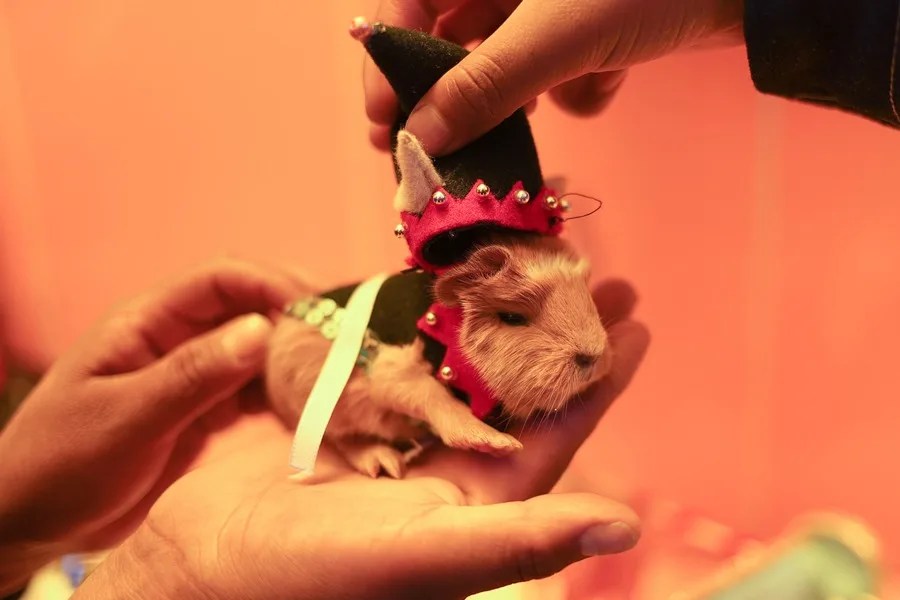
Even the skirt had the right hem. A guinea pig went to Friday’s parade at the Public University of El Alto dressed as a chola, complete with a bowler hat and a shawl. Around its middle was a pollera, the full skirt with rows of tucks that many Aymara women wear in El Alto and neighboring La Paz. Somebody else had brought a guinea pig dressed as a pharaoh. A woman in her everyday clothes got equal billing with a king.
The bowler originated in Britain. The pollera has roots in Spain. Generations of Aymara women decided how the hat should sit and how the skirt should fall, and made the combination so much their own that a few inches of fabric could identify the wearer. That distinction came at a price. A woman could build a thriving business in a La Paz market and still hear the word chola from a customer who meant it as an insult.
The little miner and the dancer in the bright shirt and cap of the llamerada also shared a history. The dance honors the herders who guided llama caravans across the Andes. Their animals carried provisions to Potosí, where Spanish authorities drafted Indigenous men to work the silver mines beginning in the sixteenth century. Mining families later helped remake Bolivia. Organized tin miners fought in the 1952 revolution, which brought the largest mines under public ownership. Both costumes drew applause.
El Alto grew as families came in from the mines and the farming villages of the altiplano. Today it is Bolivia’s second most populous city, on a plateau more than 13,450 feet above sea level. Elías Quispe, who teaches animal science at the university, told EFE that “high demand” from residents had brought the festival back. He had seen more people take up breeding in western Bolivia, both in the countryside and in El Alto itself.
What Half an Ounce Is Worth
Guinea pigs were domesticated in the Andes long before the rise of the Inca Empire. A household with little grazing land can keep a few near the kitchen and feed them greens. When guests come, there is meat for a special meal. When money runs short, the family can sell one animal and still have breeding stock. A farmer in highland Peru or Ecuador would recognize the arrangement. The trade in El Alto has its roots in a way of feeding a family that predates all three republics.
Quispe attributed some of the recent interest to meat he described as high in protein and low in cholesterol. He told EFE that university researchers studying guinea pig genetics were aiming for “14 grams of live weight per day” in animals raised for meat. If that pace holds, it comes to 98 grams in a week, about three and a half ounces. For someone selling animals at a given weight, getting there sooner could mean fewer mornings putting out feed before any money comes in.
A scale tells only part of that story. Two animals can gain the same weight and run up different feed bills. A larger litter, another goal of the breeding work, gives a household more mouths to feed before it gives anyone more meat to sell. Quispe explained to EFE that inherited traits depend on the environment to show themselves. The producers put that in terms a visitor could use at home. Give the animals room and light, they advised, and keep the enclosure cool and clean.
Companies took part, and professionals came from other universities and institutes to learn about the animals, Quispe said. A visitor looking for the latest work in livestock genetics could also get advice from someone heading home to a penful of cuyes.
A Skewer Before the Wedding
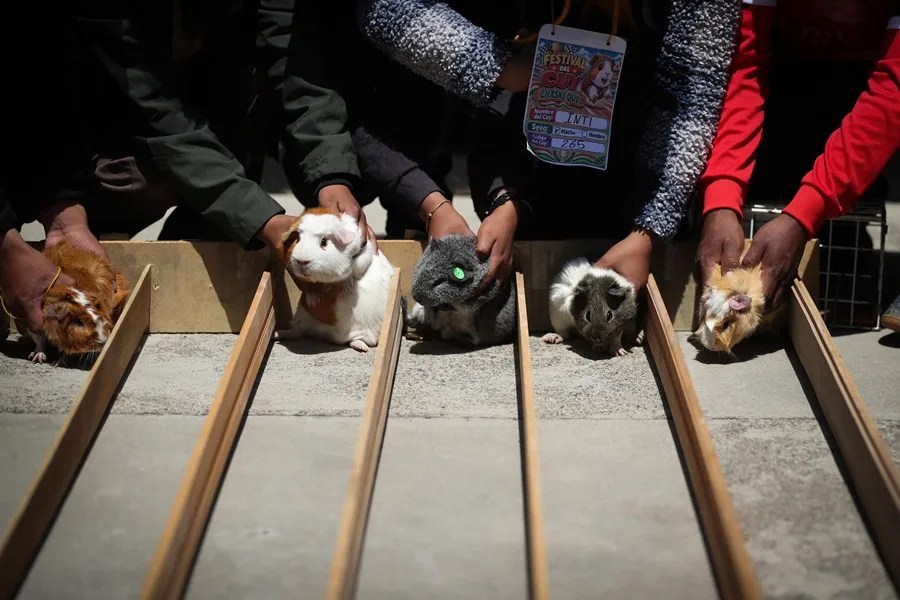
At the Miss and Mister Cuy competition, visitors could see how the hair on one animal lay smooth against its body while on another it grew outward in whorls called rosettes. Weight and speed got contests of their own. Quispe even counted a boxing match among the attractions. The race alone took some organizing. In a photograph by EFE’s Luis Gandarillas, handlers are busy lining up the competitors before anyone can find out how fast a guinea pig runs.
In the food area, cooks offered cuy in flour batter and on skewers. They also made burgers, a sensible proposition in a city the size of El Alto. A customer can order one for lunch without having grown up eating guinea pig or knowing how to prepare a whole animal. EFE reported that the dishes drew curious visitors. Curiosity alone is reason enough to try a skewer once. For a family considering a bigger pen, the interesting question is whether a cook will need another delivery the week after the visitors have gone home.
Quispe told EFE that the wedding was the event people most wanted to see, so the organizers saved it for last. The university plans to bring the festival back next year with more research to share. In the high Andes, families have long served cuy to honor guests at a wedding feast. On Friday in El Alto, two of the guinea pigs had a prior engagement.