Brazil Needs Two Kinds of Nurseries to Save Spix’s Macaws
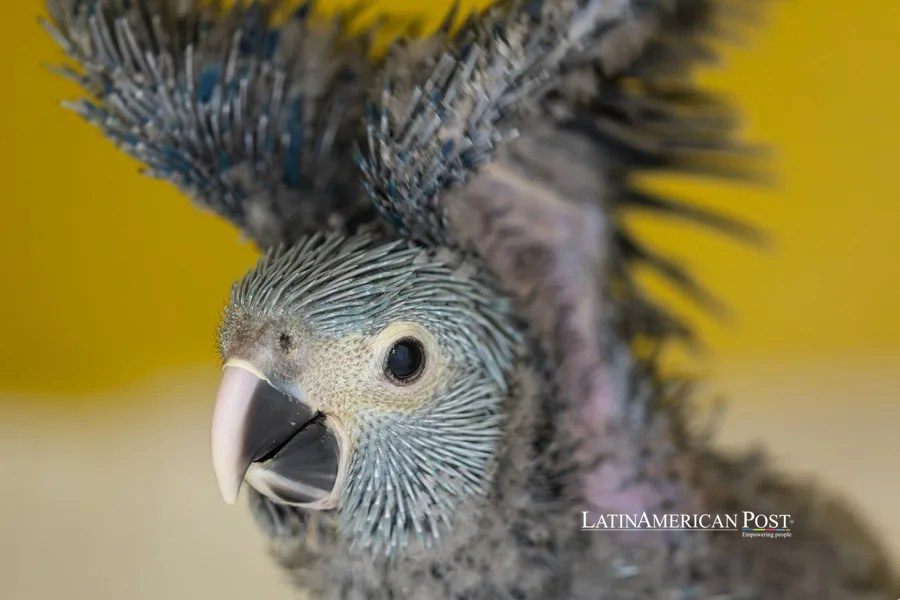
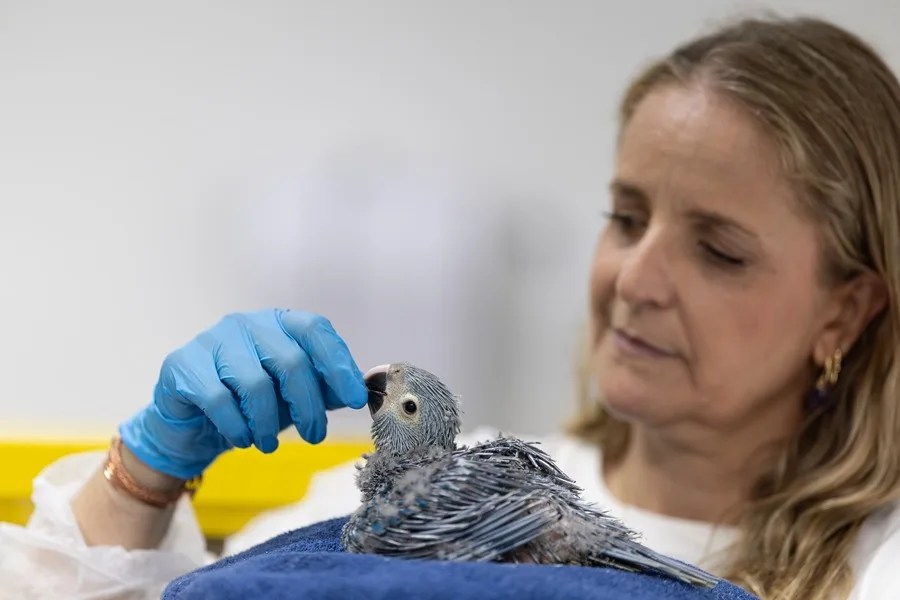
Hope is the first Spix’s macaw to hatch in a Brazilian zoo. Biologists feed her four times a day in São Paulo. In Bahia, families grow the native trees her descendants may one day need to raise chicks without keepers.
Thirty-Eight Eggs and No Chicks
Fernanda Vaz Guida waited 28 days for a bird that weighed less than half an ounce. When the time came, the chick was turned the wrong way inside the egg. Guida, who heads the bird department at the São Paulo Zoo, helped her out. A month later, on Tuesday, the little female wriggled in a chamber kept near 95 degrees Fahrenheit. The first blue was coming into her feathers.
They named her Hope. She hatched on October 18, the first recorded birth of a Spix’s macaw in a Brazilian zoo. It took Guida’s team two years to see the first pairs form. The adults began touching and visiting the nest. In 2025, two pairs laid 38 eggs between them. Guida waited out a whole breeding season without a single chick.
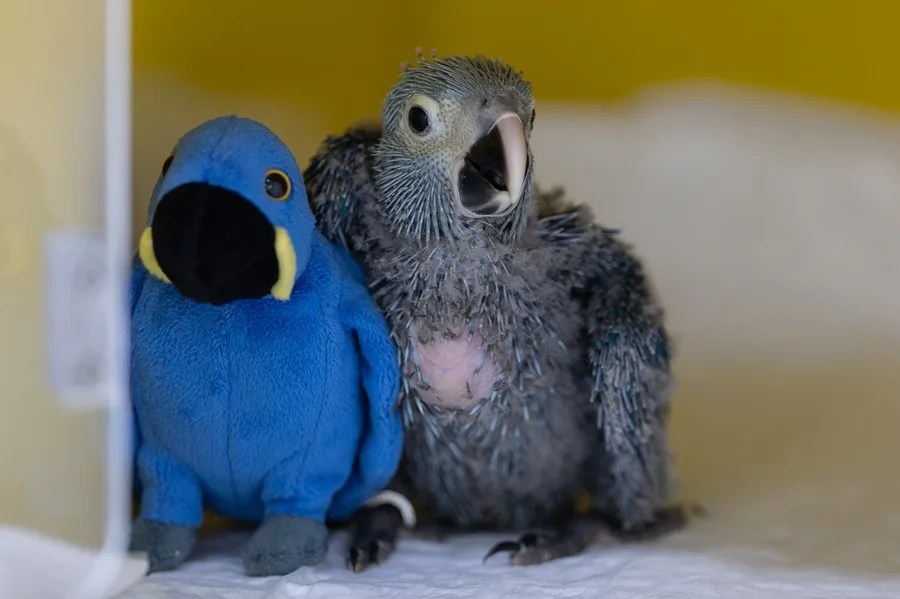
The zoo had agreed to temporarily look after 27 macaws from a breeding facility in Minas Gerais. They arrived in 2023. The following May, São Paulo opened a conservation center for them with room for 44 birds, at a cost of about 5 million reais. With Hope, the zoo now cares for 28 of the roughly 330 Spix’s macaws left in the world. Around one in twelve lives here. On paper, another 16 would fit. The biologists run up against a limit that has little to do with floor space.
Many of the surviving birds are related. A male and female who look promising in the family records still have to take to each other. And a chick inherits only what her parents can pass on. Hope gives the next generation another possible mother. She cannot bring back a branch of the family that died out before she hatched. Guida’s team would like to introduce her to another young macaw and see what the two make of each other.
The Forest Behind the Film
Moviegoers know the little blue macaw from Rio, where the animated bird Blu had his adventures. The real bird comes from the dry interior of Bahia. Near the town of Curaçá, caraibeira trees grow along streams that run only part of the year. Old trunks provide hollows big enough for a nest. Years of cutting woodland and trapping macaws for sale helped empty those trees. The last known bird of the original wild population disappeared in 2000.
Brazil has already tried opening the aviary door. In 2022, conservationists released 20 macaws in Curaçá. The following year, chicks hatched in the wild. One died in the nest box. The other fledged and died a few days later. A further setback followed when officials detected a virus among the reintroduced birds. They ordered the birds brought back into care and suspended further releases. In Bahia, people had already seen something worth trying for again. A pair had chosen a nest and raised a chick that flew.
My pick for Brazil’s next conservation investment is a standing order for native trees from the Curaçá families. A project run by the Federal University of the São Francisco Valley has helped residents build shade nurseries, each with room for about 1,600 seedlings. Families can raise trees from local seed for their own land and sell the rest. Pay growers to supply the saplings and tend them through their first dry seasons. A dependable buyer gives a family a reason to sow again next year.
What a Parrot Owes a Tree
Roughly a third of the Caatinga’s more than 5,200 plant species grow nowhere else. This dry forest lies entirely inside Brazil. Protecting a hundred acres somewhere greener does little for a macaw seeking a hollow along a seasonal stream in Bahia. And a living stream bank offers more than timber. Spix’s macaws have nested in old woodpecker holes. After the 2022 release, observers saw them follow blue-winged macaws to fruit they gradually learned to eat. Even a different parrot species had something to teach them.
In the Colombian Andes, researchers counted 81 yellow-eared parrots near Roncesvalles in 1999. The birds nested in wax palms, Colombia’s national tree, whose fronds people carried on Palm Sunday. Conservationists enlisted the Catholic Church in a campaign to change what worshippers carried. They established tree nurseries and put up nest boxes. By 2013, monitors in Roncesvalles counted more than 1,400 birds. Decisions made in a parish and on nearby farms helped determine whether a species would survive. Latin America’s extraordinary biological wealth comes with obligations that are local and that specific.
At Tuesday’s announcement, Brazil’s environment minister, João Paulo Capobianco, pointed to the golden lion tamarin. Descendants of zoo-born tamarins now live in Brazil’s Atlantic Forest. Keeping those woods connected has also meant planting a wildlife bridge over a federal highway. Even a monkey born free can come to the end of its forest at the edge of the asphalt.
Hope has another feeding due in São Paulo. In Curaçá, a tree grown from local seed could take years to gain enough girth to shelter a nesting pair. Brazil knows how to keep an egg warm for 28 days. The harder commitment is paying someone to tend a tree whose first macaws may be Hope’s grandchildren.