Maradona’s Family Saw the Swelling. What Did Argentine Doctors Know?
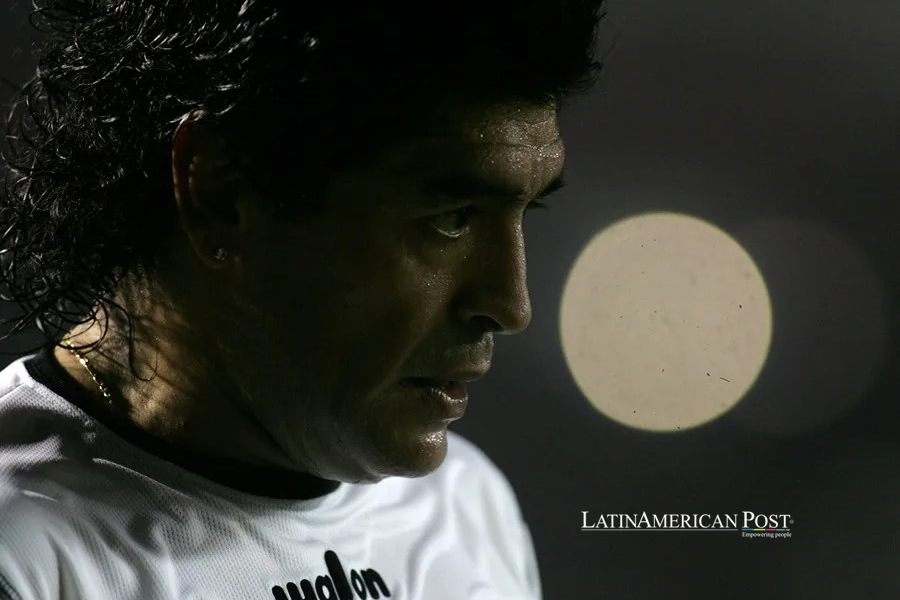
Six years after Diego Maradona died in a house outside Buenos Aires, six health professionals await a verdict on his care. His daughter Jana told EFE what she hopes the Argentine court’s decision might finally allow her to do. Grieve.
The Swelling His Family Could See
Diego Maradona was barely eating. He seldom got out of bed. His relatives and others who saw him noticed how swollen he looked and told his doctors. They could do that much for him. What happened to those warnings inside the home care operation assembled for Argentina’s most famous soccer player is a question that has taken two trials to reach court.
An ambulance brought Maradona to a private home in an exclusive neighborhood of Tigre, outside Buenos Aires, on November 11, 2020. He was there to receive medical treatment. Fourteen days later, around noon on November 25, he was found dead, and twelve hours had passed without a medical check. By then, the people responsible for different parts of his care included a neurosurgeon, a psychiatrist, a psychologist, nurses, and the coordinator who oversaw home care for a private medical company.
For his daughter Jana, even getting to the end of the testimony was once in doubt. The first trial collapsed after it emerged that one of the judges, Julieta Makintach, had participated in an unauthorized documentary about the proceedings. The defendants went on trial again in April 2026. The family had to hear the evidence a second time before it could hope for a first verdict.
“After what we went through in the previous trial, I was afraid,” Jana told EFE on the eve of the anniversary. This time, she said, the trial had met her expectations. She hoped the decision would do the same and give her “the chance to grieve.” The court is expected to rule on December 22.
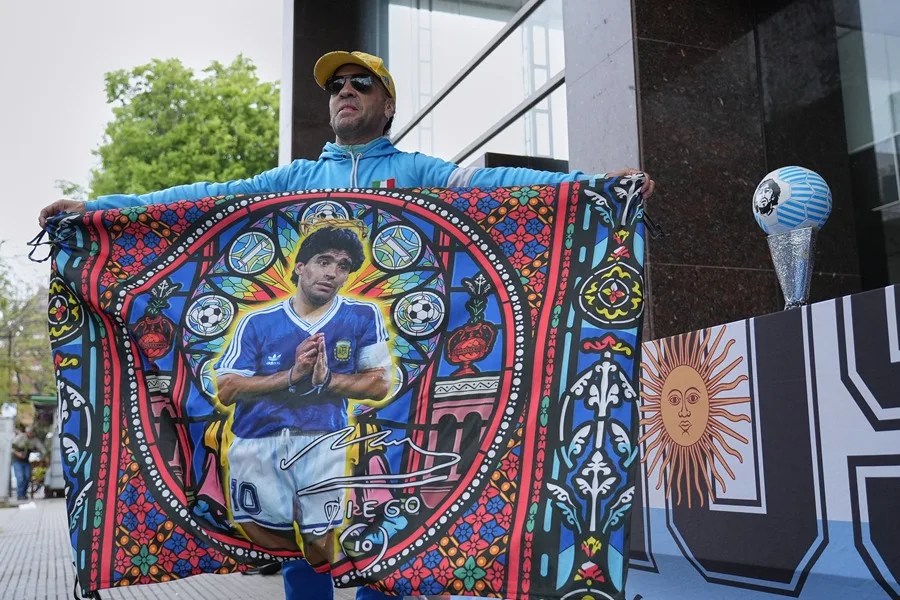
Who Could Call the Doctor?
More than 70 witnesses testified at the retrial. Recordings played in court allowed the defendants to hear their own voices from the period under scrutiny. Neurosurgeon Leopoldo Luque addressed the court 13 times. He denied having been in charge of Maradona’s health and disputed that his patient had chronic heart disease. Prosecutors said the evidence established that Luque acted as Maradona’s personal physician, visited him infrequently in those final days, and withdrew from decisions about his treatment.
The distinction matters because a second chain of authority ran through Swiss Medical, the company coordinating care at the house. Nancy Forlini oversaw its home care operation. According to the prosecution, she forbade nurses to contact Maradona’s personal doctors and threatened them with dismissal if they did. Under that arrangement, a nurse could stand beside the patient and still fear for her job if she picked up the phone.
The psychiatrist, Agustina Cosachov, tried to get an update directly from the nurses. According to EFE’s account of the evidence, they declined because they feared being fired. Expert assessments found her medication regimen appropriate. Those details complicate the case against her. The court must weigh what Cosachov did to learn about her patient’s condition alongside what prosecutors contend she should have done when the information failed to come.
Prosecutors requested 12 years in prison for Luque, 10 for Forlini, and 8 for Cosachov, along with 10-year professional bans for each. All three face a homicide allegation involving dolo eventual. In Argentine criminal law, the issue here is whether each understood that their conduct could lead to Maradona’s death and accepted that risk by continuing. A family member’s warning can establish that somebody spoke up. Further evidence is needed to establish who heard it, what they understood, and how they responded.
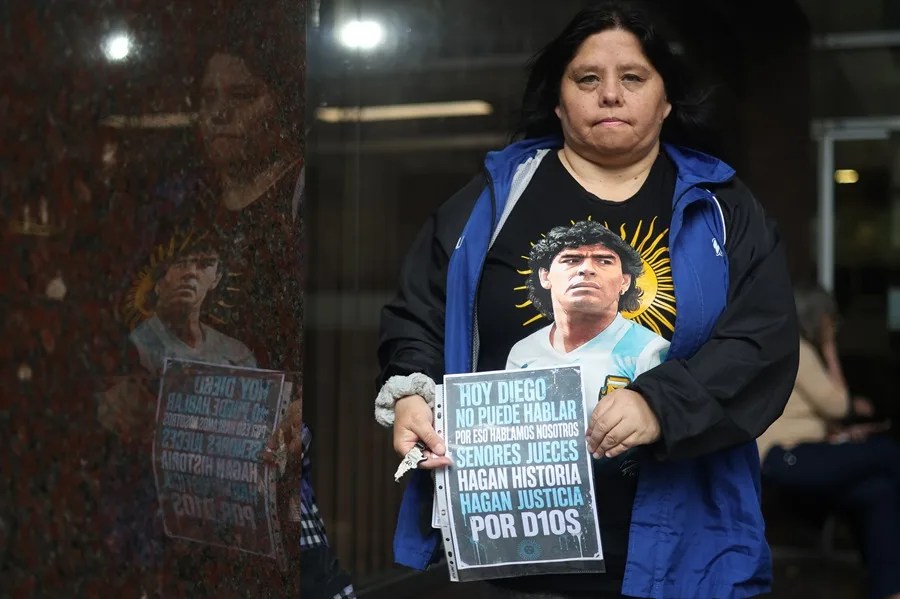
A Family Divided Over One Empty Chair
The sharpest disagreement among Maradona’s relatives concerns psychologist Carlos Díaz, who joined his treatment a month before he died. Díaz asked the family to refrain from visiting. In another household, that might have remained a private argument about who should come by and when. In Tigre, visitors had been among the people who noticed the swelling. Asking them to stay away also meant fewer people who knew Maradona well could see how much he had changed.
One private prosecution sought a conviction for homicide with dolo eventual. Prosecutors and three of Maradona’s children sought a negligent homicide conviction, with five years in prison and a ten-year professional ban. His sisters and another daughter asked for Díaz’s acquittal. In their view, nothing he could have done in his capacity as a psychologist would have prevented the death. The relatives agreed on whom they had lost. They differed on how much responsibility for that loss could fairly be assigned to the man who asked them to stay home.
For nurse Ricardo Almirón and nursing coordinator Mariano Perroni, the allegations come down to the bedside. Prosecutors cited a missed check on the morning Maradona died and the failure to replace a nurse who had been unable to take his vital signs. They sought four years in prison and eight-year professional bans for each. Consulting physician Pedro Di Spagna was acquitted on October 22 after none of the parties pursued the charge against him.
Six decisions remain. For the judges, the work is to determine what each defendant knew and could have done during the fourteen days Maradona spent in that house. Jana has described a different measure of what December 22 might mean. After six anniversaries and two trials, she would like some room to mourn her father.