Why Latin American Music Holds the Keys to GTA VI
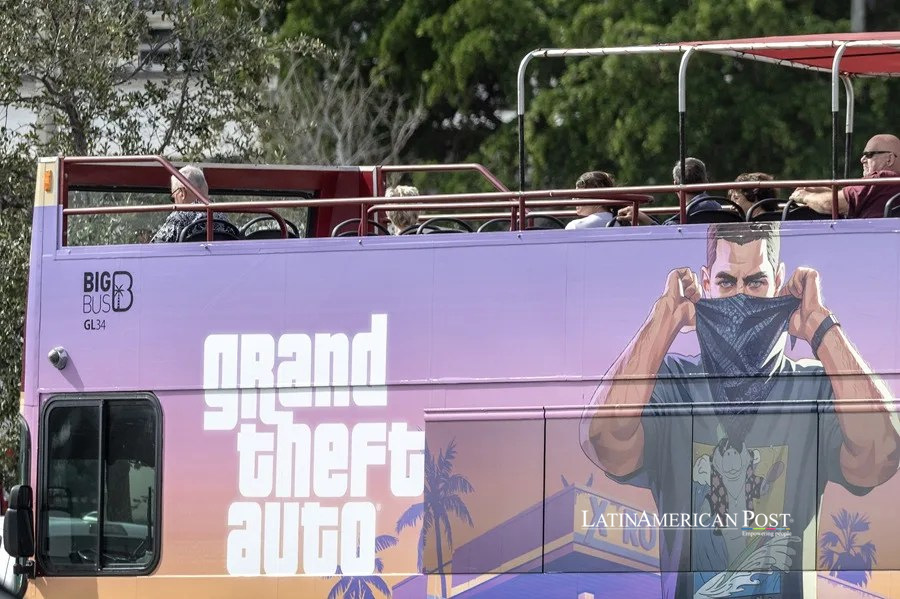
Across two Grand Theft Auto VI stations, Bad Bunny, RaiNao, and the Estefans introduce 55 songs. Turn the dial again, and the story gets stranger, with Celia Cruz on Haitian radio and a Venezuelan orchestra playing a Russian piano concerto.
The Records in the Mango Box
Once a month, Gloria Estefan’s grandmother went to the airport in Cuba with a box of baby food, a record or two and her daughter’s Miami address. She entrusted the delivery to an airline pilot, Estefan later recalled. The mango purée was for the children. Tucked inside those packages were records by musicians including Celia Cruz and the Cuban bassist Israel “Cachao” López. In Miami, Gloria’s mother played them alongside Johnny Mathis and Nat King Cole.
Now Gloria and her husband, Emilio, host Radio La Ola in Grand Theft Auto VI, set in a fictional Florida. Cachao and Cruz are on their station. So is “Mi Tierra,” the title song of Gloria’s 1993 Spanish-language album, which she credits her mother’s record collection with making possible. A family once went to considerable trouble to get those musicians across the water. A kid playing the game can find all three by turning on the radio.
Cachao has been here before. His “A Gozar con Mi Combo” played on Radio Espantoso in the 2002 Grand Theft Auto: Vice City. What has changed in the intervening years is how much room the older music gets. The Estefans have 25 salsa and tropical classics, just five fewer tracks than Cocoteo FM, the station featuring Bad Bunny and Karol G. Nearly half the slots on those two stations belong to the older catalog.
Consider what happens when somebody trying to get away with a crime tunes in to “Pedro Navaja.” On the 1978 recording by Rubén Blades and Willie Colón, a man carrying a knife sizes up a woman on a New York street. She has a gun. Blades gives both strangers a turn in the story before either knows what the other intends. A player who pulls over to catch the ending has let a Panamanian songwriter take charge of the action for a few minutes.
Bad Bunny Already Knew These Streets
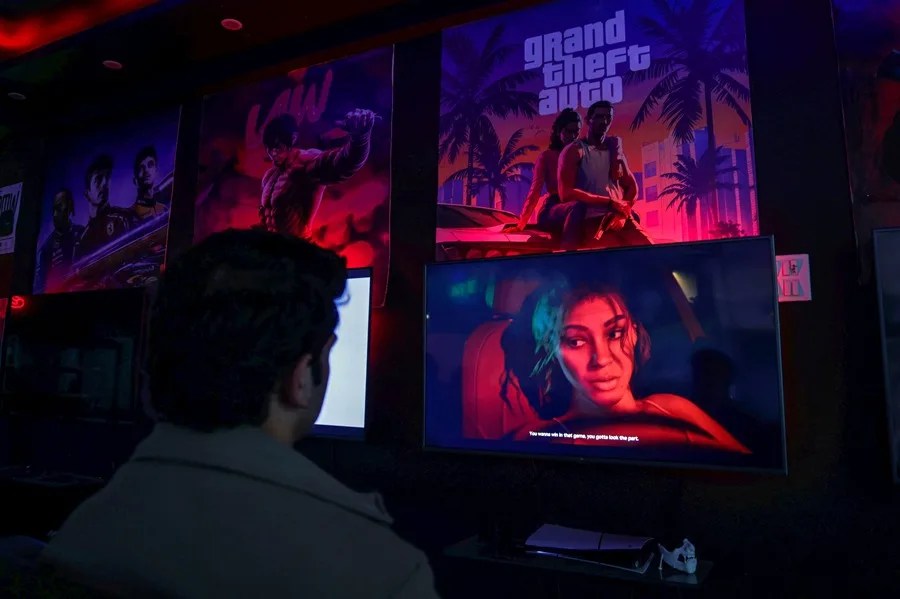
Bad Bunny hosts Cocoteo FM as El Martillo, appears on three songs, and plays another character, Mítico Mario. His “Otra Noche en Miami” makes a particularly wry companion for a drive through Vice City. In the 2018 song, he can choose between a Mercedes and a Maserati. What he would really like is another night with the woman he misses. Years before Rockstar put him behind the microphone, he had found something lonely to say about a city full of beautiful cars.
Listen to his cohost, too. Puerto Rico’s RaiNao plays La Gata and sings “Mariposas en el Estómago” with El Laberinto del Coco, a 14-piece ensemble led by percussionist Héctor Bárez. Its musicians work in bomba, the island’s Afro-Puerto Rican drum and dance tradition. Their song concerns the exquisite inconvenience of liking somebody before you know whether they like you back. All that musical history accompanies a crush.
There is a business reason to care how a teenager first hears that ensemble. Streaming accounted for 98.2 percent of U.S. Latin recorded music revenue in 2025, according to the Recording Industry Association of America. A game offers musicians another way to reach the listener who might later stream a record. Someone who chooses Cocoteo for Bad Bunny can stay long enough to hear Romeo Santos sing “Canalla” with El Chaval de la Bachata. Nobody has to know El Chaval’s name the first time. The second time, somebody might look him up.
Who Else Is on the Dial?
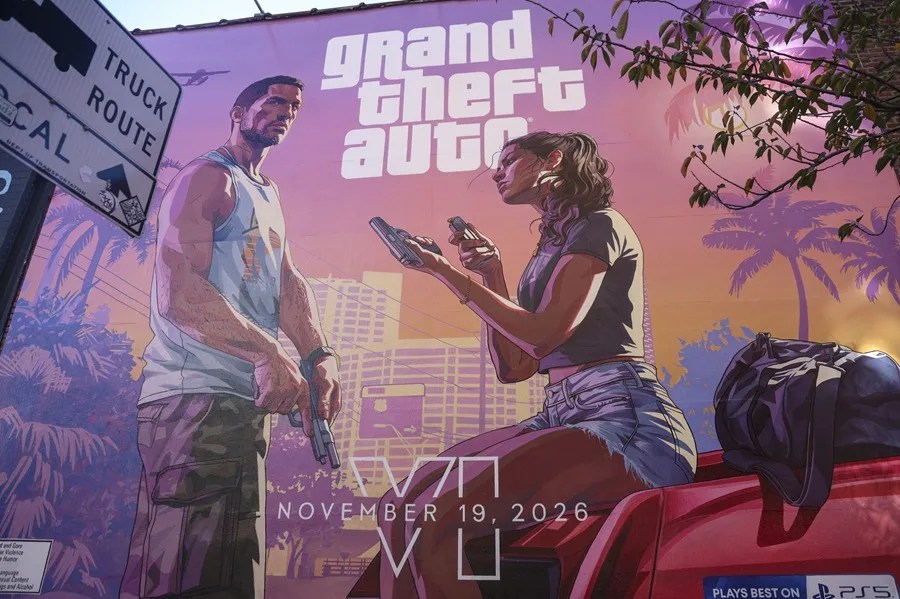
Turn both Latin stations off, and Gloria turns up again, singing Miami Sound Machine’s “Dr. Beat” on the 1980s pop station. Cruz reappears on a hidden Haitian station in Wyclef Jean’s version of “Guantanamera.” There is a whole Caribbean listening habit in that second choice. Someone who comes looking for a Haitian artist gets to hear what a Cuban singer sounds like in his company.
A metal fan gets Chilean-born Slayer singer Tom Araya hosting alongside guitarist Kerry King. On the classical station, pianist Yuja Wang plays Prokofiev’s Second Piano Concerto with Venezuela’s Simón Bolívar Symphony Orchestra under Gustavo Dudamel. Count only the songs labeled Latin and an entire Venezuelan orchestra disappears from the tally. Even 55 songs, it turns out, can give a listener a rather cramped idea of what Latin Americans do for a living in music.
The credits tell that story better. Rockstar and Atlantic Records released a separate album of 34 original tracks, featuring contributions from artists including Kali Uchis, Helado Negro, and Argentine duo Ca7riel and Paco Amoroso. The French duo Justice composed the score. Among the producers credited with additional music are Cuban American Danny Daze, Nick León, whose parents are Colombian, and DJ Python, whose family has roots in Ecuador and Argentina. Their work reaches players who may never touch the dial.
For the Estefans, perhaps the sweetest possibility is also the least measurable. Somewhere a player may leave Vice City wanting to know who that was on bass. It is the sort of question Gloria’s mother could once answer by reaching for a record sleeve. Her grandmother went to the airport so that, in one Miami household at least, somebody would know the name.