In Peru, a Shuttered Brothel Opens a Door for Extortionists
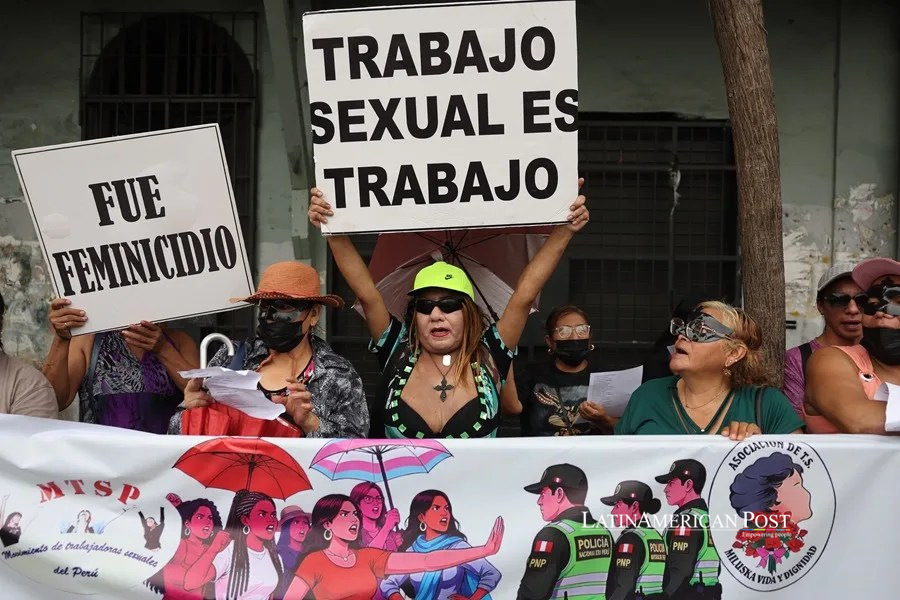
In Lima, a sex worker says extortionists charge up to 300 soles a week. After raids closed five licensed venues, women went to Peru’s Congress to explain what a police operation costs a household that depends on that night’s earnings.
The Women on Abancay Avenue
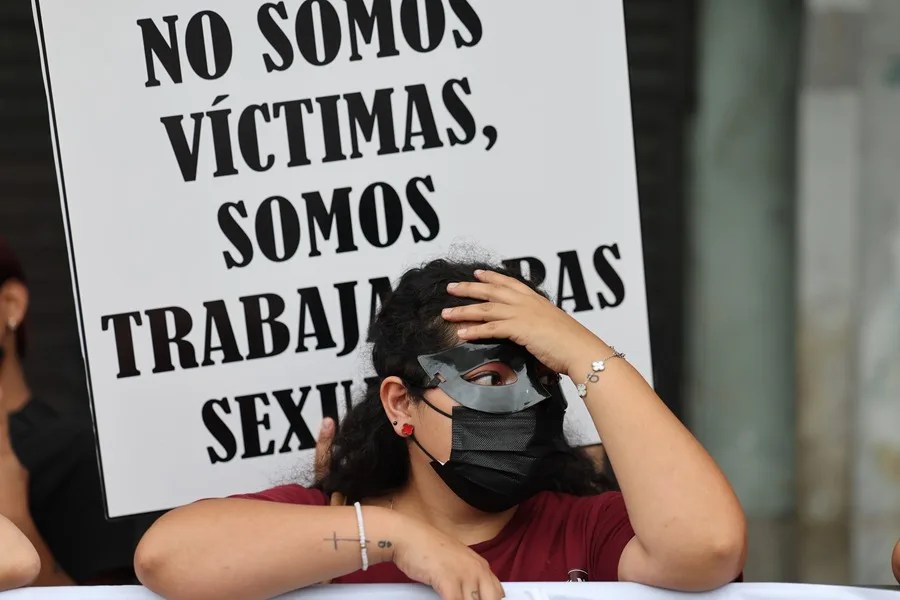
One woman who came to Peru’s Congress on Wednesday was willing to tell a reporter how much a man with a gun can charge her to stand on a Lima street. She drew the line at giving her name. Between 200 and 300 soles a week, she told EFE. The men who demand it offer her no protection. Refuse to pay, she said, and one of them might shoot you.
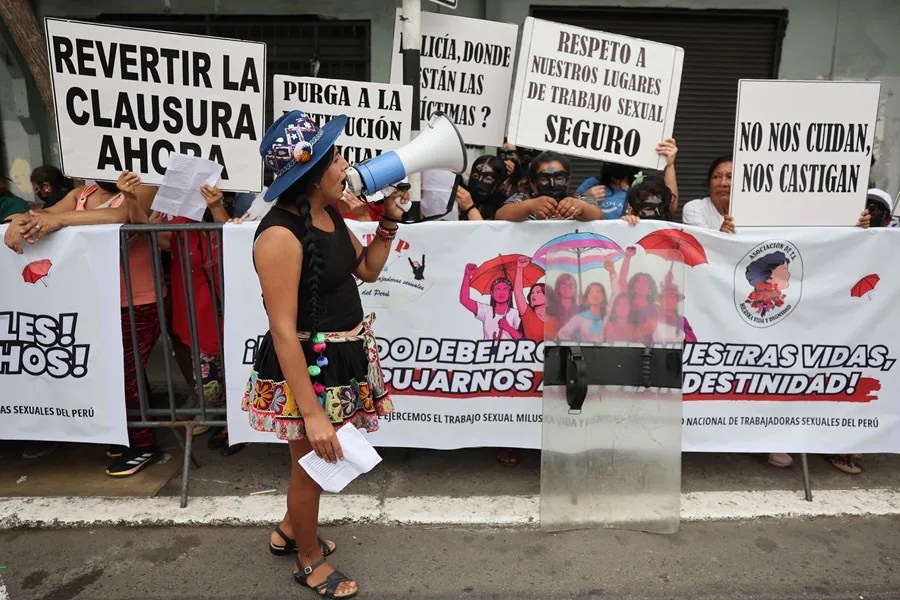
Several dozen sex workers had gathered outside the legislature on busy Abancay Avenue. “Our lives are not a spectacle,” one sign read. Ángela Villón, spokeswoman for the National Movement of Sex Workers, told EFE that police operations targeting human trafficking had shut five licensed venues in the capital in recent months. Some closures were temporary, others permanent. Hundreds of women had worked at those five addresses, she said.
Villón supports investigations into trafficking. What she disputed was the assumption that police had rescued women like her by shutting the places where they worked. She had a fairly precise idea of where she needed police protection. “If we set foot on the corner, we have to pay,” she told EFE. She described women going hungry while the gangs acquired fresh opportunities to collect.
Peru should grant the workers the congressional hearing they came for. An agency that closes a workplace in the name of a woman’s safety ought to account for what happens to her afterward. On the street Villón described, a man who owns no part of the pavement gets to charge a woman for standing on it. A police operation can make that corner more valuable to him.
The Bill Comes Due Every Week
The woman who withheld her name described households that live day to day. Some workers have children to care for. Others look after adults. When police take a woman to the station, she said, they can keep her there the whole night before releasing her. By then, the hours in which she could have earned anything are gone. She goes home empty-handed. The weekly demand still stands.
Four weeks at the rates she described would cost a worker between 800 and 1,200 soles, roughly $230 to $345. Her testimony gives no basis for calculating what share of anyone’s income that represents. It does reveal who bears the cost of a bad night. A woman can spend hours waiting for a client. The man who comes to collect can demand the same sum whether she earned much that week or scarcely worked at all.
For a mother, there is little room to absorb the loss. A child has the same appetite the morning after she spends the night at a station. An adult who depends on her care still needs her time. Earning back a lost night means finding more hours somewhere in a week that other people already claim.
Even the word “temporary” looks different across a kitchen table. For the agency that orders a venue shut, a reopening date can mark the end of the matter—for a family living on daily earnings, reopening restores the possibility of earning tomorrow. It cannot give the family back last Tuesday.
A Seat at the Hearing
On Abancay Avenue, the women appeared in a role the public seldom sees during a police raid. They were constituents asking legislators to do their jobs. Villón wants Congress to use its oversight power to bring sex workers together with prosecutors and the ministries responsible for women and for justice and human rights. The women want a say while officials are deciding where the danger lies. They have spent enough time hearing the decision after officers arrive.
There is a practical reason to give them that seat. A license cannot establish whether someone inside a building has been coerced. Neither can a photograph of officers leading women out. A worker may know who controls the money, who is free to leave, and who has been threatened. Getting that information requires her trust. Villón’s accusation that police conduct aggressive raids for publicity raises a question for investigators. What chance does a woman have to speak candidly when she already feels she is part of somebody’s show?
Congress could begin with the five addresses. Prosecutors could explain what evidence justified each closure and whether anyone responsible for coercion faced charges. Workers could describe where they went afterward and what it cost them. Then the officials around the table could say what they had done about the men demanding money on those streets. Those answers would tell Peru considerably more about the value of the operations than a count of shuttered premises.
The woman who spoke to EFE had already done something that a hearing would require of her. Without identifying herself or exposing her family, she gave a public account of how extortion works in the company of people who could speak up alongside her. She named a price, a payment interval, and the consequence of refusal. She knows exactly what a criminal can demand of her on a street in Lima. She deserves to know what she can reasonably expect of the police on that same corner.