El Salvador Reinforcements Confront Haiti Rescue Crisis, Exposing Limits of Tough Rhetoric

|
Getting your Trinity Audio player ready...
|
Four Salvadoran aviation technicians remain missing after a Haiti gang ambush, drawing reinforcements and threats from Nayib Bukele. Their disappearance exposes the distance between promises of security and the daily vulnerability facing Haitians, even as another election deadline draws closer.
Four Men, an Unfinished Journey
Four men exited a burning armored vehicle. After that, the public account went dark.
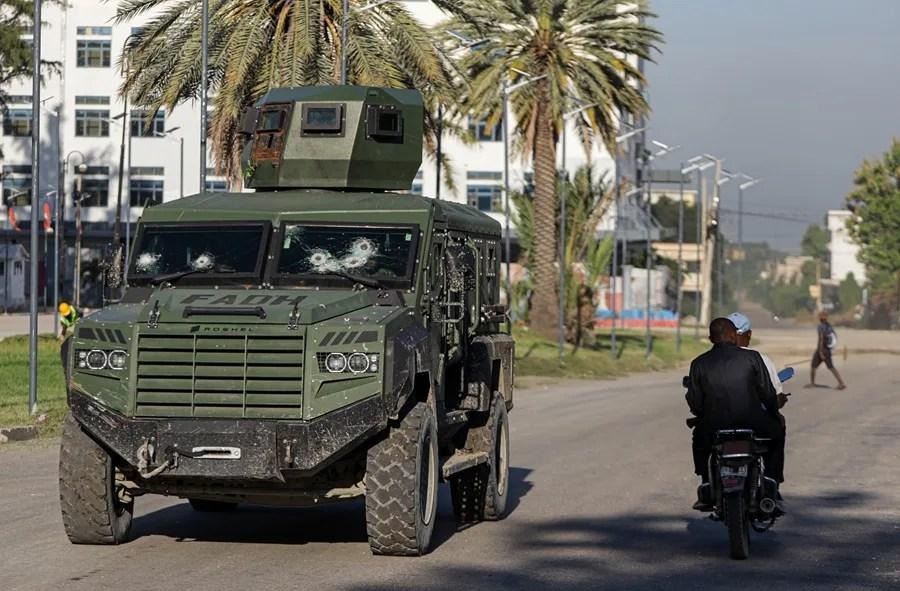
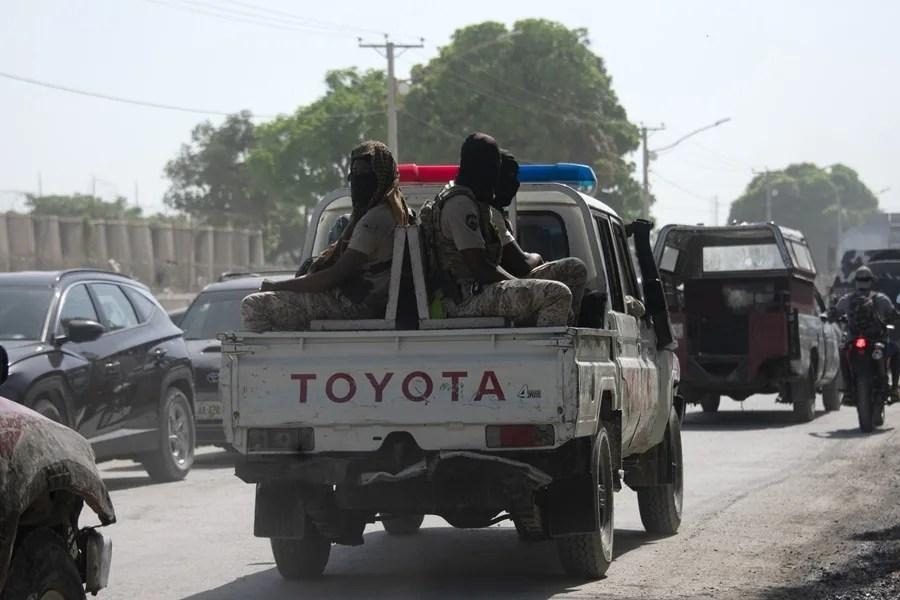
According to El Salvador’s military, the aviation technicians were returning to their camp on October 18 when heavily armed gangs ambushed them in Santo, in Croix-des-Bouquets, outside Port-au-Prince. Gunfire and explosives struck their vehicle, which caught fire. The military said all four escaped the flames. It has not publicly established what happened to each man afterward.
On Thursday, Salvadoran reinforcements arrived in the Haitian capital to help find them, the Gang Suppression Force announced. Its statement, reported by EFE, did not specify the contingent’s size. Searches continued alongside Haitian police.
The absence of detail matters. President Nayib Bukele says gangs are holding the men and has demanded their release unharmed, threatening retaliation. But that assertion does not establish their location or condition. A rescue announcement is not a rescue.
These are aviation technicians, specialists whose work supports the machinery behind a security mission. Bukele said their duties included medical evacuations, not combat. That makes the ambush particularly revealing: personnel who help sustain operations can become targets even when their assignment isn’t to fight.
For those waiting for them in El Salvador, the distinction between a presidential assurance and verified contact is everything. Statements about reinforcements and coordination still leave the most urgent question unanswered: Are they safe? Four people remain missing while governments decide what to say next.
The force has promised updates once official channels verify the information. In an operation surrounded by threats and uncertainty, that restraint is necessary. Silence can be agonizing, and every unanswered question can become evidence of the worst.
The Numbers Behind the Threats
Much larger numbers surround these four men, but they require equally careful handling.
On October 2, UN human rights chief Volker Türk reported at least 5,700 people killed or injured in Haiti between January 1 and September 11. The count covered violence by gangs and operations against them. It was neither a death toll alone nor a tally attributable exclusively to gang attacks.
Over those 254 days, that means more than 22 recorded deaths or injuries per day, on average. The calculation conveys the sustained burden, not the risk on any particular street. An injured survivor may still face lost earnings, rehabilitation and dependence on relatives long after disappearing from a breaking news headline.
Türk also reported more than 230 kidnappings and the rape of over 1,000 women and girls by gangs, warning that actual numbers were likely higher. These categories cannot simply be added into a neat total of distinct victims. Their possible overlap is precisely part of the horror: violence does not observe statistical boundaries.
The international response remains smaller than its authorized ambition. At an October 19 Security Council briefing, the GSF reported more than 2,000 personnel, just over one third of its authorized strength. The authorized ceiling of 5,500 is a planning figure, not a description of the resources already available on the ground.
Headcount, however, is not the same as usable capacity. Personnel need transport and reliable communications to provide protection. Four missing aviation specialists bring that distinction painfully into focus.
The GSF’s own figures put displacement above 1.5 million people and say only 26 percent of health facilities in Port-au-Prince remain fully functional. That leaves roughly three-quarters of facilities unable to operate at full capacity. In that setting, aviation support for medical evacuations is not peripheral to civilian survival. It can connect patients to care.
Bukele’s promise of punishment cannot, by itself, close these gaps. A multinational mission supporting Haitian authorities is not a Salvadoran domestic operation transplanted across the Caribbean. It must work through another country’s institutions and competing operational demands. The immediate objective is to find four men alive, not to prove that a national security reputation travels intact.
An Open Border, an Uncertain Ballot
Across Hispaniola, the Dominican Republic chose a different response. Its Defense Ministry said Thursday that conditions did not justify closing the border, describing commerce and everyday activity there as normal while promising continued monitoring.
That is an official assessment, not proof that every border community feels safe. Still, leaving crossings open recognizes an important distinction: an ambush outside Port-au-Prince does not automatically make shutting down livelihoods elsewhere a proportionate response. Traders and families should not become collateral damage of a regional show of resolve.
Haiti’s political timetable is less reassuring. Presidential and legislative voting had been scheduled for December 13, barely seven weeks away. The electoral council has postponed campaigning and promised a revised calendar. Its October 5 announcement preceded the ambush, underscoring that this rescue crisis cannot reduce political uncertainty.
An election requires people to reach registration offices and polling places without armed groups deciding who gets through. Foreign reinforcements may help create those conditions. They cannot confer legitimacy on a process Haitians cannot safely enter.
The four Salvadorans deserve every serious effort to bring them back home. The Haitians around them deserve something that lasts beyond the operation: the possibility of making an ordinary journey and returning safely.