Chocó’s Earthquake Exposes the Fault Lines Beneath Colombia’s Forgotten Wealth
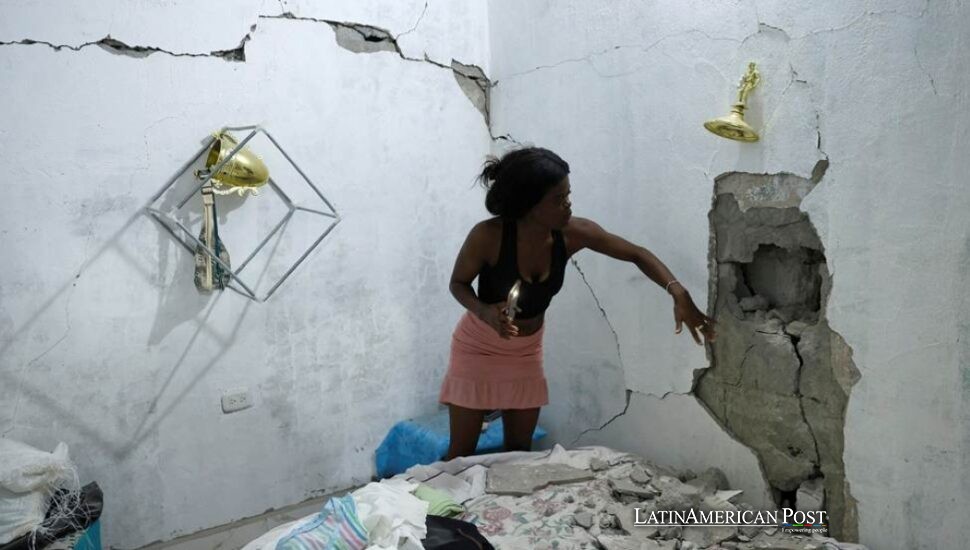
In Quibdó, a 7.4-magnitude earthquake shattered homes already weakened by decades of neglect, exposing how Chocó’s poverty, extractive history, racial inequality, armed conflict, and fragile public services turn a natural disaster into a far deeper national reckoning for Colombia today.
When the Walls Gave Way
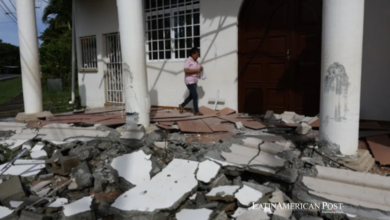
In the Jardín neighborhood of Quibdó, in a sector called Las Dalias, the earthquake is measured less by magnitude than by absence. A wall no longer stands where a family photograph once hung. Concrete lies where children slept. Every aftershock asks what remains when the little a family has built is declared beyond repair.
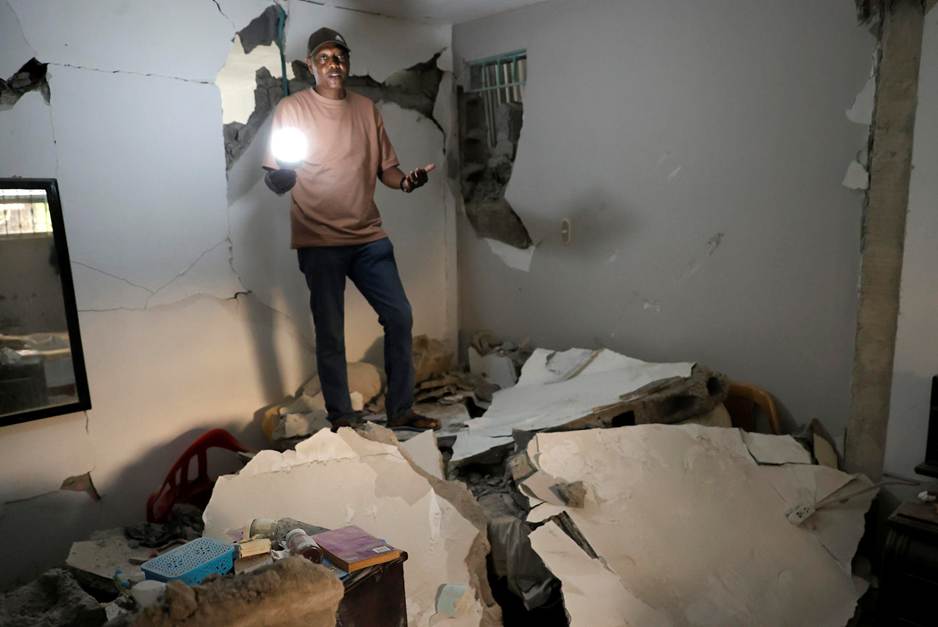
Nilson Hinestroza walks carefully through one room of his house, pointing to fractures running from ceiling to floor. Engineers who inspected the structure offered no comforting language. “The loss is total. Not a single wall can be recovered. They all have to be demolished,” he told EFE. Five people lived there, although only Hinestroza and his wife were inside when the earthquake struck. They escaped before several walls collapsed. The timing saved lives, but not the home.
Rebuilding is estimated to cost between 60 million and 70 million Colombian pesos, roughly $19,000 to $22,000. For a family trying to find rent, store salvaged belongings, and remove debris, the figure is not a budget. It is another wall. Hinestroza said he had received a food package and two sleeping mats, but no clear answer about what came next. “One expects support from the state, information that lets you know what to do, but so far we have received no response,” he told EFE.
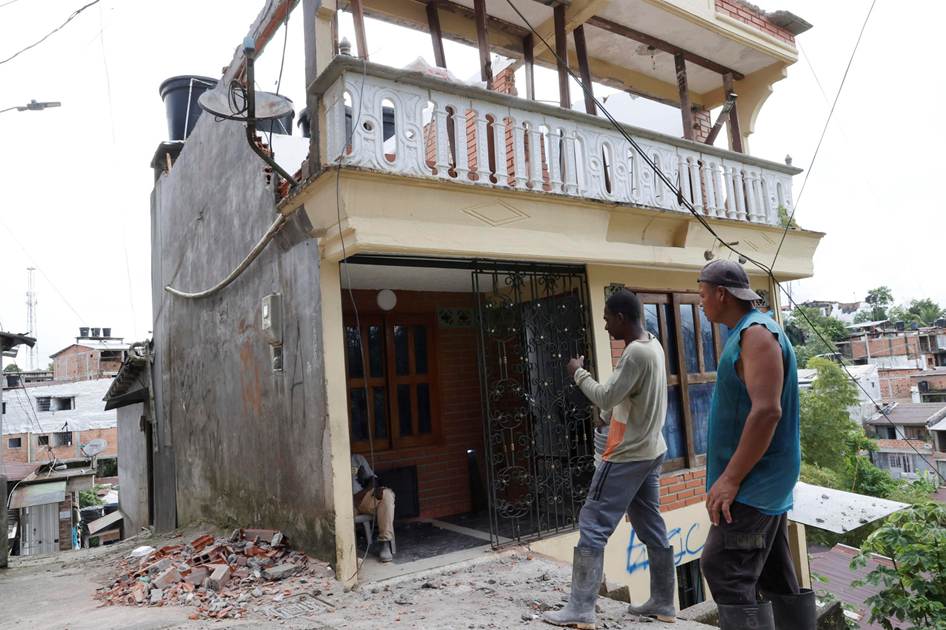
A few streets away, Yerlin Perea speaks with a composure that makes the damage sound almost ordinary, until she explains what was lost. Her mother and two brothers maintained three households on the same family plot, a common arrangement in working-class Quibdó, where daily survival is shared across generations. All three homes collapsed.
“The house is practically destroyed. There is nothing to recover,” Perea told EFE. Yet when she describes what the neighborhood needs, she does not begin with food. Neighbors have organized communal kitchens. “We ask the government to help us with sand, cement, iron rods, and blocks. We can handle the food among ourselves,” she said.
That sentence contains both Quibdó’s strength and the scandal of its abandonment. The community can cook, share, and improvise shelter. It cannot finance reconstruction, enforce building standards, or insure families against catastrophe. Solidarity can keep people alive after the ground moves. It cannot substitute indefinitely for the state.
A Disaster Centuries in the Making
The earthquake did not create Chocó’s vulnerability. It exposed it.
Chocó is one of Colombia’s richest territories in minerals, forests, fisheries, biodiversity, and strategic geography. It touches two oceans and contains rivers sustaining Afro-Colombian and Indigenous communities. Yet 65.3 percent of its population lived in monetary poverty in 2025, the country’s highest departmental rate. Bogotá’s rate was 17.8 percent. Cundinamarca’s was 15.1 percent.
The contrast is not a natural paradox. It is a political history.
Colonial Chocó was organized around gold extraction. Enslaved Africans were brought to labor in mines, while Indigenous communities were displaced, exploited, or forced from valuable territory. The system was designed to remove wealth, not build a diversified economy. That pattern endured after independence. Gold, platinum, timber, and other resources left, while much of the capital, processing, expertise, and profit accumulated elsewhere.
Mining can produce impressive figures without broad prosperity. Machinery, fuel, credit, and commercial control may come from distant cities. Communities may receive temporary work while absorbing polluted rivers, abandoned pits, damaged crops, weakened fishing grounds, and armed control.
Chocó can therefore appear productive in an extractive ledger while remaining poor in the lived economy. The value removed from the ground is counted. The value lost when a river can no longer sustain a family is harder to see.
Geography adds real costs. Heavy rainfall, rainforest, unstable terrain, river basins, and dispersed settlements make roads, power grids, aqueducts, hospitals, and telecommunications expensive. But difficult geography does not automatically produce deprivation. It becomes a poverty trap when investment is intermittent, construction remains unfinished, maintenance is weak, and infrastructure serves political visibility rather than local conditions.
A region organized around rivers cannot be connected only through highway promises. It requires dependable river transport, docks, ambulance boats, coastal shipping, regional aviation, digital service, and electricity adapted to communities beyond the national grid.
The public-service deficit shows what has been postponed, and in 2026, reported aqueduct coverage reached only 34.69 percent in urban Chocó and 22 percent in rural areas. Many communities remained without stable electricity. When an earthquake strikes under those conditions, emergency response begins from behind. Water is harder to distribute, communications fail, and medical transfers take longer.
Race is central. Chocó’s population is predominantly Afro-Colombian and Indigenous, and the department has historically had limited influence in networks that shape national investment. Colombia developed around Bogotá and the central Andean corridor, concentrating industry, credit, universities, and transport elsewhere. Chocó was treated as a source of resources and strategic territory, not as a place entitled to equivalent public goods.
This is not total state absence, but selective state presence. The state has been visible when granting mining rights, policing corridors, announcing projects, or deploying security forces. It has been less dependable in providing water, sanitation, specialized health care, courts, environmental enforcement, and maintenance.
Armed conflict deepens every failure. Chocó’s rivers and proximity to Panama make it valuable to guerrillas, paramilitary successor groups, traffickers, illegal miners, and criminal networks. Control of a river can mean control of weapons routes, cocaine, gold, fuel, food, and entire communities.
In 2024, the United Nations humanitarian system recorded 49,021 people confined in 30 events in Chocó, with Indigenous and Afro-Colombian communities suffering especially severe effects. Confinement is a quiet siege. Children miss school. Farmers cannot reach crops. Medical brigades stay away. Pregnant women cannot travel safely. Teachers leave. Businesses do not invest where armed orders can close a river overnight.
Conflict and underdevelopment feed each other. Weak institutions create room for armed groups. Armed groups make institutions weaker.
Rebuilding More Than Houses
Corruption and clientelism have worsened the crisis. In 2023, Colombia’s inspector general warned that five Quibdó projects, financed with about 86 billion pesos in royalties, faced serious risks of delay, noncompletion, or cost overruns. They involved housing, roads, education facilities, and scholarships. In a department with little infrastructure, one failed contract can erase years of progress.
Still, corruption is not the whole story. Chocó was marginalized before its present political class existed. Richer departments also suffer corruption, but possess more engineers, planners, legal teams, universities, contractors, and accumulated infrastructure. Chocó often faces decentralization at its cruelest: responsibility without capacity, expectations without stable revenue, and punishment for failures produced partly by national neglect.
The earthquake makes the consequences intimate. A development model sounds abstract until a family is told every wall must come down. Structural racism sounds theoretical until three generations lose their homes on one lot. Weak investment becomes visible when emergency assistance consists of food and sleeping mats, while families ask for cement and steel.
The government’s 2026 Pacific development policy, CONPES 4185, proposes 166 actions and more than 12.3 trillion pesos in indicative investment over ten years. It recognizes structural racism and historic service and infrastructure deficits. The harder question is whether projects will be completed, maintained, monitored, and shaped with Afro-Colombian community councils and Indigenous authorities rather than imposed from Bogotá.
Real reconstruction would mean more than replacing walls. It would mean climate-adapted housing, reliable water systems, local construction capacity, medical networks, schools that remain open during conflict, and transportation designed around rivers and coast. It would mean keeping more value from mining, cacao, fisheries, agroforestry, biodiversity, culture, and tourism inside Chocó.
It would also require a different understanding of security. Soldiers can temporarily control a corridor, but lasting security requires prosecutors, investigators, teachers, environmental officials, nurses, and judges who remain after the operation ends. A state that arrives only in uniform is not complete.
Back in Las Dalias, families do not speak about structural transformation. They speak about rent, blocks, iron rods, and where they will sleep. Their needs are immediate. Their diagnosis is not.
Chocó’s geography made development expensive. Colombia’s history made that expense an excuse. Extraction without industrialization, promises without continuity, and security without dependable civilian institutions left thousands exposed before the earth shook.
The earthquake damaged houses in seconds. The conditions that made those losses devastating were built over centuries. Rebuilding Quibdó cannot mean returning families to the same vulnerability with newer walls. It must mean treating Chocó not as a distant reservoir of gold, rivers, and forests, but as a place whose people are owed the durable institutions the rest of Colombia has too often taken for granted.
Also Read: Pereira and Cali Lose Sleep as Earthquake Forces Colombia into Grim Census of Ruins