Latin America Counts Growth While Indigenous Lands Keep Quietly Bleeding
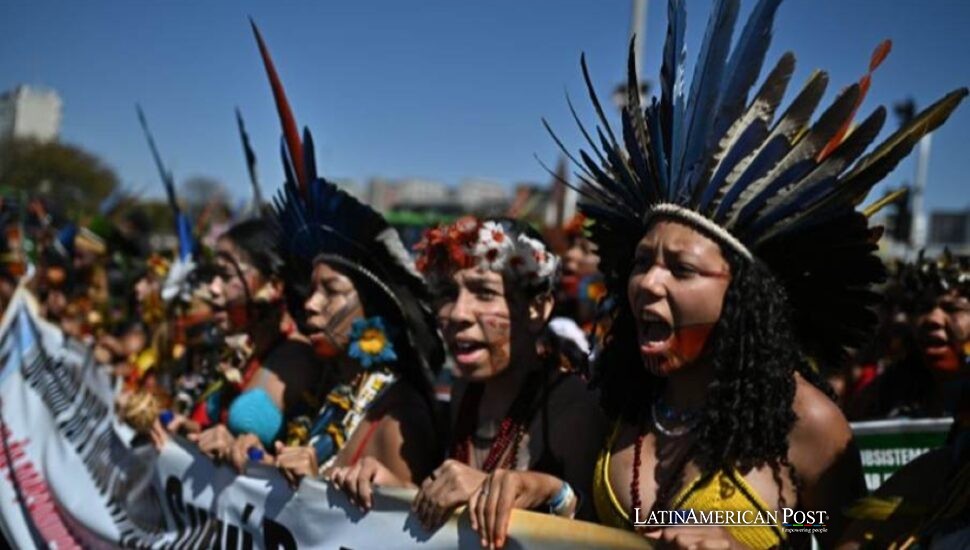
From Brazil’s rising Indigenous murder toll to a disputed anti-coca operation in Peru, alarms reveal an old regional bargain: governments promise protection, while land, minerals, infrastructure, and security policy repeatedly place Indigenous survival behind the demands of power and profit.
The Violence Begins Before the Gunfire
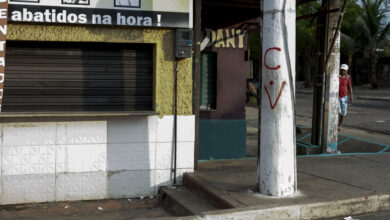
In Brazil, a boundary remembered through ancestry, burial grounds, rivers, and generations of occupation can become dangerous when absent from the federal registry. Landowners, companies, and armed men can point to missing paperwork.
That gap is where violence gathers.
At least 258 Indigenous people were murdered in Brazil in 2025, a 22.3 percent increase from the previous year, according to the Indigenous Missionary Council, or CIMI. The Catholic Church organization also documented 210 cases of invasion or resource exploitation across 151 reserves and 169 territorial conflicts affecting 143 areas. EFE reported the findings after CIMI released its annual study.
The numbers require care. The 258 deaths represent murders of Indigenous people generally, not 258 cases already proven to be racial killings or territorial assassinations. Yet the accompanying data makes the larger pattern difficult to dismiss. Violence rose while invasions, extraction, contested ownership, and stalled recognition overlapped.
The most revealing figure may be 66 percent. That was the share of territorial conflicts occurring in lands the state had not properly demarcated. Of 1,443 areas considered Indigenous lands in Brazil, just 436, or 30.2 percent, were officially demarcated and registered. Another 131 were in the process of legalization, while 582 remained unrecognized.
Demarcation sounds like the gray language of ministries. On the ground, it functions like a shield. When recognition stalls, roads advance, cattle enter, trees fall, and mining equipment arrives. Economic interests gain time, while communities seeking protection are treated as though their presence were the disputed fact.
CIMI described violent reactions against Guarani and Kaiowá communities in Mato Grosso do Sul and Pataxó communities in Bahia when they attempted to recover territory trapped for years in administrative delay. According to the report, landowners have organized armed militias to confront them. In this setting, bureaucratic slowness redistributes power.
The violence extends beyond homicide. CIMI recorded 38 attempted murders, 33 cases of bodily injury, 46 reports of racism and discrimination, 19 abuses of power, 18 death threats, 27 other threats, and 25 cases of sexual violence. Twenty involved girls younger than 14. Together, these offenses show how pressure can make remaining on ancestral land physically and psychologically unbearable.
Brazil’s dispute over the “Temporal Framework” law exposes the machinery behind the conflict. The law would bar Indigenous peoples from reclaiming land they were not occupying when the 1988 Constitution took effect, even when earlier expulsion explains their absence. The Supreme Court provisionally revoked the measure, but the battle still favors a narrow idea of possession over histories of removal.
When Protection Arrives as a Threat
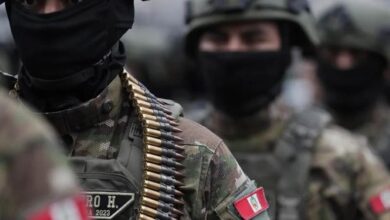
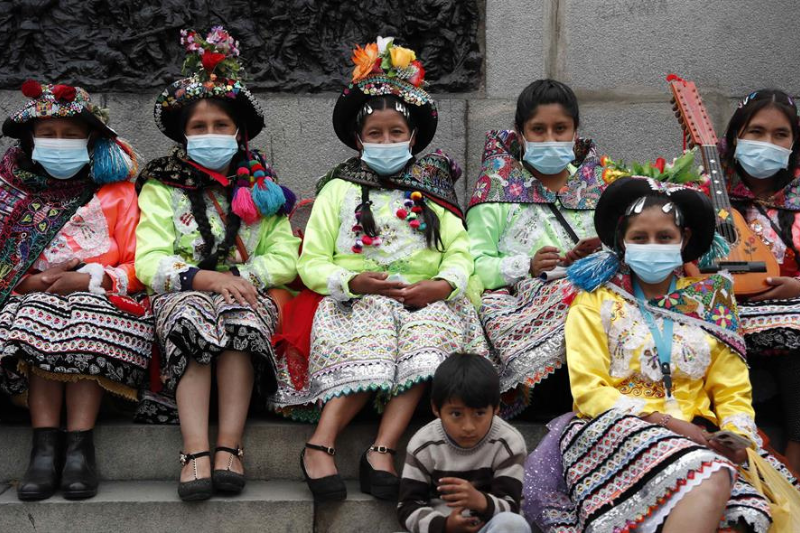
In Peru’s Ucayali region, the conflict took a different shape. Indigenous organizations said a community airfield in Charashmanan was bombed during an apparent operation to eradicate illegal coca crops. They demanded an investigation. The allegation had not been assigned to a specific unit, and the organizations named no direct perpetrators.
That uncertainty matters. So does the airstrip.
The community built and maintained the runway for essential needs, including emergency medical evacuations. In remote Amazonian territory, such infrastructure can separate a treatable crisis from a death. Damaging it, the organizations argued, left residents vulnerable when rapid transportation was needed.
Their position was not a defense of narcotics activity. ORAU and Fecoirp said Indigenous communities had spent years denouncing illegal coca fields and clandestine runways. Leaders had received threats and been killed while defending their territories. The organizations offered guides and territorial knowledge to help the state confront drug trafficking and illegal mining.
Their complaint concerned exclusion. An operation designed in distant offices, without Indigenous coordination, could mistake community infrastructure for criminal infrastructure and turn a security mission into another danger. EFE reported that eradication operations in Ucayali fall under Peru’s Interior Ministry through specialized National Police programs, although responsibility for the alleged bombing remained undetermined.
Brazil and Peru reveal opposite faces of the same state problem. In Brazil, authorities are accused of arriving too late to demarcate and protect. In Peru, Indigenous organizations say state power may have arrived forcefully, without first listening. One failure is omission. The other is intervention without participation. Both leave communities carrying decisions made elsewhere.
History Keeps Changing Its Uniform
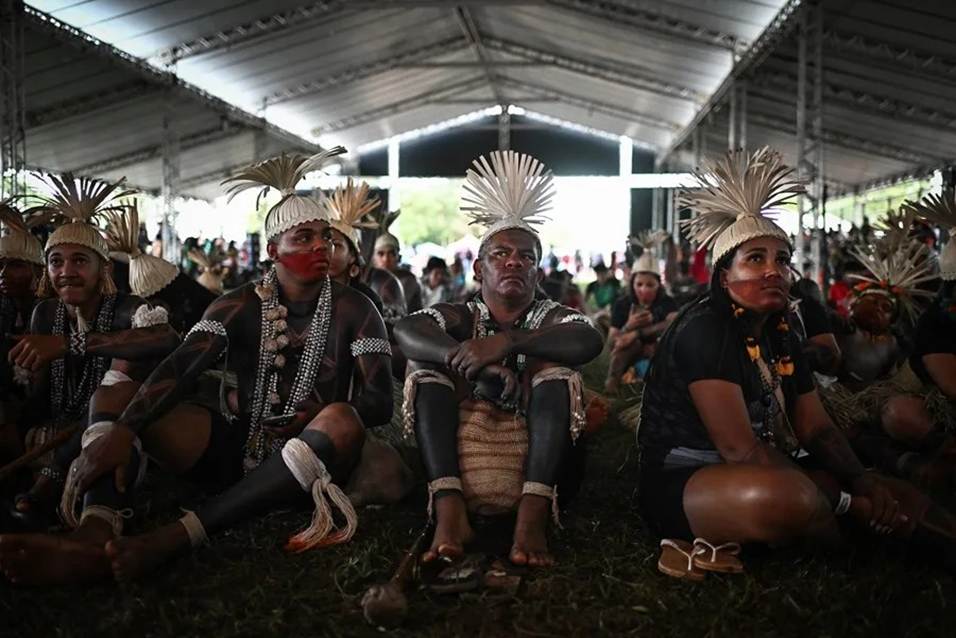
ECLAC estimated that 58.5 million Indigenous people lived in Latin America in 2022, roughly 10.4 percent of the population. At least 826 Indigenous Peoples had been officially recognized, while at least 200 peoples lived in voluntary isolation or initial contact across seven South American countries.
Their vulnerability is tied to an old political economy. Colonial conquest imposed forced labor, tribute, displacement, sexual violence, and seizure of farmland. The Amazon rubber boom later converted debt, hostage-taking, torture, and starvation into commerce, most notoriously in the Putumayo basin. Republican governments then opened supposedly vacant land to ranching, plantations, mines, roads, and settlement, treating Indigenous communities as impediments to progress.
The uniforms changed. The logic often did not.
Guatemala’s truth commission found genocidal acts against Maya communities during the armed conflict. Brazil’s courts upheld genocide convictions for the Haximu massacre of Yanomami people. Peru’s truth commission documented atrocities by the Shining Path and state forces, with Quechua-speaking, rural, and Indigenous populations bearing a disproportionate share of the dead and disappeared. Colombia’s Constitutional Court warned that several Indigenous Peoples faced physical or cultural extermination amid conflict and territorial seizure.
These cases do not carry identical legal weight. A criminal conviction differs from a truth commission finding, an international human rights judgment, or a precautionary measure. Precision matters because genocide and crimes against humanity have demanding definitions. But legal caution should not become historical blindness. Across centuries, the sequence remains recognizable: territory gains value, Indigenous title is questioned, defenders are stigmatized, and coercion clears space for someone else’s project.
Today the pressure may come from miners, ranchers, traffickers, armed settlers, contractors, or public agencies acting without consultation. Legal and illegal economies overlap. A road can serve development and open access for logging. An anti-drug operation can pursue a legitimate objective and still endanger the community living with its methods. A delayed land file can benefit those already extracting value.
Cardinal Leonardo Ulrich Steiner, CIMI’s president, described the violence in Brazil as structural because it serves interests that treat land as a commodity and Indigenous people as obstacles. The phrase reaches beyond Brazil. It explains why modern promises can reproduce the region’s oldest hierarchies.
Latin America has constitutions recognizing Indigenous rights, courts capable of landmark judgments, and communities organized across borders. What remains weak is the machinery that turns recognition into safety. A title must be processed. A leader must be protected before a funeral. A security operation must distinguish a community runway from a clandestine strip. Consultation must occur before machinery arrives.
The crisis does not show that Indigenous Peoples stand outside the modern state. It shows how often they encounter the state at its sharpest edges: absent when protection is needed, hurried when land is desired, and heavily armed when policy has already been decided. Until that changes, Latin America will keep hiding blood beneath its administrative lines.
Also Read: Fidel Castro at One Hundred While Cuba Bargains with Tomorrow