Copa Libertadores Draws Leave South American Football on Shaken Ground
Seven Copa Libertadores first legs ended level, while Colombia’s earthquake postponed another match and exposed rural families still waiting for help, now turning South America’s grandest club tournament into a portrait of uncertainty that is both sporting and painfully real.
Seven Draws and One Dismissal
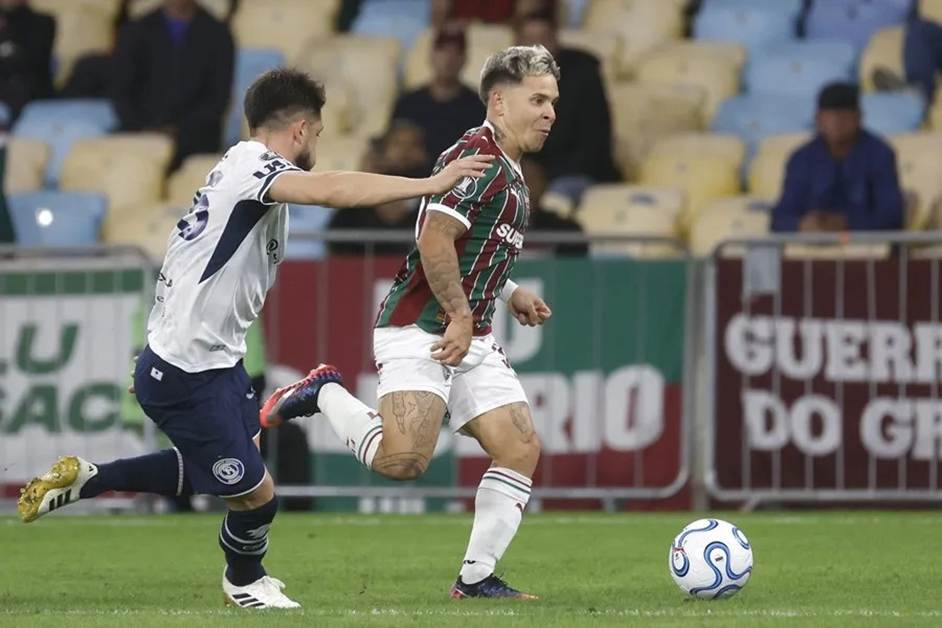
In Rio de Janeiro, the scoreboard refused to move. Fluminense pushed, Independiente Rivadavia resisted, and the 0-0 draw looked like another cautious opening act. By the next day, it had become a dismissal notice. Luis Zubeldía, in charge since September 2025, was out.
That decision captured the pressure surrounding these Copa Libertadores ties. Seven first legs ended level, leaving every contender alive and every favorite uncomfortable. A draw looks neutral on paper, but rarely feels neutral inside a club built to win. For a former champion, it smells like failure. For a debutant, it proves the continent’s hierarchy is negotiable.
Independiente Rivadavia has made that argument repeatedly. The Mendoza club also faced Fluminense in the group stage, where the Brazilians collected one point. Alfredo Berti’s side has not overwhelmed the 2023 champion. It has done something more unsettling. It has denied Fluminense the match it expected.
The return in Mendoza carries two pressures. Independiente Rivadavia must decide how boldly a debutant should pursue history. Fluminense must prove pedigree is more than a banner. The score is level. The emotional balance is not.
The Underdogs Carry the Advantage
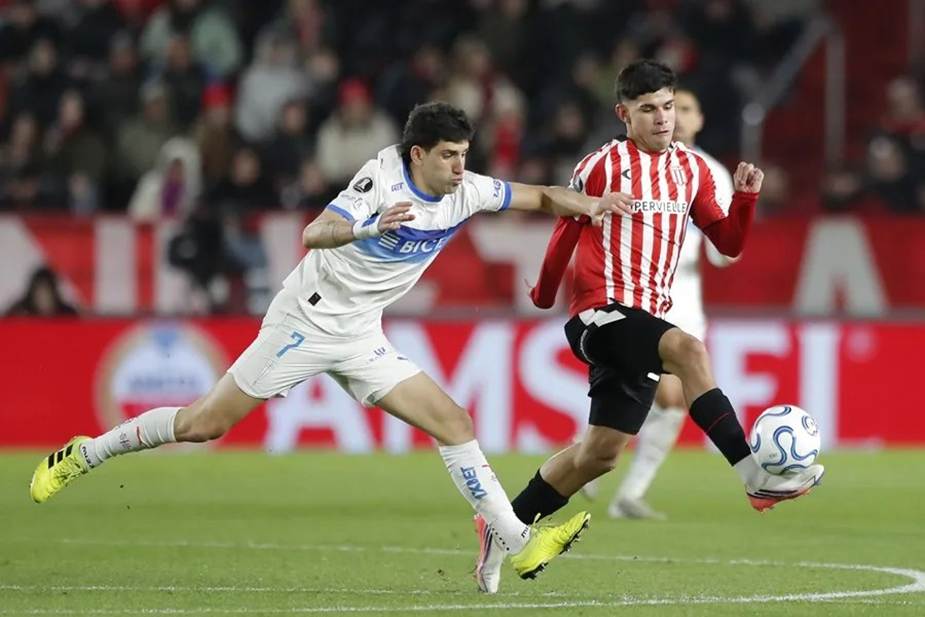
Chile’s representatives brought home leverage. Universidad Católica entered Estudiantes de La Plata’s charged Estadio UNO, absorbed an Argentine cup night, and left with a 1-1 draw. Tactical order mattered more than spectacle. The Cruzados return to Santiago knowing Estudiantes must reproduce its intimidation away from home.
Coquimbo Unido’s result was more dramatic. Platense led through Luciano Giménez in Vicente López, but Guido Vadalá scored in the fifth minute of added time. The equalizer did not merely rescue Coquimbo. It gave the Chilean club a story of survival to carry into the return.
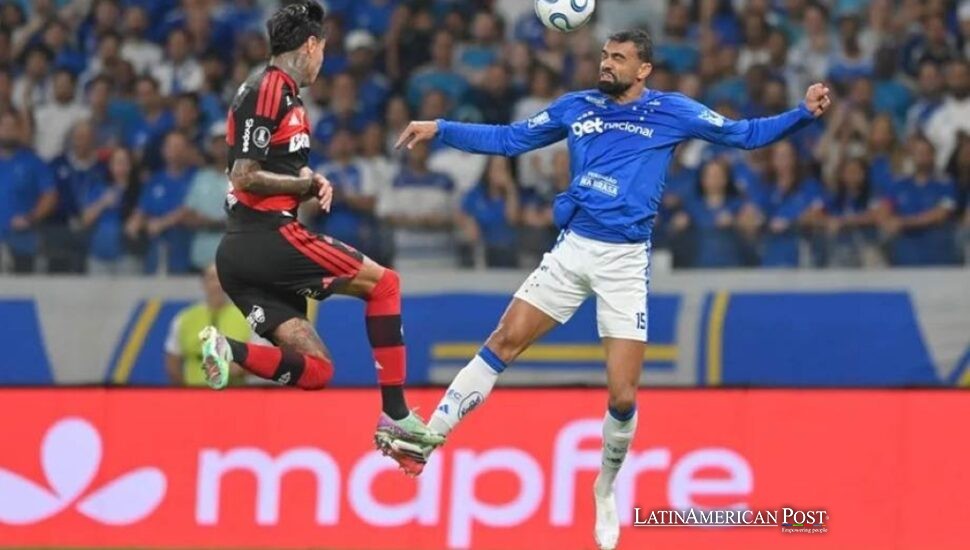
Cruzeiro and Flamengo meet again after a 1-1 draw in Belo Horizonte, where Keny Arroyo scored for the hosts, and Lucas Paquetá answered. Flamengo enters as reigning champion under Leonardo Jardim. Cruzeiro, coached by Artur Jorge, can turn a domestic rivalry into a continental dethroning.
Palmeiras nearly escaped the pattern. José Manuel “Flaco” López scored in the 82nd minute against Cerro Porteño, but Carlos Miguel’s own goal in added time made it 1-1. Cerro receives Palmeiras in Asunción knowing the favorite can be rattled.
Liga de Quito carried another 1-1 home from Mirassol. The Ecuadorians can invoke their 2008 title, but Mirassol’s debut has defeated easy assumptions. The newcomers finished the group stage level with Liga on 12 points. Their name carries less weight. Their results do not.
Corinthians and Rosario Central must find a goal after a scoreless first meeting. The 0-0 favors the Brazilians before the return at Neo Química Arena, yet Rosario travels with Ángel Di María, whose presence makes one decisive moment plausible on a difficult night.
Where the Tournament Gives Way to Survival
Then there is the tie that never began. After the magnitude 7.4 earthquake struck Colombia on August 10, CONMEBOL postponed Deportes Tolima’s match against Independiente del Valle for one week. Ibagué was not among the worst-hit cities, but football could not treat the disaster as distant. The return is August 25 in Quito.
The postponement created an empty place in the bracket. Along rural roads in Valle del Cauca, the earthquake created a different kind of emptiness.
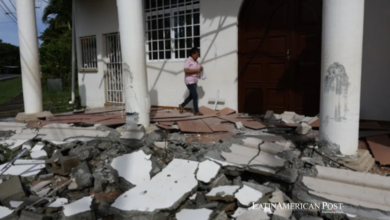
At a damaged home in Ansermanuevo, a white flag reading “Help, SOS” hangs where no official inspection has arrived. Milton Puentes Barahona lives there with his wife and son. Parts of the roof have fallen. Ceiling sections remain suspended above rooms the family no longer trusts.
“The house was practically destroyed, 100 percent,” Puentes told EFE. “It was something terrifying.”
Still, they hesitate to leave. The property is not only shelter. It supports a sport-fishing business and lodging for travelers between Ansermanuevo, Argelia and El Cairo. Abandoning it could mean surrendering home and income. Staying could mean sleeping beneath a structure no engineer has declared safe.
Passing motorists have offered food. “They give us a pound of rice,” Puentes told EFE. What the family needs are zinc roofing sheets, construction materials and an assessment that replaces fear with a decision.
At Parador La Ribera, owner Johanna Castañeda painted “Danger” and “Caution” in red on the walls herself. During the quake, she and five relatives ran toward an image of the Virgin Mary and embraced while their world shifted behind them.
“Thank God, who gave us a second chance at life,” Castañeda told EFE.
They now stay with relatives in Cartago, more than an hour away, but return daily to guard what remains from theft. The ritual exposes the rural logic of disaster. A family can escape a collapsing wall and still be tethered to it by property, livelihood and fear of another loss.
Carlos Alberto Correa, acting mayor of neighboring El Cairo, told EFE that authorities are overwhelmed and have not yet completed a rural census. Urban damage came first. Aid is being sent, he said, and officials hope to inspect country homes later.
That delay is not merely administrative. Across Latin America, distance often determines how quickly suffering becomes legible to the state. Cities produce concentrated ruins and urgent images. Rural damage is scattered across farms, hills and roadside businesses, where a white sheet may become the only emergency system a family can deploy.
The Copa Libertadores will resolve most of its seven draws within 90 minutes, perhaps a little more. Someone will advance. Someone will be dismissed. The bracket will regain its order.
In Ansermanuevo and El Cairo, there is no comparable whistle. Families wait for an engineer, a census worker, roofing sheets, and proof that the country has seen them. South American football remains gloriously uncertain. Their uncertainty is quieter, harder and far more dangerous.
Also Read: Argentine Icon Mario Kempes Turned Valencia Doubt Into Mestalla Immortality