The Malvinas War Ended, but Britain and Argentina Still Battle Over Tomorrow
Forty-four years after the Malvinas War, renewed Argentina-Britain tensions reach far beyond diplomatic speeches. Islanders navigate disrupted commerce, wounded memories and a resource economy whose growing wealth has sharpened an unresolved question: who controls the South Atlantic, and for whom?
A War With No Last Page
For Sam Cockwell, the sovereignty dispute can come down to a bottle of wine. Importing it, he tells EFE, shows how hard it is to do business across a political divide that geography alone cannot explain.
Cockwell, 41, heads the local hockey association and works for the islands’ development corporation. One of his brothers was born in Argentina in the 1970s, when contact with the mainland was more routine. That family detail complicates the familiar picture of two communities destined never to get along.
Then came April 2, 1982. Argentina’s military dictatorship sent troops to the Malvinas, known in Britain as the Falkland Islands. British forces retook them after a 74-day war that killed 649 Argentines, 255 British personnel, and three islanders. The total was 907. The sovereignty dispute survived.
Britain’s control dates to 1833, apart from the wartime interruption, and Argentina’s claim long predates the dictatorship. Condemning the generals’ decision to wage war does not settle that claim. Listening to islanders’ memories does not require treating British possession as an unquestionable historical verdict, either.
This September, President Javier Milei’s harder rhetoric has contrasted with his earlier admiration for Margaret Thatcher. On September 17, his government submitted legislation to toughen sanctions against companies exploiting disputed resources without Argentine authorization. London has reaffirmed its commitment to the islanders. The declarations travel quickly. No sovereignty settlement has been agreed on yet.
The Cost of Keeping Apart
Kathryn Daniels, deputy editor of Penguin News, describes the recurring confrontations with a weariness that rarely makes it into international headlines.
“People learn to ignore it because they’re used to it and simply want to get on with their lives,” she told EFE.
Ignoring it becomes harder when the argument reaches a business listing. Daniels describes fictitious establishments appearing on Google Maps, including a hotel named for Diego Armando Maradona, while real businesses received hundreds of one-star reviews with negative comments in Spanish. A sovereignty campaign conducted through customer ratings leaves shopkeepers answering for decisions they cannot make.
Cockwell reports similar friction in hockey, with Argentine political and sporting organizations obstructing island teams’ participation in international competitions. Trade barriers and limited air connections matter more, he says. “The lack of relations with Argentina is probably the only way all this remains tangible,” he told EFE.
For Argentina, the economic issue is substantial: extracting resources under British administration can entrench disputed control through contracts, infrastructure and commercial interests. But restricting ordinary contact carries its own strategic cost. It risks weakening the relationships through which Argentina might eventually build influence and trust.
The islands’ economic transformation sharpens that dilemma. A government-published assessment, citing national accounts, put fishing’s contribution in 2023 at £164.3 million, or 58.6 percent of gross domestic product. Fishing therefore contributed more than every other sector combined. Moving beyond sheep farming has not produced a broadly balanced economy.
That concentration makes access to marine resources far more than a matter of flags. Oil could diversify earnings, but it would also anchor another major industry in disputed waters. More wealth does not necessarily create more room for compromise; it can increase what each side believes it stands to lose.
What the Battlefields Remember
For Gerald Cheek, the distance from Argentina is measured differently. A member of the local defense force in 1982, he was detained by Argentine troops for almost two months. He told EFE that some people of his generation remain unwilling to renew ties. Political language lands on lived experience.
Tour guide Tony Smith sees those memories return when tensions rise. He began offering nature excursions in 1990, then found visitors drawn to the 1982 conflict. Today, his work links the visitor economy to places that returning veterans remember not as attractions, but as battlefields.
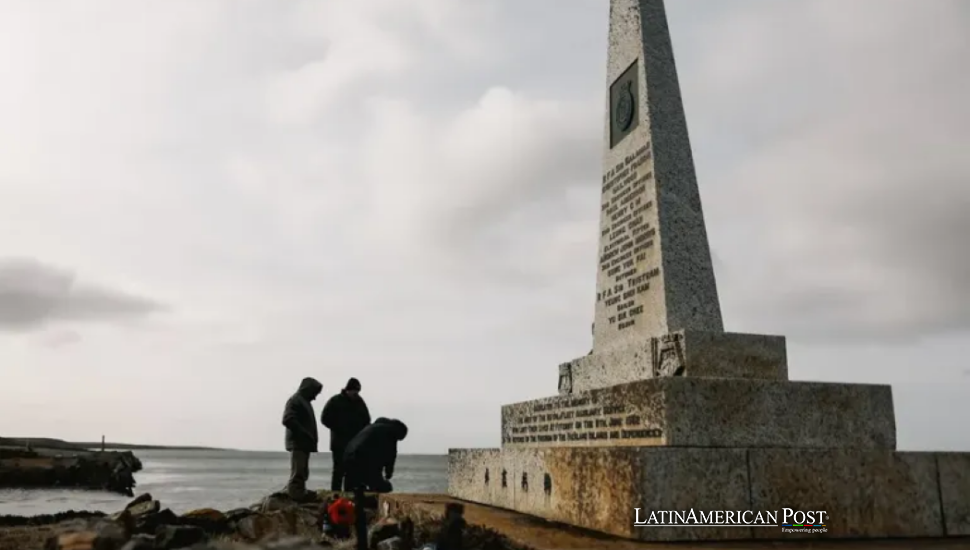
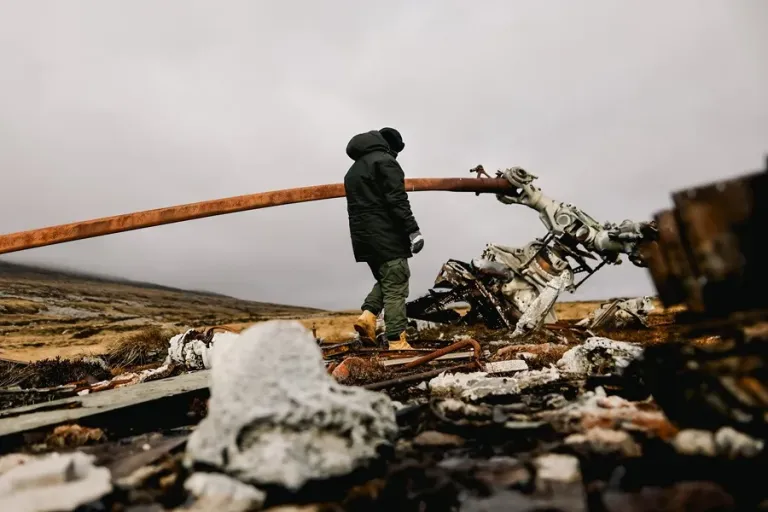
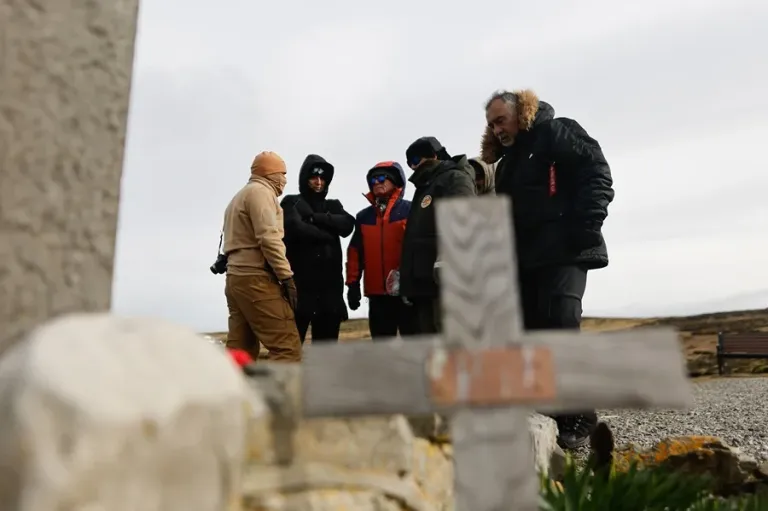
Trenches remain in the landscape alongside helicopter wreckage, spent ammunition and abandoned military equipment. Memorials interrupt the scenery. These are not simply attractions demonstrating how completely the islands recovered. They are evidence of what recovery cannot reverse.
Smith has accompanied Argentine veterans to cemeteries and their former battle positions. Islanders generally receive them without hostility, he told EFE, although Argentine flags and national symbols can create tension. Mourning may open a door that public declarations promptly close.
After the war, Britain reinforced its military presence, while fishing and tourism helped reshape infrastructure and daily life. Cockwell describes a society profoundly different from the one that existed 44 years ago. Yet prosperity has not reconciled the competing histories beneath it.
For Argentina, this is the bitter strategic inheritance of 1982: an operation intended to recover territory was followed by a stronger British military foothold and a more prosperous island economy. Pressure that confirms islanders’ worst expectations may strengthen the political attachment it seeks to loosen. Preserving a sovereignty claim and creating conditions for an eventual diplomatic agreement are different tasks. Neither can substitute for the other.
Civilian cooperation would not, by itself, settle sovereignty. It could make a different relationship imaginable without requiring either side to pretend the past never happened. For now, the war is easier to visit than to leave behind.
Also Read: Ecuador Resets the Curfew Clock as Homicide Figures Tell a Longer Story