Latin American Immigrants Confront Trump’s Secret Deportation Court Power Play
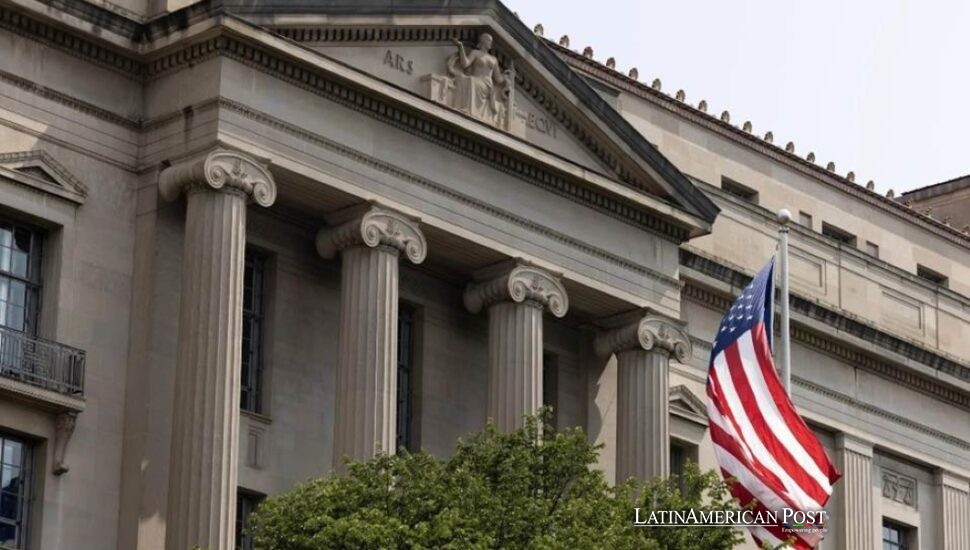
A dormant terrorism court is stirring under Donald Trump, raising a chilling question for Latin American immigrants: can a secret legal mechanism built for national security become a shortcut around due process in an already punitive United States deportation system?
A Court Built to Stay Hidden
In Washington, immigration stories often begin without a face. On July 15, the Department of Justice asked the Alien Terrorist Removal Court to authorize an unnamed person’s deportation. The next day, the court held a hearing. The public heard nothing. The proceeding surfaced only after Court Watch found the documents, like a light switched on in a locked room.
That secrecy is not a detail. It is the architecture. The petition is classified, and the person facing deportation has not been notified. Judge Joan N. Ericksen, the presiding judge, gave the Justice Department until Wednesday to provide more information, writing that the government could benefit from “more thoughtful consideration.” The language is restrained. The circumstances are not.
Congress created this court in 1996, when terrorism fears and punitive immigration politics hardened into law. It sat unused for three decades. To prevail, the Justice Department must show probable cause that the noncitizen is an “alien terrorist” threatening national security. That sounds demanding. Yet a standard is only trustworthy if the process tests it, especially when the accused cannot challenge the government’s account.
No serious person should dismiss security threats. When officials have credible evidence that someone planned or supported terrorism, they should investigate, prosecute, and, where lawful, remove that person. But extraordinary machinery requires extraordinary necessity. The Trump administration has lost deportation fights after judges found due process failures. Awakening a dormant court after those losses looks less like filling a legal gap than seeking a room where fewer questions will be asked.

When Terrorism Language Becomes an Immigration Shortcut
The sealed record offers no basis to claim the unnamed target is Latin American. That caveat matters. Still, institutions must be judged by their foreseeable uses, and Latin American immigrants occupy the center of this administration’s deportation politics. They are repeatedly turned into border imagery, campaign shorthand and televised proof of toughness. A secret removal channel built around “terrorist” could become another instrument in that theater.
Across Latin America, families know the force of labels such as “subversive,” “terrorist” and “internal enemy.” Twentieth-century dictatorships in the Southern Cone and military governments during Central America’s civil wars used national security language to blur lines between armed actors, students, union organizers, clergy and ordinary dissenters. Those histories differ. But the regional memory is clear: once the state accuses in secret, innocence becomes difficult to prove.
That history gives this U.S. experiment a bitter resonance. A migrant who fled political repression, gang coercion, extortion or state violence may arrive carrying more than documents. They may know what happens when government vocabulary outruns evidence. Washington reviving a hidden tribunal sounds like an old grammar in a new accent: accusation first, person later.
Immigration enforcement already encourages dangerous category slippage. A status violation is not a violent crime. A gang allegation is not a conviction. A social media connection is not operational support for terrorism. Yet secret proceedings make weak associations harder to expose. A mistranslated message, shared surname, tattoo, or informant’s untested claim can gain enormous weight when the subject cannot see the evidence. Secrecy can shelter weak cases from the friction that reveals them.
The numbers are tiny, but the institutional signal is enormous. One petition. One hearing. One unnamed person. That is not a trend, but moving from zero uses in three decades to one is no ordinary data point. It is a rupture. The first case teaches prosecutors what the court may accept, gives future officials a roadmap and makes the exceptional feel normal. In 1998, a Senate report led by Republican Jon Kyl warned that an inappropriate case could bring the court’s constitutional collapse. The warning came from inside the tough-on-immigration establishment.
Due process is not decorative. Deportation can separate parents from children, destroy livelihoods and send people back toward prison, persecution or death. Calling immigration proceedings civil does not make those consequences gentle. Calling someone an “alien terrorist” should increase the government’s obligation to prove its case fairly, not reduce the person’s ability to answer.

Immigration Has Harder, Better Answers
Trump’s political project presents immigration as one emergency demanding speed, spectacle and exceptional power. Latin American migration is not one emergency. It is a labor system, a family system and a protection crisis braided together. It reflects U.S. demand for workers, authoritarian collapse, extortion, climate shocks and unequal development. A terrorism court addresses none of those forces. It processes fear, not migration.
A durable response would be less cinematic and more competent. Immigration courts need enough judges and staff to decide cases promptly without becoming assembly lines. People facing removal need access to counsel and the evidence against them. Asylum officers need time and training to distinguish a thin claim from a desperate one. Legal work channels should match industries that depend on migrant labor, while letting workers leave abusive employers without losing status.
The United States must also stop pretending deportation alone can defeat migration’s economic logic. Agriculture, construction, hospitality and elder care recruit workers, directly or through contractors, while politicians promise mass expulsions. Enforcement without legal pathways does not eliminate demand. It creates a shadow labor market where fear suppresses wages and makes exploitation profitable. Regular status, portable visas and serious action against wage theft would do more for American workers than another televised raid.
Regional cooperation cannot mean paying Latin American governments to keep vulnerable people out of sight. Washington can support functioning asylum systems, anti-corruption efforts and local protection while expanding lawful pathways to the United States. Returns should be safe, reviewed and tied to real conditions in the receiving country. Longtime residents with deep family and community ties need a realistic route to legal status. These policies are difficult. That is why they are better than a secret shortcut.
Perhaps the government’s case before the Alien Terrorist Removal Court is strong. The public cannot know. Perhaps it is weak. The target may not know. That asymmetry is the danger. A human being can become a classified adjective before becoming a participant in the case that may decide the rest of their life.
Latin American communities have seen national security language travel from exceptional enemies to convenient ones. Once a hidden court proves useful, officials will be tempted to widen its reach, especially when ordinary judges insist on constitutional limits. The answer is not to disable the government from confronting real threats. It is to require evidence, notice, counsel and review when the accusation is most frightening.
A republic is not measured by how quickly it can remove a disliked stranger. It is measured by whether it keeps legal discipline when fear makes shortcuts popular. The United States has tools to prosecute terrorism and practical ways to manage immigration. Turning a secret court into a deportation weapon is neither. It is an admission that spectacle has replaced policy, and that the person behind the sealed file is expendable.
Also Read: Mexico Turns Migrant Deaths into a Test of American Justice