Colombia’s Legal Aid for Accused Mercenaries Deepens Controversy in Haiti Assassination Case
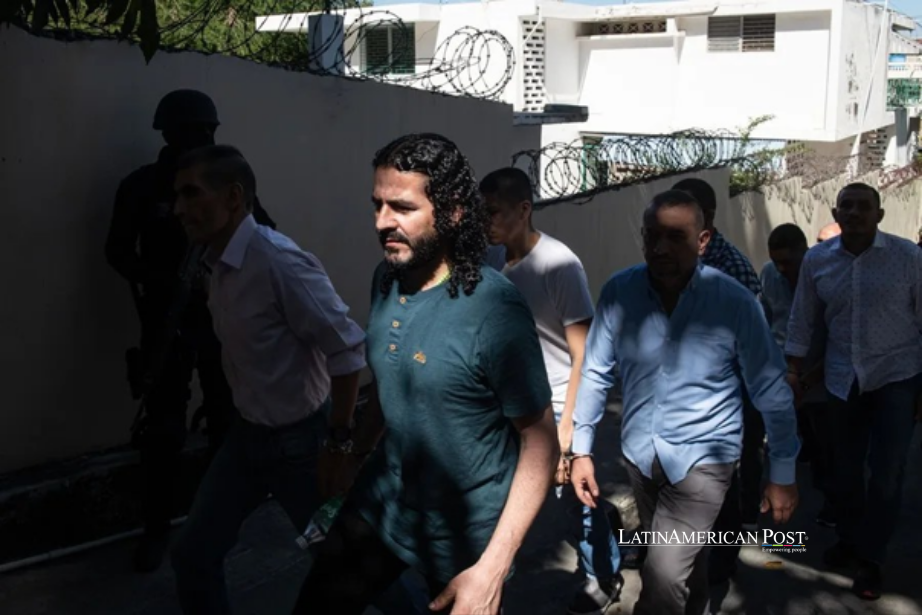
Colombia’s promise of legal assistance for 17 veterans accused in Haiti’s presidential assassination exposes a difficult divide between defending citizens and declaring heroes. At the same time, a sprawling prosecution reveals how foreign contractors imagined turning political upheaval into a profitable business opportunity.
A Defense Is Not Absolution
For Milena Carmona, the announcement meant somebody was finally listening. Her husband, Jheyner Carmona, is among the Colombian veterans accused in the assassination of Haitian President Jovenel Moïse. “I am absolutely happy that someone finally listens to us,” she told The Associated Press. Relief, however, is not a verdict.
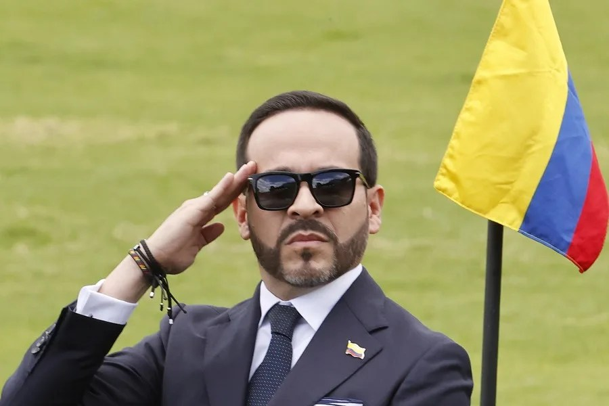
On October 6, President Abelardo de la Espriella ordered legal assistance for 17 former soldiers now facing prosecution in the United States. He also promised financial help for their families. But he attached a politically consequential label to that support: “heroes.” He said he wanted each man’s individual responsibility established.
Those positions are not identical. Providing a defense protects citizens against wrongful conviction. Calling defendants heroes before their cases are resolved risks suggesting that military service already answers the questions a court must examine. Colombia can insist on fairness without asking Haitians to hear an endorsement of the men accused.
The practical distinction is important, too. At their September 21 appearance in Miami, Magistrate Judge Lisette Reid assigned court-appointed lawyers. Colombia is therefore not rescuing men without counsel. Its assistance must complement existing representation. The announcement leaves unanswered what that additional support will cover and how it will be funded.
The 17 veterans account for roughly 57 percent of the expanded U.S. case’s 30 defendants. That measures headcount, not leadership. They face conspiracy charges involving murder or kidnapping abroad and material support resulting in death, with possible life sentences. The question remains what each man knew and did.
A Presidency Priced in Contracts
Moïse was killed at his home on July 7, 2021. His wife, Martine, was seriously wounded. Behind that household’s devastation, prosecutors describe a business proposition: remove the president, install a preferred successor, and obtain government contracts. Christian Sanon was initially envisioned as the replacement, with a Doral security company positioned to benefit.
This was not simply a story of Colombians taking violence abroad. The alleged arrangement joined Colombian military labor to Florida financing and Haitian political ambition. Its logic was brutally commercial. Instead of winning contracts from an elected government, the organizers sought to determine the government that would award them.
The financing supplies a revealing scale. Evidence presented at a separate Miami trial traced a $175,000 loan agreement to the operation, financed with proceeds from U.S. pandemic relief programs. That figure was not the total price of the assassination. It was one documented financing mechanism supporting a project whose anticipated rewards were public contracts.
The disparity matters more than a sensational price tag. A relatively small sum was deployed to gain access to a country’s public spending. The proposition was circular: money intended for American economic relief would help install a Haitian government expected to reward the private organizers. Sovereignty became the asset they hoped to monetize.
For Colombia, that raises a question extending beyond this prosecution: what happens when military skills cultivated for national security enter private recruitment networks abroad? Protecting veterans after arrest is necessary. Preventing deceptive recruitment and investigating employers before another deployment ends in catastrophe matters too.
Some of the men awaiting trial say they were recruited for legitimate work. The operation was presented as a lawful arrest with supposed U.S. agency backing. Such claims require scrutiny, not acceptance. An assertion of American authorization is not proof, and believing an operation involved arrest does not automatically make it lawful.
In May, a Miami jury convicted four organizers and financiers in the plot. Those convictions show that accountability has reached beyond the armed team. They do not establish the individual guilt of these 17 defendants, whose knowledge and actions must still be examined.

Haiti Cannot Remain the Backdrop.
The Haitian proceedings also resist easy arithmetic. An indictment covering 51 people, including Martine Moïse, was overturned on October 13, 2025, when an appeals court ordered a new investigation. Treating that earlier tally as a current roster of established conspirators would erase a consequential judicial reversal. The court nevertheless kept the Colombian suspects detained.
Meanwhile, Haiti’s losses have become national rather than merely presidential. A September 25 migration agency report put internal displacement at nearly 1.5 million people, with almost 80 percent located outside Port-au-Prince. That distribution matters: displacement is straining communities beyond the capital, not remaining contained around the original center of violence.
These numbers cannot all be charged to one assassination. Haiti’s political and security failures did not begin in Moïse’s bedroom. But reducing the case to Colombian defendants and American court dates leaves the people living through its aftermath outside the frame.
De la Espriella’s position also reverses the emphasis of Gustavo Petro, who apologized to Haiti in 2025 for Colombian involvement. One administration stressed national shame; the next stressed loyalty to veterans. Neither political framing can substitute for evidence about particular men.
The defensible course is less theatrical: protect the accused from injustice while helping establish who recruited, financed, and directed the operation. Families in Colombia deserve answers about their relatives. Haitians deserve answers about their country. A government need not abandon either group to stand beside the other.