U.S. Drug Raids in Ecuador Under Legal Scrutiny After Eight Fishing Boats Sunk
Eight Ecuadorian fishing boats are gone, and 160 crew members face consequences ashore. Human Rights Watch is demanding the evidence and legal authority behind U.S. operations, as Ecuador’s campaign against trafficking collides with fishermen’s accounts of abuse and lost livelihoods.
A Livestream From the Deck
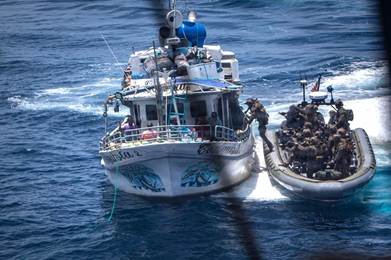
Some Ecuadorian fishermen have begun broadcasting military boardings on TikTok. They share their positions and record what happens until U.S. Marines take their phones, EFE reports. The last image may become something for relatives to hold onto while waiting for answers.
The captain of Los Tres Hermanos described another record. He told Human Rights Watch that, after asking what evidence American forces had found, he was offered a choice: “death or prison.” His answer was “Neither.” He said his crew later left in support boats before their vessel was destroyed.
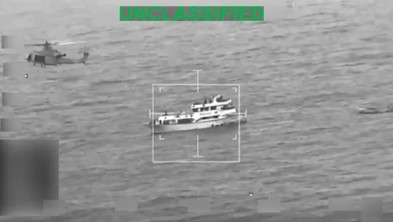
Between August 28 and September 16, 2026, American forces destroyed eight Ecuadorian fishing vessels. Crews were removed before the boats were sunk. The operations, conducted in coordination with Ecuador, involved forces deployed from the USS San Antonio. The sequence distinguishes these cases from separate U.S. attacks that killed people aboard suspected trafficking boats.
Washington describes the vessels as floating refueling stations supporting cocaine shipments linked to Los Choneros. Los Choneros has also been linked to Mexico’s Sinaloa cartel. Ecuador’s government says joint investigations identified their logistical role. Supplying fuel offshore could extend a smuggling boat’s range without a port call. That theory, however, does not establish what each person aboard a targeted vessel knew.
President Daniel Noboa has said there is clear evidence. Defense Minister Gian Carlo Loffredo said an unidentified vessel had previously carried 2.9 metric tons of drugs and was again supplying illicit fuel. Those claims remain distinct from the evidence prosecutors must present against individual defendants.
The operations unfolded under the Shield of the Americas, a coalition promoted by Donald Trump against organized crime. Ecuador’s participation places these boardings within a broader regional security project, rather than an isolated encounter between a fishing crew and an American warship.

What the Numbers Actually Establish
HRW’s October 2 report examined 160 crew members. Ninety face criminal investigations for alleged unlawful association but remain free under restrictions. Judges declared 56 arrests unlawful. Another 14 were not brought before a judge. The categories describe different legal situations, not a single group of convicted traffickers.
The unlawful-arrest rulings concern 35% of those aboard. Ongoing investigations cover 56.25%. Neither percentage measures guilt. An unlawful detention ruling does not settle every allegation about a voyage; an investigation does not establish that an accused person committed a crime.
A pending decision concerns 34 crew members whose case was heard in Manta on September 28. HRW said a ruling was expected October 7. Their court proceedings therefore continue after the vessels were destroyed, not before the irreversible loss.
HRW’s 27 interviewees were not all eyewitnesses. They included relatives and lawyers alongside captains and crew members. Researchers also examined court and police records, photographs, and videos. The organization said it could not determine whether any vessel functioned as an illicit refueling station.
That limitation does not erase the allegations requiring investigation. Crew members reported beatings, threats intended to extract confessions, and pressure to sign documents they could not understand. Lawyers told HRW that Ecuadorian police and naval officials acknowledged in court that neither country had supplied evidence establishing a crime.
There is also a distinction between finding drugs and establishing logistical support. A fuel supplier would not necessarily carry cocaine. Conversely, carrying fuel cannot alone distinguish an ordinary fishing voyage from a criminal operation. Connections between deliveries, recipients, and particular defendants would matter more than the presence of a tank.
HRW warned that destroying the vessels may have eliminated evidence. Records or equipment aboard could support either the prosecution or the defense. Once the hull is gone, an argument about what investigators found can become harder to resolve. Ecuador’s attorney general and U.S. Southern Command had not answered HRW’s inquiries.
The Coast Beyond the Targets
The stakes extend beyond whether Washington interrupts shipments headed north. For Ecuador’s coastal communities, a fishing vessel is also equipment that makes earning possible. A crew member released ashore cannot necessarily return to work when the workplace itself has been destroyed.
Latin American development goals recognize both sides of that problem. The 2030 Agenda calls for combating organized crime and reducing illicit financial flows while strengthening access to justice. Its ocean commitments also include protecting small-scale fishers’ access to marine resources and markets. Security and lawful livelihoods are parallel objectives.
The economic loss cannot be calculated by counting eight hulls. Vessel values and ownership arrangements are needed, along with information about earnings forgone. Nor does eight boats destroyed reveal how much trafficking capacity disappeared, whether replacement vessels emerged or whether coastal violence declined.
HRW’s Americas director, Juanita Goebertus, accepts that intercepting illicit fuel supplies can disrupt criminal groups. She demands that both governments explain their legal authority, disclose targeting criteria, and investigate alleged mistreatment. It is a challenge about how operations are conducted, not a finding that every intercepted voyage was lawful.
For families following the hearings, freedom and recovery are not the same thing. A release order can settle whether someone remains in custody. It cannot replace a vessel. Returning a fisherman to shore is not necessarily returning him to work.