Latin American Football Faces a Billion-Dollar FIFA Future with Strings
FIFA’s proposed commercial overhaul could deliver up to $40 million to federations before 2030, a windfall capable of transforming Latin American football. Yet the money arrives through a centralized corporate structure that may deepen dependence, sharpen governance risks, and redefine sovereignty.
Forty Million Dollars Changes the Grassroots Equation
In much of Latin America, football begins where budgets do not. A ball is shared on cracked concrete, coaches collect coins for gasoline, and youth teams travel overnight. Women train after men. Small federations postpone clinics or regional tournaments because one missing sponsor can erase a season.
Under the plan, each of its 211 member associations would receive $20 million through FIFA Forward during the 2027 to 2030 cycle, up from $8 million in 2023 to 2026. Federations could seek another $20 million through a new FIFA Fast Forward program, potentially placing $40 million within reach before the 2030 World Cup.
For Brazil, Mexico, or Argentina, the sum would not remake the professional game. For Honduras, Bolivia, Haiti, Paraguay, Guatemala, or many Caribbean associations, however, it could alter football’s physical map.
It could mean playable pitches beyond capital cities. It could finance coaching schools. It could support women’s leagues that disappear between tournaments, medical programs for youth players, or competitions that connect isolated provinces with scouts.
The most democratic feature of FIFA’s model is also its strangest: every national association receives the same base amount. A football giant and a small island federation stand equal in the ledger. That can narrow international disparities, but it says nothing about equality inside each country. Twenty million dollars deposited at headquarters does not automatically reach a teenage goalkeeper in the Andes or an Afro-descendant girls’ team on Colombia’s Pacific coast.
FIFA Turns Football Into an Investable Machine
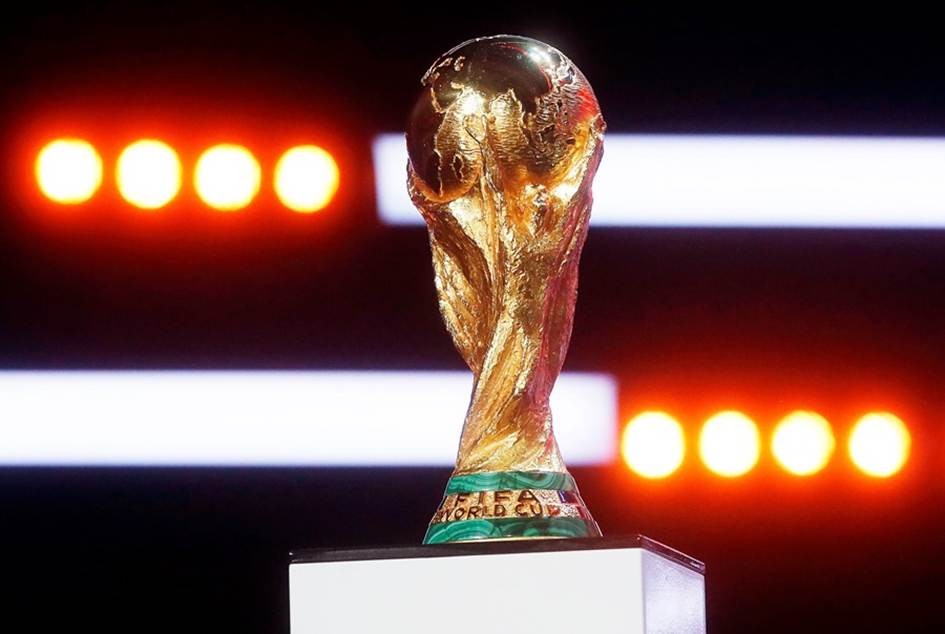
The money depends on FIFA Forward Enterprise, or FFE, a proposed subsidiary that would consolidate FIFA’s commercial rights and event operations. Sponsorship, broadcasting, licensing, competitions, and future projects would fall under a single controlled structure designed to increase their value.
FIFA plans to raise $4.2 billion by selling minority stakes to long-term investors at an initial valuation of $20 billion. JP Morgan would help select the partners. FIFA says investors would have no seats on its council, no votes in Congress, and no authority over World Cup formats, expansion, frequency, or regulation.
Investors buying into FFE will expect growth. That can favor more tournaments, additional broadcast windows, new sponsorship inventory, and competitions designed for wealthy consumer markets. Latin America has already lived this tension. Its football culture is local, tribal, and historical, but its best players and matches are increasingly packaged for audiences elsewhere.
The proposal could make FIFA less dependent on a single men’s World Cup cycle and more capable of financing development. It could also make national federations more dependent on FIFA itself. When a single global institution provides funding for training centers, women’s competitions, and infrastructure, that institution gains influence without requiring a formal vote in domestic football.
This matters in a region where federations sit uneasily between public importance and private legal status. National teams function as civic symbols. Stadiums receive public support. Governments are blamed for failure, yet officials are warned against “political interference” when they challenge federation leaders.
FFE would strengthen a system in which FIFA can act as a regulator, development bank, rights owner, and commercial corporation at once.
The Windfall Will Test Who Football Serves
The proposal contains safeguards. Member associations would not own FFE shares. Funding would come through FIFA Forward and Fast Forward, with projects subject to approval, auditing, and reporting. FIFA would retain board control, while minority investors could sell stakes only through supervised bidding.
Those rules matter in Latin America, where football governance has repeatedly been damaged by opaque contracts, patronage, and executives who treat federations as personal estates. Yet audits measure paperwork more easily than public value. A complex can be completed on budget and still serve favored clubs. A women’s program can satisfy a funding category while offering players six meaningful matches a year.
The deeper question is not whether federations spend legally. It is whether they spend to broaden football’s social base.
By 2038, a participating association could receive $86 million over 12 years: $40 million from 2027 to 2030, followed by $22 million from 2031 to 2034, and $24 million from 2035 to 2038. That duration could support planning beyond a single president, a single qualifying campaign, or a single ribbon-cutting ceremony.
Federations could build regional technical networks, retain coaches, create stable women’s calendars, improve refereeing, and reduce the pressure pushing children toward informal agents. They could also pour money into headquarters, consulting contracts, and showcase facilities while neighborhood clubs keep selling raffle tickets for uniforms.
The proposal therefore offers something more consequential than generosity. It offers a test.
Latin American football has never lacked talent. It has lacked equal access to surfaces, nutrition, medicine, safe travel, patient coaching, and institutions worthy of the people sustaining them. FIFA’s billions could address those failures. But a corporate pipeline is not a development philosophy.
The future will be decided in ordinary places: a federation meeting with published accounts, a floodlit field in a forgotten town, a women’s team finally given a season long enough to become a profession. The money may come from Zurich and global investors. Its legitimacy must be earned much closer to home.
Also Read: Cuba Turns Out the Lights on Its Prized Cigar Festival