Latin American Families Find a Fragile Refuge Beside Georgia’s Vast Detention Machine
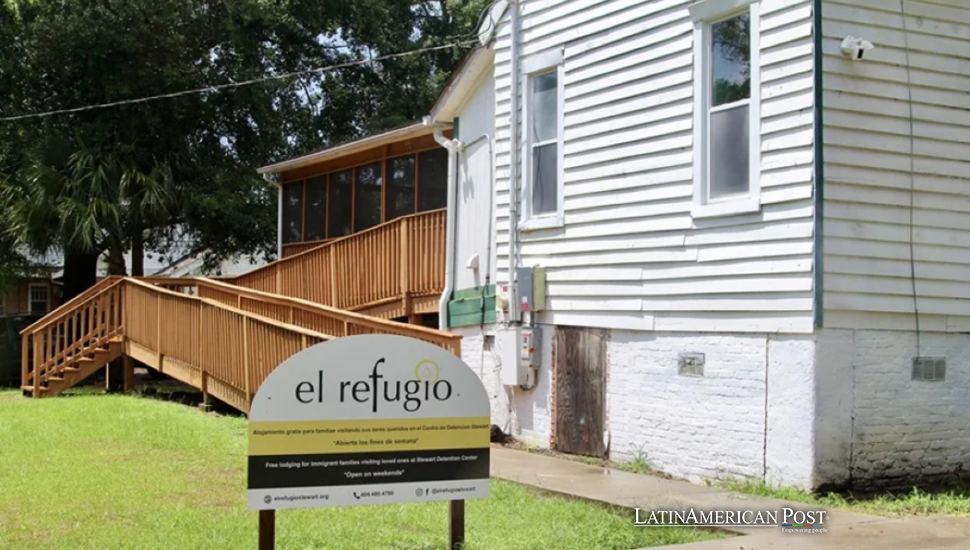
Near one of America’s largest immigration detention centers, El Refugio offers beds, food, toys, and something harder to measure: dignity. For Latin American families arriving in Lumpkin, Georgia, a weekend visit can become a reunion, a farewell, or both painfully.
A House Three Miles From Detention
In a large old house in rural Georgia, people arrive carrying overnight bags, children, food, uncertainty and the peculiar exhaustion that comes from traveling hundreds of miles to see someone who cannot leave with them.
El Refugio sits in Lumpkin, a small town roughly 300 kilometers south of Atlanta and only about three kilometers from the Stewart Detention Center, one of the largest immigration detention facilities in the United States. The physical distance between the two places is short. Emotionally, it can feel enormous.
At Stewart, nearly 2,000 immigrants are detained behind fences and institutional walls. At El Refugio, families eat together around a long table, children find toys and puzzles, volunteers answer phones and bedrooms offer people a place to sleep before or after a visit that may be joyful, devastating or both.
“It is a blessing to have them here,” a Mexican woman who arrived with her daughter and young granddaughter told EFE. They had traveled to visit her son-in-law, who was being held at Stewart, and stayed at El Refugio while waiting for the long-anticipated meeting.
Since opening in 2010, the nonprofit has become something unusual in America’s immigration system: an infrastructure built not for processing people, but for handling the practical consequences that detention pushes outward onto families. On weekends, volunteers told EFE, around 40 people a day may pass through the house.
That number sounds modest beside the scale of national immigration enforcement. In Lumpkin, it feels different because each visitor represents a family reorganized around detention.
A parent drives through the night. A child misses school. Someone borrows money for gasoline. Relatives learn visitation procedures, detention numbers and the vocabulary of immigration law they never expected to need.
The American detention system measures beds. El Refugio measures the people who come looking for whoever occupies them.

What Happens After the Gate Opens
Stephanie M. Madison spends much of her time answering the telephone. The El Refugio coordinator, who also teaches at Clemson University in South Carolina, switches easily into Spanish as families, detainees and officials call the house.
One recent call came from Stewart itself. A security officer working for CoreCivic, the private company operating the detention center, said an elderly detainee was going to be released. According to the call described to EFE, officials had been unable to locate relatives who could receive him.
Freedom, in that moment, presented another problem: where does someone go after the gate opens if nobody is waiting outside?
Madison began calling another organization in Americus, about 45 minutes away, looking for temporary shelter. Outside, another elderly immigrant named Armando offered a glimpse of what release can look like.
The Cuban man leaned on a walker after spending three months detained at Stewart. He appeared exhausted and physically fragile. “They let me out because I am very sick,” he whispered to EFE.
The sentence collapses the clean distinction Americans often imagine between detention and release. Leaving custody does not necessarily mean the crisis has ended. A person may emerge without transportation, housing, money, medication or relatives nearby.
Death has also entered Stewart’s recent history. In April, 33-year-old Cuban detainee Denny Adan González died in what Immigration and Customs Enforcement described as an apparent suicide. On July 24, Mexican national Prisciliano Trejo Ricano, 29, died in a Georgia hospital after having been detained at Stewart.
Those deaths belong to individual cases and circumstances that should not be casually generalized. But they give weight to what families experience when they arrive in Lumpkin. A detention center is not merely a place where an immigration case waits to be decided. Time happens inside it.
People become sick. Families miss birthdays. Children grow. Court dates move. Someone receives an order, someone else is released, and another person may be deported before relatives have understood that the previous visit was the last one.
That is why the work happening three kilometers away matters. El Refugio cannot decide an immigration case, but it can make sure someone has a bed, a meal and a working phone after the machinery of detention has moved on.

A House Built Around the Waiting
The house itself makes a quiet argument. There is food, clothing and bedrooms. Children have a playroom. Families sit at the long table and talk, sometimes sharing stories with strangers who understand more than strangers usually could. They assemble puzzles to occupy their hands when the mind will not cooperate.
“It is good to know that we are not alone,” Gonzalo, a Mexican father who traveled with his young daughter to visit his detained stepson, told EFE. A person who comes to El Refugio, he said, can find food, safety and people trying to help.
That simplicity is precisely what makes the place revealing.
America’s immigration debate is usually conducted in the language of millions: border encounters, deportation totals, detention capacity, court backlogs and appropriations. Those figures matter. Governments cannot administer borders through anecdotes alone.
But statistics create distance.
El Refugio restores the scale that policy discussions often erase. One detainee can generate a caravan of relatives. One detention can disrupt childcare, wages, rent, school schedules and emotional stability far beyond the person inside.
For Latin American communities, this is particularly familiar. Migration across the hemisphere has always created families stretched across geography. A father works in Georgia while children remain in Mexico. A Cuban relative arrives after years of separation. A Central American household survives partly through remittances from someone thousands of miles away.
Detention tightens those distances abruptly. The person who was physically present yesterday becomes reachable only through institutional rules today.
Madison does not claim that El Refugio can change the system surrounding it. “My contribution feels like just a drop,” she told EFE. What the house can do is narrower and more tangible: answer a call, find temporary housing, make space for a child, or make sure a newly released detainee is not simply left outside with nowhere to go.
That may sound small against a detention network measured in thousands of beds.
In Lumpkin, it is not.
El Refugio’s importance lies precisely in its refusal to speak at the scale of immigration policy. It works at the scale of one family arriving after dark, one elderly man leaning on a walker, one child waiting while adults discuss a case she does not fully understand.
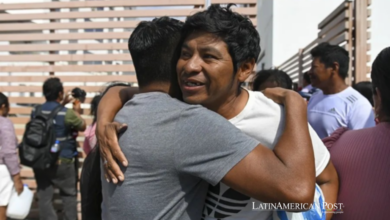
And sometimes it is simply the place where a family comes after a visit, when everyone already suspects that the embrace they just witnessed may have been goodbye.
Also Read: El Salvador Faces a Homeland Crisis as TPS Ends for Thousands Abroad