Panama’s Dark Beach Guards Four Turtle Species Against a Rapidly Brightening Coastline
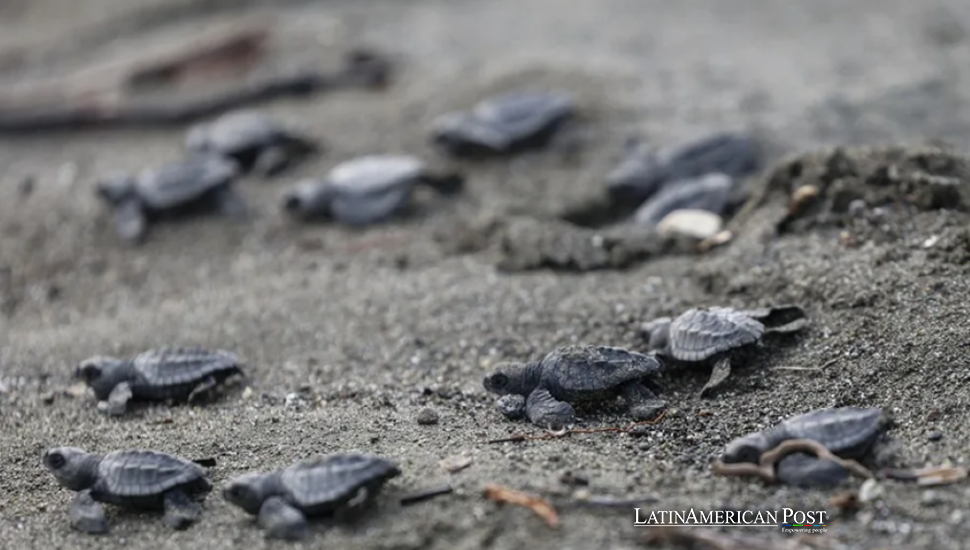
On Panama’s Pacific coast, residents patrol Mata Oscura with sticks, gloves, and decades of experience, rescuing turtle eggs before tides, predators, heat, and development destroy them. Their work reveals how conservation increasingly depends on communities defending nature from cumulative human pressure.
Reading the Sand Before Sunrise
At low tide, Manuel Vásquez walks the beach carrying a small stick. The 63-year-old Panamanian is not searching randomly. He presses it into patches of sand until it suddenly sinks more easily. Softer sand means something disturbed the beach during the night. Often, beneath that spot, there is a nest.
“Instead of digging around crazily, we use the stick,” Vásquez told EFE. Once a nest is found, the eggs are handled with gloves because bacteria from human hands can contaminate them. They are placed carefully into a bag and carried to an artificial nursery farther from immediate danger.
Vásquez has been protecting sea turtles since 1992. He belongs to Mata Oscura, a small coastal community in Panama’s Veraguas province where turtle conservation has become something close to inherited knowledge.
The beach is unusual even by Panamanian standards. Four species come here to nest: green turtles, leatherbacks, olive ridleys and hawksbills. Jacinto Rodríguez, an activist with the Agua y Tierra Foundation, describes Mata Oscura as “blessed” by that diversity.
For two of those species, the stakes are especially high. Rodríguez told EFE that green and leatherback turtles in the eastern Pacific are classified as critically endangered. Under international conservation criteria, he said, that makes Mata Oscura a critical habitat deserving the highest level of protection.
The phrase “critical habitat” sounds bureaucratic. On the beach, its meaning is tactile. It is Vásquez bending over wet sand, volunteers working at night while turtles drag themselves beyond the tide line, and the knowledge that a few degrees of heat, another beachfront light or one badly placed construction project can alter a reproductive cycle older than Panama itself.
Forty-Seven Nests Behind Three Fences
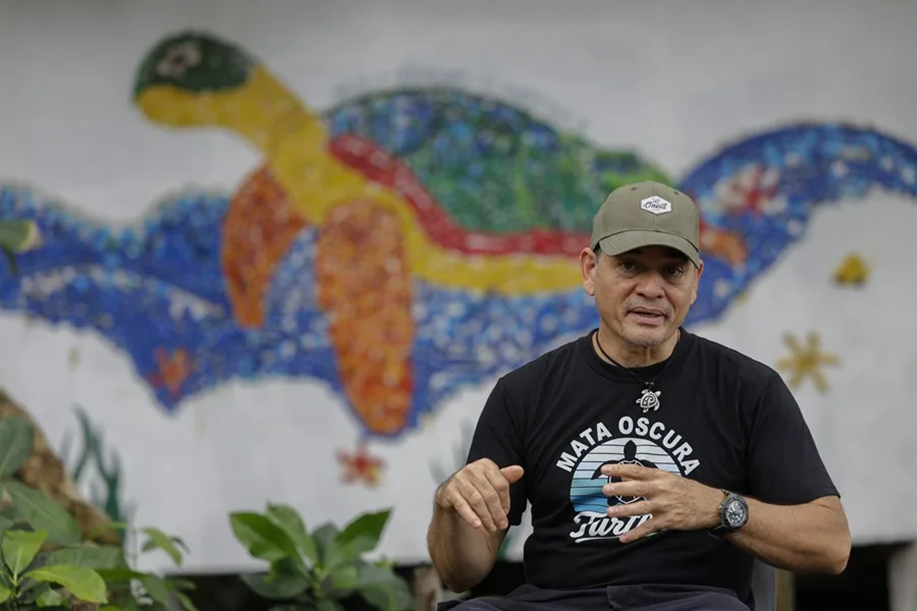
Marine biologist Cary Rodríguez, 25, showed EFE one of Mata Oscura’s artificial nurseries. Inside were 47 rescued nests containing approximately 4,700 eggs, which will take roughly 45 to 60 days to hatch.
The nursery resembles a controlled experiment built inside a landscape that is becoming increasingly difficult to control. Three layers of fencing and mesh protect the eggs from dogs, people, insects and other predators.
Moving nests is itself an intervention, which is why Rodríguez emphasizes precision. “If we are moving something from nature to an artificial place, we have to guarantee optimal conditions,” she told EFE. The goal is straightforward: more hatchlings should survive there than would have survived in the increasingly vulnerable sections of beach where the eggs were originally laid.
That calculation captures a modern conservation paradox. Humans are intervening because human pressure has made nonintervention increasingly dangerous.
Mata Oscura earned its name from darkness, and darkness remains part of what attracts nesting turtles. But each year, Rodríguez said, more lights appear as construction and urban development advance along the coast. For turtles, artificial illumination is not merely visual pollution.
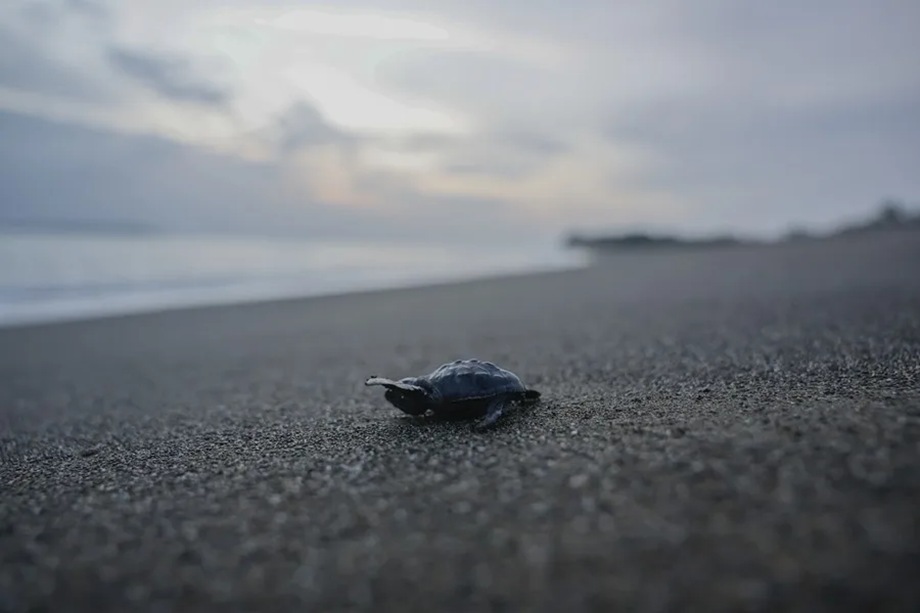
Adult females depend on environmental cues when nesting. Newly hatched turtles use natural light horizons to orient themselves toward the ocean. Bright buildings, roads and lamps can scramble those instincts, pulling hatchlings away from the water at the moment they are most exposed. Development therefore changes the beach without necessarily touching a nest.
Then there is erosion. The shoreline has moved significantly, Rodríguez said, whether from climate change, sand extraction or a combination of pressures. Places where the foundation installed artificial nurseries a decade ago now flood.
The disappearing ground is an unusually clear measure of change. Conservationists are not talking about models predicting what the coastline might look like someday. They can point toward sections of beach where they once worked and say the nursery cannot go there anymore.
When Conservation Becomes a Village Job
Heat creates another problem. As temperatures rise, turtles are nesting increasingly close to vegetation, where the sand is cooler. Excessively hot sand can kill developing eggs, so preserving coastal vegetation becomes part of preserving the turtles themselves.
The threats overlap: brighter nights, hotter sand, retreating coastline, predators, development and limited government presence. Panama has more than 100 turtle nesting beaches on its Pacific coast alone, and Rodríguez acknowledged the obvious institutional limitation. Placing a government official on every nesting beach would be nearly impossible.
That leaves communities occupying the space between environmental law and environmental reality.
In Mata Oscura, that arrangement did not appear overnight. Vásquez said residents have spent more than three decades learning turtle conservation with help from universities and nonprofit organizations. The Agua y Tierra Foundation’s current project arrived in 2011 and added scientific methods to knowledge residents had accumulated through years of watching the beach.
“I have mixed the experience from those years with what we have now, because now things are more scientific,” Vásquez told EFE.
His observation explains why community conservation can succeed where distant protection sometimes struggles. Science can identify incubation requirements, contamination risks and endangered populations. Residents know where the water reached last year, where dogs enter the beach, which lights appeared recently and how the sand feels beneath a stick at low tide.
Neither form of knowledge is enough alone.
Mata Oscura also exposes a larger tension running through Panama and much of coastal Latin America. Beaches carry increasing economic value for housing, tourism and development precisely because the same landscapes retain enormous ecological value. The pressures rarely arrive dramatically. A new light appears, sand disappears, another structure rises and the vegetation retreats.
Then, slowly, a beach that remained suitable for nesting across generations becomes something else.
Against that transformation stands a remarkably modest defense. A 63-year-old man walks with a stick. A 25-year-old biologist counts thousands of eggs behind mesh. Residents patrol at low tide and wait weeks for creatures small enough to fit in a hand to break through the sand and begin moving toward the Pacific.
Vásquez is already thinking beyond his own generation. “When we were young, we had that initiative to conserve the turtles,” he told EFE. His message to younger residents is simple: follow the example, because “if we don’t conserve what we have, it will be lost.”
On Mata Oscura, that warning is no metaphor. The old nursery sites are already underwater.
Also Read: Aracataca Boards a Culture Train Beyond García Márquez’s Yellow Butterflies