Colombian Land Reform: Families Face Threats and Uncertainty After Receiving Farms
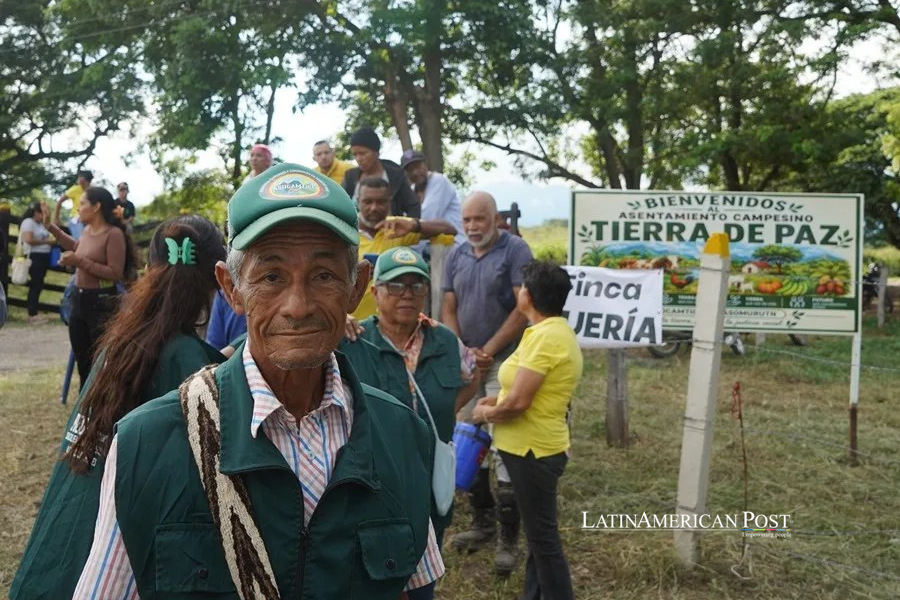
Six months after the state handed over La Alquería, about 77 families near Valledupar are farming under threat, their leaders say. What happens between planting and harvest tests a promise Colombia made to its countryside in the 2016 peace accord.
A Warning at the Fence
Mayelis Mendoza knows how cattle keep getting into the corn. Someone cuts the wire around the plots, she told EFE, and the animals come through. The families at La Alquería grow cassava, watermelon, sugarcane and plantains alongside the corn. What they lose through a gap in the fence is food they worked to grow and may now have to buy.
Mendoza, an officer of the Tierras Nuevas Rural Women’s Association, says residents recognize the people cutting the fences as workers for the farm’s former occupants. She says those workers tell the families to quit planting. The property still belongs to Hugues Rodríguez, they warn, and the families “will have to give it back.”
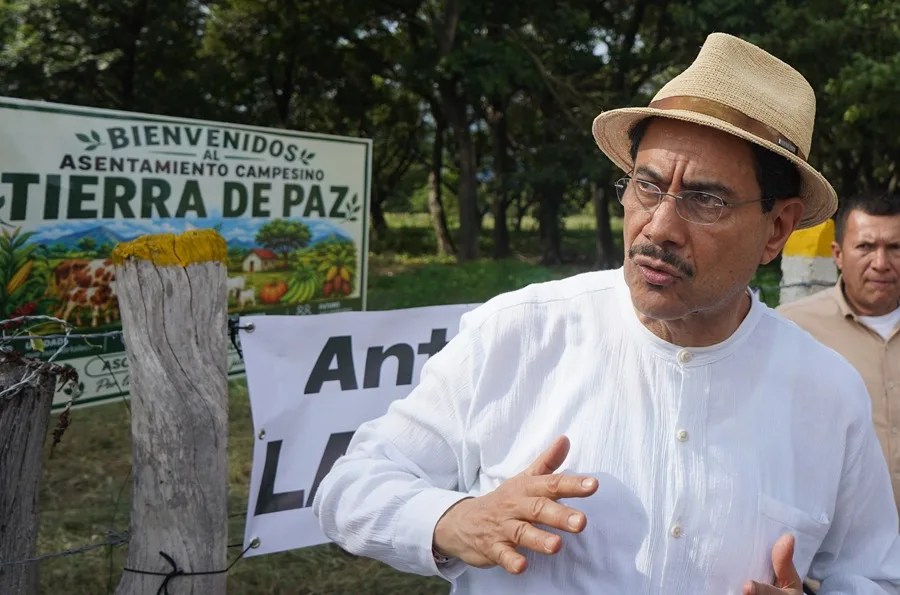
La Alquería lies in rural Valledupar, capital of the northeastern department of Cesar. Sen. Iván Cepeda, who visited the farm, has linked its history to Rodríguez, whom he described as a former paramilitary chief who pleaded guilty to drug trafficking in the United States. In Mendoza’s account, people invoking his name claim the authority to decide who gets to farm there, even after the state handed it over.
Salvador Lara Hernández sits on the board of Cesar’s Association of Farmers and Landless Communities. Someone had body bags delivered to the home of the association leader’s daughters, he told EFE. A neighbor considering whether to put a name to a complaint now has to reckon with what that decision might cost the people at home.
A Claim Older Than the Peace Accord
The families were already pressing for land when the Colombian government and the Revolutionary Armed Forces of Colombia, or FARC, signed their peace agreement in 2016. By the time the National Land Agency handed over La Alquería in May, toward the end of President Gustavo Petro’s term, they had been at it for more than a decade. What Mendoza had looked forward to all those years, she told EFE, was working for herself.
The accord put rural reform first. For generations, farmland ownership had been concentrated in relatively few hands, leaving many rural Colombians dependent on whoever would hire them or let them cultivate a plot. During the war, forced displacement deepened that inequality. Families driven from their fields lost the ground that fed them, and whoever controlled it afterward could profit from their absence. The agreement called for distributing land to people with little or none and formalizing rural property rights so families could hold on to what they worked.
La Alquería covers 466 hectares. If it were divided evenly among the 77 families, that would come to just over six hectares apiece, about 15 acres. A household working its own ground could decide how much cassava to grow for the kitchen, how much corn to sell, and what to plant with the proceeds the following season.
The National Land Agency says more than half a million people have benefited from land distribution. The figure captures how far the program has reached across Colombia. It tells little about how many recipients have secured titles or how many have brought in a harvest safely. A grower at La Alquería can be counted among those beneficiaries and still have to think twice about sowing another row of corn.
The Cost of Staying Put
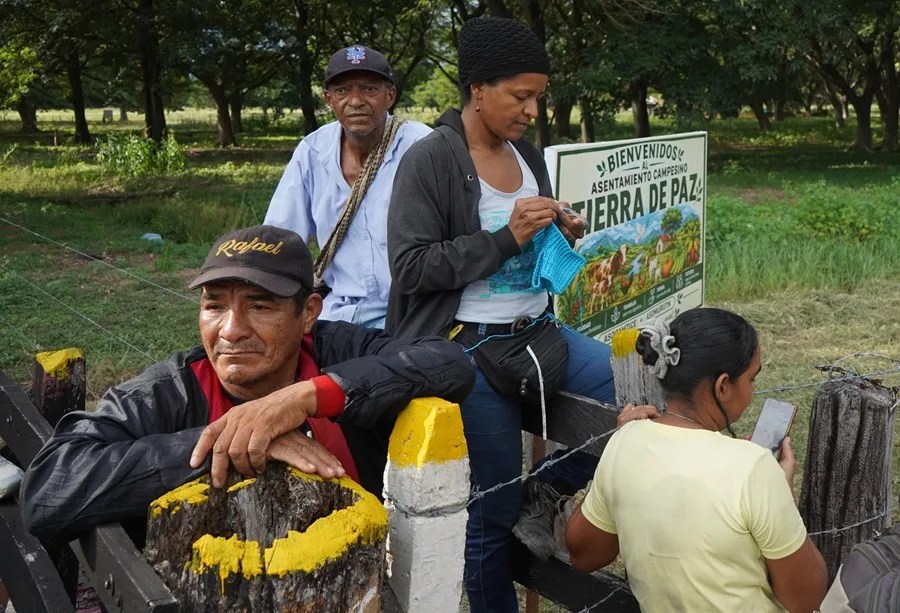
Fabián Carrillo, executive director of the women’s association, told EFE that families have received messages warning them against putting money or labor into the farm. The senders speak of its return to the former owner as a settled matter. When that day comes, they warn, the farmers could lose whatever they produce. “We don’t want land that was handed over to compensate victims to end up back in the hands of the perpetrators,” Carrillo said.
A warning like that starts costing a family money well before anybody leaves. Replant damaged corn, and cattle could get through again tomorrow. Leave the ground idle, and there is less to eat, less to sell, and less cash to see the family through to the next planting. A household that eventually leaves because it can no longer feed itself might look, from an office in Valledupar, like a family that gave up farming. It would be another forced displacement, months in the making.
The families have asked Petro’s successor, President Abelardo de la Espriella, to honor the peace accord. De la Espriella, a far-right opponent of the agreement, has given agrarian reform a lower priority. Cepeda raised the threats at an October 27 oversight hearing with Agriculture Minister Indalecio Dangond. He has urged Valledupar officials to protect the community, blamed Rodríguez for the pressure and accused the government of complicity.
The farmers want officials to finish the titling process. A title would give them a public record of their rights to take to a land office when someone says the property belongs to Rodríguez. They also need to be able to come home safely after filing a complaint and find their crops intact the next morning.
For now, the families keep planting. “Here we have our future, our livelihood, our children’s future and our food sovereignty,” Lara told EFE. For a family at La Alquería, that freedom is as ordinary as deciding to have cassava for supper, walking out to the plot and digging enough for everyone at home.