Three Weeks of Testing Changed What I Expect From Travel Data

For the better part of a decade, I treated international roaming like a necessary evil—an expensive tax I paid for the privilege of staying connected while abroad. Then I started working remotely from different time zones, and the math stopped making sense. Between client calls, Slack notifications, and the occasional Netflix session on a overnight train, my data usage was unpredictable, and my roaming bills were anything but. That frustration eventually led me to Iroamly esim, and what I discovered changed not just how I stay connected, but how I think about travel itself.
The Shift from Vacation Connectivity to Always-On Necessity
The travel landscape has changed dramatically in the last few years. What was once a simple choice between hotel Wi-Fi and expensive roaming passes has become a complex ecosystem of connectivity options. The modern traveller juggles mapping apps for navigation, messaging apps for staying in touch, social media for sharing experiences, video calls for work or family, and cloud backups for photos and documents. A decade ago, disconnecting during a trip was a choice. Today, for many of us, it is not an option.
This shift is particularly pronounced for digital nomads and remote workers. When your income depends on a stable internet connection, the quality of your data service directly affects your livelihood. I have been working remotely since 2019, and I have tried every connectivity solution imaginable: local SIM cards, portable Wi-Fi devices, international roaming passes, and various eSIM providers. Each had its strengths, but none felt like a complete solution until I started testing iRoamly across multiple countries.
Why eSIM Technology Changed the Game
The underlying technology is straightforward but transformative. An eSIM is a programmable chip embedded in your device that stores carrier credentials digitally. Instead of inserting a physical card, you scan a QR code or download a profile, and your device connects to a local network. The standard is now supported in virtually all flagship smartphones and most mid-range devices released since 2020, which is why the travel eSIM market has grown so rapidly.
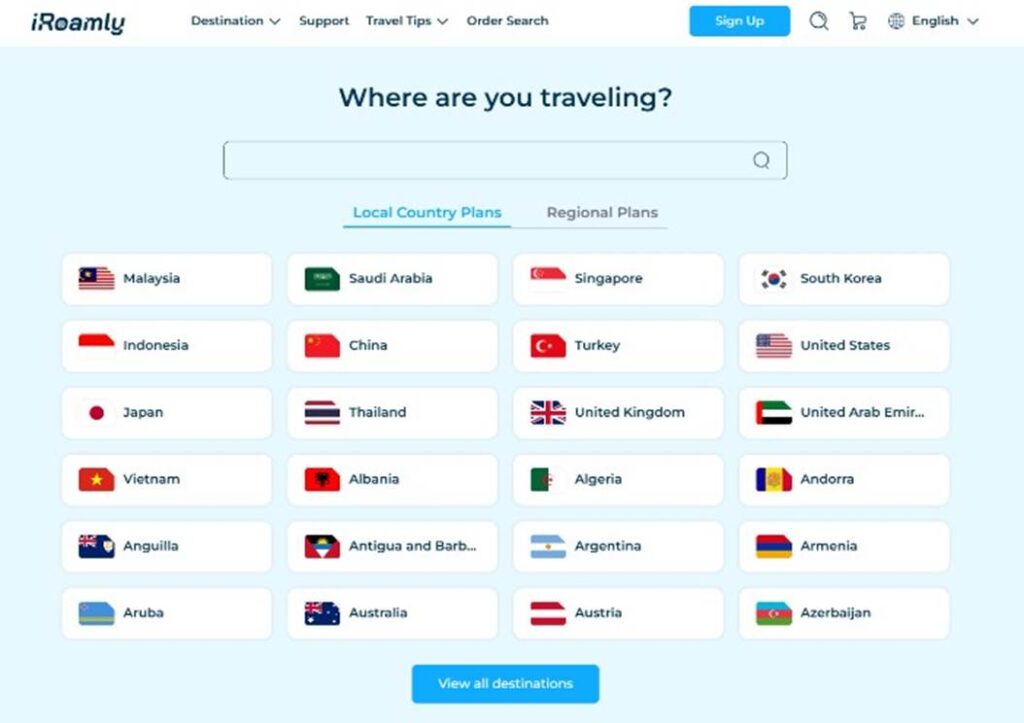
What sets iRoamly apart is not the technology itself—most eSIM providers use the same underlying standard—but how the service is structured around real traveller needs. The company partners with over 50 telecom operators worldwide to provide coverage in more than 100 countries. In practice, this means you land in a new country, your eSIM connects to the best available local network, and you are online within seconds.
The Practical Reality of Using iRoamly Day-to-Day
Theory is one thing; real-world performance is another. I spent several weeks testing iRoamly across different scenarios to understand how it actually performs.
The Installation Process: Faster Than Expected
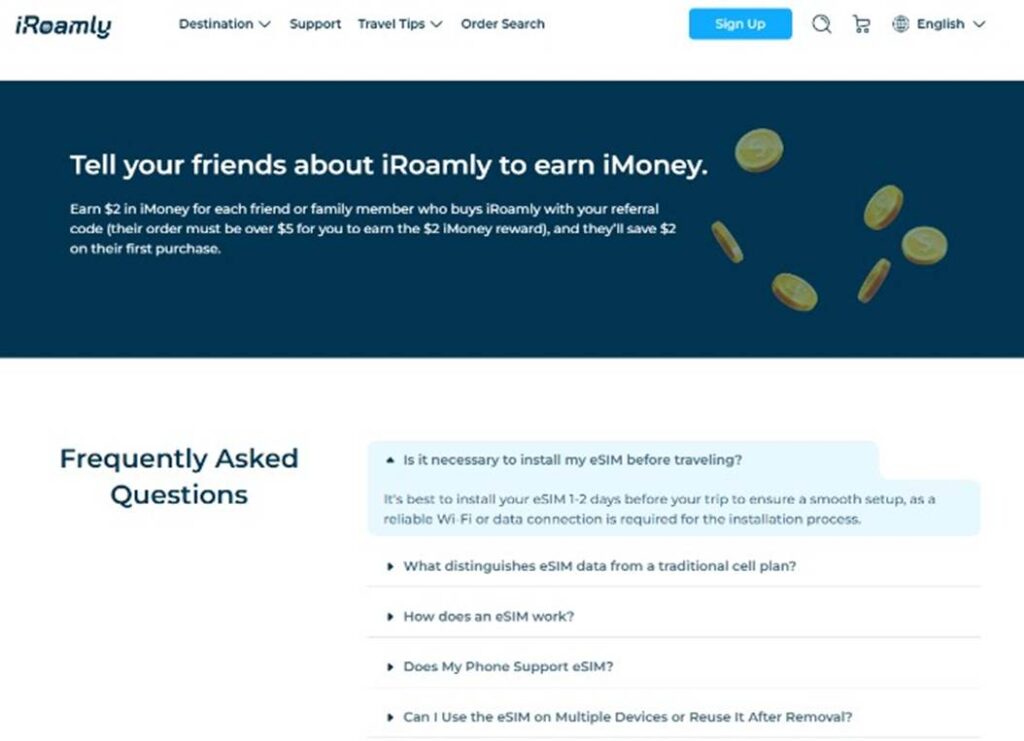
The installation follows a clear sequence. After purchasing a plan, you receive a QR code and activation code via email or on the success page. The recommendation is to install the eSIM one to two days before your trip using a fast Wi-Fi connection. In practice, the QR code scan took under thirty seconds on my iPhone, and the eSIM profile installed without errors.
One subtle but important detail: the validity period begins when the eSIM first connects to a supported network, not when you purchase or install it. This means you can install it at home, travel with it inactive, and only start consuming data when you arrive at your destination. That small policy difference has a meaningful impact on value because you are not paying for days you are not using the service.
The Free Trial: A Risk-Free Entry Point
Before committing to a paid plan, I claimed the free 500MB eSIM available in over 100 countries. The trial does not require a credit card, which removes the hesitation of entering payment details for an untested service. You can claim it through the iOS or Android app and either test it at home or use it at your destination. I used the trial at my destination to verify coverage and speed before purchasing a longer plan, and the experience gave me confidence that the service would work as advertised.
The trial is available for destinations including Turkey, the United States, Japan, the United Kingdom, and many others. For travellers visiting Turkey, the turkey esim option follows the same installation and activation process, and the free trial is available there as well.
The Three Plan Types and When to Use Each
iRoamly offers three plan types across most destinations, which is more flexibility than most competitors provide.
Daily Plans: For Short Trips and Predictable Usage
Daily plans give you a set amount of high-speed data per day. These work well for short city breaks where usage patterns are predictable—think three days in Istanbul with heavy map navigation and moderate social media. The pricing is transparent, and you know exactly what you are paying for each day.
Total Plans: For Longer Itineraries with Fluctuating Usage
Total plans provide a lump sum of data that lasts until you use it up or until the validity period expires. These suit a week-long itinerary across multiple regions where data consumption fluctuates daily. If you are travelling across Turkey, visiting multiple cities, and your data needs vary from day to day, a total plan gives you more flexibility than a daily plan.
Unlimited Plans: For Peace of Mind
Unlimited plans remove the background anxiety of monitoring usage counters. They are priced at a premium, but for digital nomads, remote workers, and anyone who relies heavily on video calls and streaming, the peace of mind is often worth the extra cost.
How iRoamly Compares to Other Providers
Based on my testing and research, here is how iRoamly stacks up against the competition.
| Aspect | iRoamly | Airalo | Holafly |
| Plan Types | Daily, Total, and Unlimited | Fixed-data plans only | Unlimited only |
| Hotspot Sharing | Unlimited on paid plans | Often restricted | Not supported |
| Free Trial | 500MB in 100+ countries | Limited or none | Not typically offered |
| Speed Throttling | Transparent policies | Throttled to 1Mbps after 3GB/day | Reduced speed after 2GB/day |
| Coverage | 100+ countries | Varies | Varies |
The most noticeable difference is flexibility. iRoamly offers more plan types than most competitors, and the unlimited hotspot sharing on all paid plans is a significant advantage for travellers who need to connect multiple devices.
A Few Limitations Worth Acknowledging
No service is perfect, and iRoamly has its constraints. First, eSIM compatibility depends entirely on your device. Before purchasing, you should ensure your phone supports eSIM and is not carrier-locked. Second, the service is data-only, which means you do not get a phone number for calls or SMS. If you need a local number for reservations or verification codes, this may not be the right solution.
Third, while the installation process is straightforward, it requires a stable internet connection. If you wait until you are at the airport with unreliable Wi-Fi, you may encounter difficulties. The recommendation to install the eSIM one to two days before departure is not just a suggestion; it is genuinely good advice.
Finally, the service relies on partner networks, and the quality of those networks varies by country. While iRoamly claims to provide strong signal and high-speed data in 99% of countries, the result may vary in remote areas. Checking the coverage map before purchasing is advisable, especially if you plan to travel outside major cities.
Who Should Consider This Service
Based on my experience, iRoamly is a good fit for several types of travellers. If you are a digital nomad or remote worker who needs reliable connectivity for video calls and file transfers, the unlimited plans and hotspot sharing are compelling features. If you are a frequent traveller who values convenience over hunting for local SIM cards, the digital installation and instant activation are hard to beat. If you are travelling with family or a group, the unlimited hotspot sharing means one plan can keep everyone connected.
For occasional travellers, the free trial may be sufficient for short trips. You can claim the 500MB, use it for a day, and decide whether to purchase a longer plan. The flexibility of the service, combined with the risk-free entry point, makes it accessible to a wide range of travellers.
The Bottom Line
After testing iRoamly across multiple destinations and scenarios, I came away with a clear impression: the service does what it promises. The installation is straightforward, the activation is reliable, and the data speeds are comparable to what you would expect from a local provider. The free trial removes the risk of commitment, and the transparent plan structure makes it easy to choose the right option.
It is not perfect. The data-only limitation and device compatibility requirements are real constraints. But for travellers who understand those trade-offs and plan accordingly, iRoamly offers a dependable way to stay connected without the headaches of physical SIM cards or unpredictable roaming bills. For my next trip, I will not be standing in that airport SIM card line again.