Brazil Counts Votes While Trans Lawmakers Fight to Be Counted
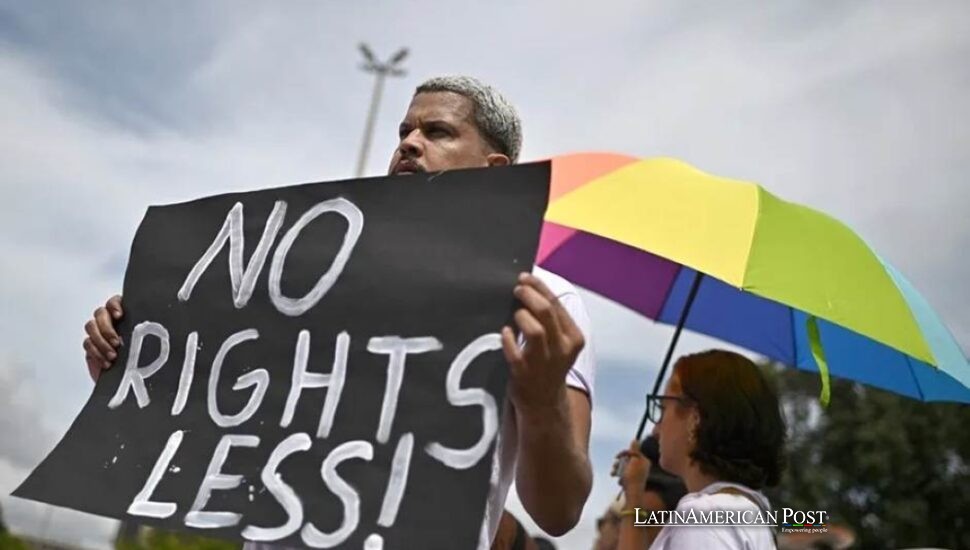
Brazil’s 2022 election opened Congress to unprecedented transgender representation. Four years later, two federal deputies face a Supreme Court challenge that could redefine women’s political quotas, exposing how a tiny electoral minority became a symbol in the country’s culture wars.
A Breakthrough Measured in Fractions
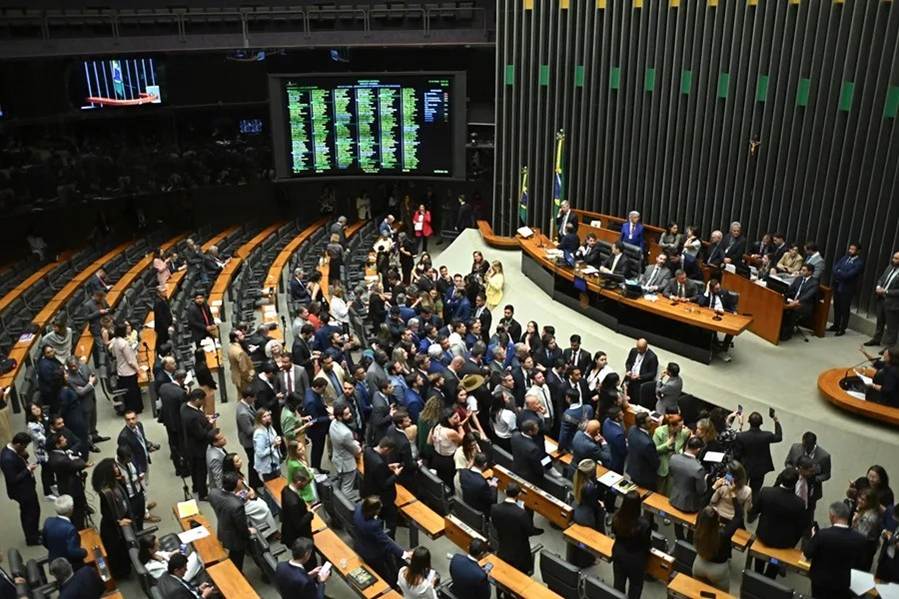
The breakthrough looked larger in Brasília’s marble corridors than on paper. In 2022, four transgender women won regional and congressional seats while politics remained overwhelmingly male and socially conservative.
Then came the arithmetic.
Of the Chamber’s 513 members, 423 are men, and 90 are women. Only two are transgender, 0.38 percent of the chamber. Both could share a café table and still embody the federal trans delegation.
Their election mattered symbolically but barely shifted power. Women rose from 77 seats in the previous legislature to 90 today. The two transgender deputies account for only two of those 13 additional seats.
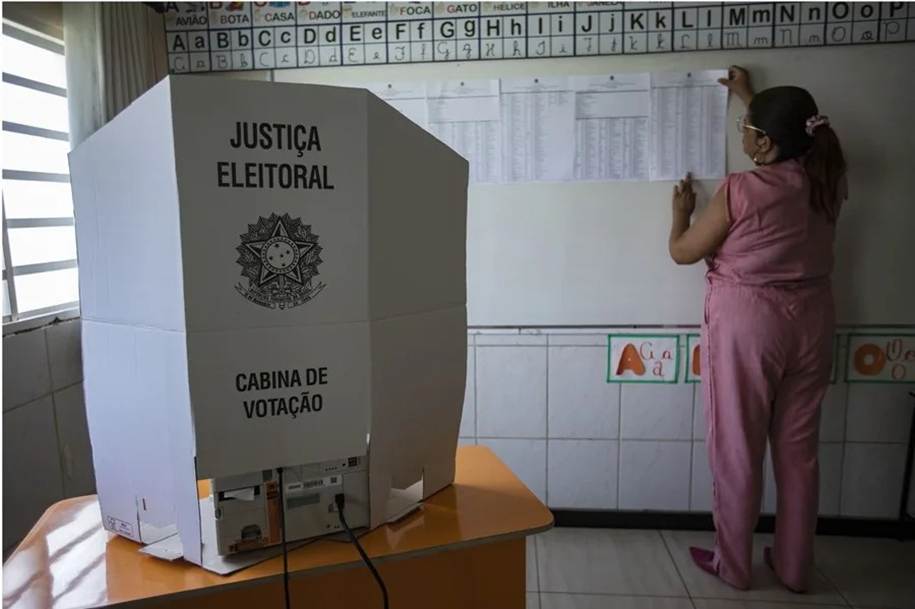
The distinction sits before Brazil’s Supreme Court. Since June, the justices have considered whether transgender candidates should be counted by their self-declared gender or the sex assigned at birth.
Matria wants transgender women excluded from the minimum 30 percent quota for female candidacies that parties must meet. The dispute concerns who may be counted as a woman under one of Brazil’s few tools for correcting gender inequality.
Paulo Iotti, a lawyer handling LGBTQIA+ litigation before Brazil’s highest courts, told EFE the action approaches “the limit of judicial harassment.” He connects it to challenges against transgender access to university quotas, public-sector hiring and women’s restrooms.
Rights Language Turns Into a Weapon
Matria presents its argument as a defense of women. Its website warns against policies that “erase biological sex,” described as an objective marker, and says the group coordinates internationally on gender-identity disputes.
Founder Celina Lazzari also created the Full Childhood Movement, which seeks to protect children from “gender ideology.” She acknowledged to EFE that Matria will probably lose. “I am not optimistic,” she said.
Her pessimism reflects Brazil’s judicial record. Courts have followed the Inter-American Court of Human Rights and international forums in recognizing transgender identity. In July, the Superior Electoral Court issued an opinion against Matria’s claim, consistent with its precedent.
Yet the lawsuit need not win to have political effect. Repeated litigation forces a stigmatized minority to defend its legitimacy and redirects attention from the scale of exclusion to an imagined danger posed by inclusion.
The numbers expose the distortion. Transgender women occupy two federal seats, while men hold more than four hundred. Still, the controversy treats their inclusion as though it were overwhelming women’s representation rather than barely entering it.
Iotti argues that groups such as Matria invoke feminism selectively. He told EFE he has not seen them fight equally hard against domestic violence, wage discrimination or restrictions on reproductive rights. Women’s protection, he says, becomes a test of who deserves recognition.
Lazzari rejects accusations of transphobia and describes herself as a target of brutality, misogyny and ideological policing by some transgender activists. She says the debate is trapped between a left that moralizes victimhood and a right that reduces everything to religion and Adam and Eve.
That framing claims distance from both camps. Still, Lazzari favors the approach of U.S. President Donald Trump and other far-right leaders. She told EFE that Matria reaches similar conclusions from different starting points.
Across Latin America, campaigns against “gender ideology” have linked conservative legislators, religious organizations, parental-rights groups and nationalist movements. In Brazil, the phrase gained exceptional force during Jair Bolsonaro’s rise, turning classrooms, bathrooms and family policy into symbols of a struggle over national identity.
The Court After the Ballot Box
The dispute is moving from slogans into institutions capable of rewriting election rules. In early July, right-wing lawmaker Clarissa Tércio submitted a brief supporting Matria. Her name has circulated as a possible running mate for Flávio Bolsonaro, the former president’s eldest son, in October’s election.
That intervention ties the case to Brazil’s next political transition. Iotti does not expect the current Supreme Court to reverse existing protections. But the next president could nominate as many as three justices, potentially changing the balance and reopening questions that appear settled.
For transgender politicians, the threat is personal. Their public service has unfolded amid prejudice, threats and repeated refusals to recognize their gender, including within institutions meant to protect constitutional equality. Every challenge carries the same message: election did not end the argument over whether they belong.
Matria says it protects women and children. Iotti sees an operation portraying a transgender woman as a heterosexual cisgender man in disguise, presumed capable of threatening others at any moment. That political scarecrow replaces people with permanent suspicion.
Brazil’s quota law exists because formal equality never produced real access to power. Parties could praise women while continuing to nominate men. Excluding transgender women would not add a single cisgender woman to Congress. It would create candidates recognized as women in daily life but denied that status when political opportunity is distributed.
The case therefore reaches beyond two deputies. Brazil is deciding whether representation expands by recognizing citizens as they live, organize and vote, or contracts whenever a minority becomes useful as an electoral warning.
The victories of 2022 were historic, but history does not move in a straight line. Sometimes it enters Congress, takes a seat, and discovers the country is still debating whether to count it.
Also Read: Mexico Fentanyl Pipeline Exposes the Global Broker Behind Cartel Chemistry