Colombia Can Decentralize Power Without Turning Government into Roadshow Theater
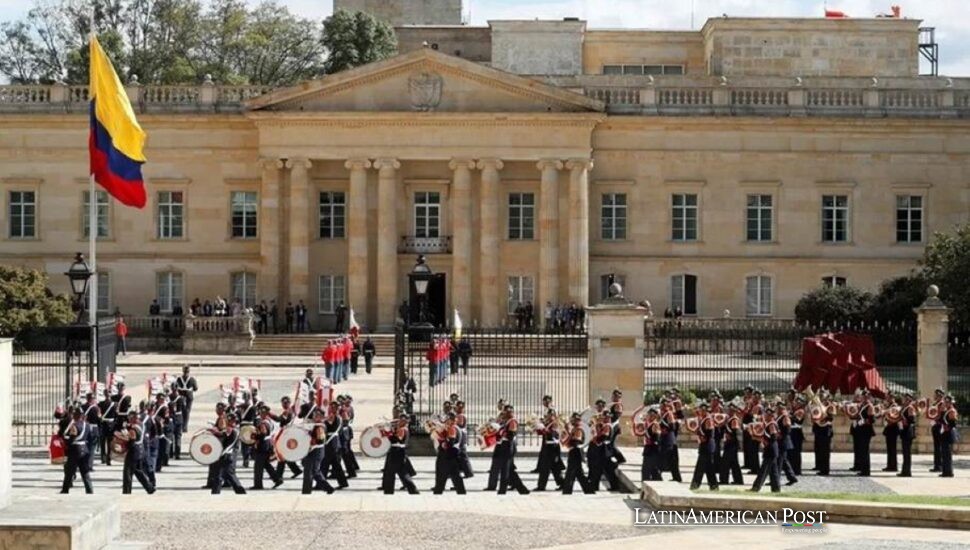
President-elect Abelardo de la Espriella’s plan to govern from Barranquilla, Cali, Medellín and Bogotá could challenge Colombia’s stubborn centralism. Yet without constitutional precision, fiscal discipline and genuine regional authority, decentralization may become expensive choreography rather than durable democratic national reform.
A Presidential Desk Is Not Decentralization
Something is appealing in the image: the Casa de Nariño opening to schoolchildren while the president packs his desk for another city. Colombia’s center has long treated distance as a complaint, not a governing condition measured in bad roads, delayed budgets and ministers who arrive after disaster.
De la Espriella says he will work in Bogotá from the Palacio de San Carlos, now occupied by the Foreign Ministry, while holding cabinet meetings in Barranquilla. Cali and Medellín would also host presidential offices. He wants Barranquilla recognized constitutionally as an alternate capital and has asked Congress to convene his August 7 inauguration in Cali after volcanic ash from Puracé complicated the original Popayán plan, according to EFE.
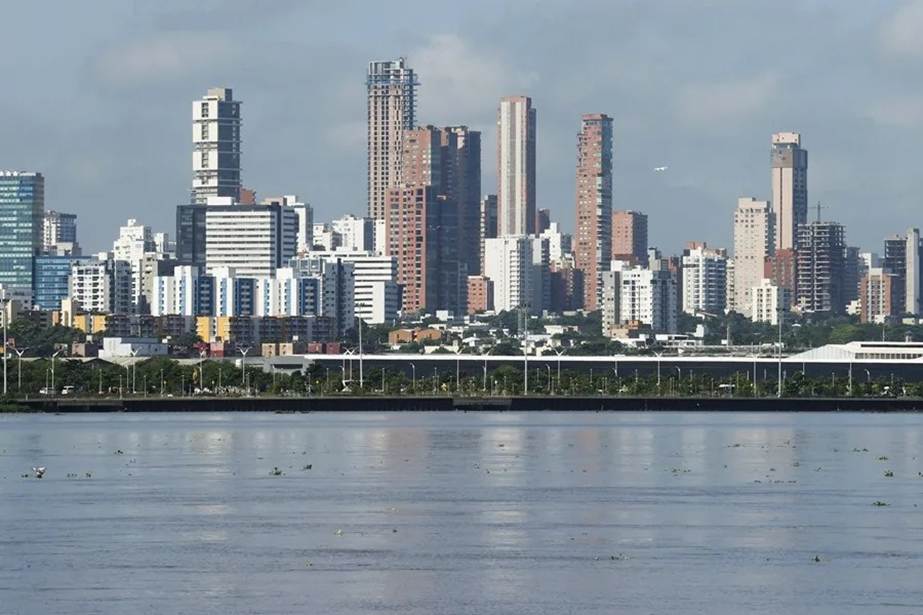
The instinct deserves more respect than reflexive Bogotá mockery. Barranquilla is not a decorative Caribbean backdrop. It is a port city at the mouth of the Magdalena, tied to commerce, migration and a coast that has repeatedly supplied national wealth while receiving national attention in bursts. Historian Diógenes Rosero told EFE the plan could be “an opportunity for the region” if it advances the river’s recovery, energy autonomy and connectivity. That “if” is the debate.
A president who regularly governs from the Caribbean or Pacific can force senior officials to see what spreadsheets flatten. Cabinet members might confront port congestion, electrical fragility, informal neighborhoods and security crises without Bogotá’s insulation. A distributed command structure can also improve continuity during emergencies.
But moving the presidential chair is not moving power. Real decentralization means predictable revenue, territorial capacity, local accountability and authority over implementation. Colombia’s Constitution already describes the republic as unitary but decentralized, with autonomy for territorial entities. The contradiction lies in a system where responsibilities migrate downward more readily than money and expertise.
The Constitution Needs More Than a Slogan
The Casa de Nariño is not sacred ground. Colombia’s presidency has occupied both that building and the Palacio de San Carlos, returning to the current palace during Julio César Turbay’s administration. Turning Casa de Nariño into a museum could demystify executive power and recover a historic building for public memory. Still, the government should publish the conversion cost, security plan, fate of presidential archives, and expense of adapting San Carlos without crippling the Foreign Ministry.
The legal questions are more exacting than the speeches suggest. Article 322 names Bogotá as Colombia’s capital. Creating an “alternate capital” therefore requires constitutional amendment if the title carries legal consequences. Politicians must explain those consequences before voting. Would Barranquilla host permanent agencies? Would budgets or diplomatic accreditation change? Or would the title merely formalize occasional cabinet meetings? A constitutional phrase cannot remain an attractive empty room.
The inauguration presents a different issue. Article 192 requires the president to take office before Congress. Article 140 places Congress in the capital but permits the chambers, by agreement, to move elsewhere. Cali is therefore not inherently unconstitutional. What matters is a valid congressional decision, proper attendance, public access, and an unmistakably civilian ceremony.
That last point matters because De la Espriella originally wanted a military installation in Popayán to honor soldiers and police. The gratitude may be sincere, especially in a southwest scarred by armed groups and narcotrafficking. Yet presidential legitimacy flows through voters, Congress and the Constitution, not through a barracks gate. The military can be honored after the oath. It should not appear to host the transfer of civilian sovereignty.
Brasília Offers a Warning, Not a Blueprint
Latin America has seen a capital move sold as territorial redemption before. Brazil inaugurated Brasília on April 21, 1960, transferring the capital from Rio de Janeiro to a purpose-built city in the interior. That was not a traveling presidential office or honorary second capital. It was a monumental relocation backed by highways, bureaucracy and enormous public expenditure.
Brasília generated population, employment and state-centered growth around itself. But a 2017 study in Environment and Planning A, using data from 1939 through 2008, found only limited population effects and no per-capita income effect on Brazil’s wider spatial economy outside Brasília. Relocating government can create a prosperous administrative island without distributing prosperity nationwide.
Colombia’s proposal is cheaper and less disruptive, but also easier to fake. Barranquilla could become a second corridor for national elites while La Guajira, Chocó, the Amazon, Catatumbo and rural Cauca remain spectators. Rotating ministers among major cities may decentralize meetings while recentralizing access around powerful urban machines.
The pace of De la Espriella’s announcements should deepen caution. Alongside the palace move and alternate capital, he announced plans to close fourteen embassies and roughly fifteen consulates. Governments may audit diplomatic duplication. But constitutional geography, presidential security and foreign representation are separate systems, each requiring cost studies, transition rules and congressional scrutiny. A cluster of dramatic gestures is not yet a state design.
Colombia should welcome the challenge to Bogotá’s monopoly of attention. It should reject the idea that symbolism alone is reform. Let the president work from Barranquilla, Cali and Medellín. Let children enter the Casa de Nariño. But before engraving “alternate capital” into the Constitution, Congress should demand budgets, competencies, timelines and measurable regional benefits.
Otherwise, the government will travel, the cameras will follow, and power will remain exactly where it has always been: closest to those who already know how to reach it.
Also Read: Latin American Immigrants Confront Trump’s Secret Deportation Court Power Play