Argentina Soccer Glory Kicks Up a Murky Miami Money Trail
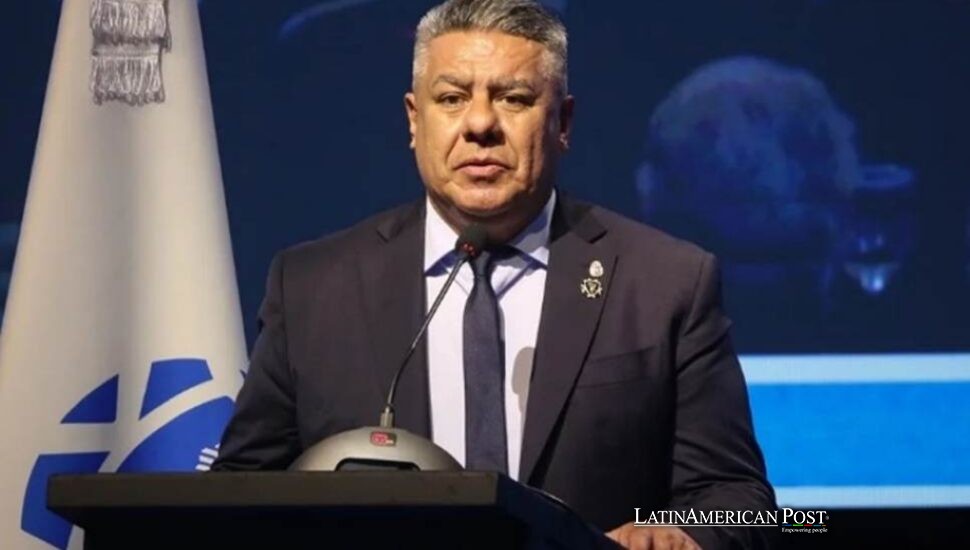
As Argentina’s soccer machine converts Lionel Messi’s fame into global revenue, a Florida inquiry into AFA-linked money flows is testing whether championship glory concealed opaque commissions, virtual offices, luxury spending, and an accountability gap stretching from Buenos Aires to Miami.
The Champion’s Cash Box Opens
Argentina’s delegation had barely begun its trip home from New York when the story changed shape. The national team had lost the 2026 World Cup final, a sporting wound built for years of argument. Then came reports that federal agents questioned Argentine Football Association president Claudio “Chiqui” Tapia and treasurer Pablo Toviggino before their charter departed.
The reports landed hard because AFA is not an ordinary federation. It guards a national religion and the blue-and-white shirt worn from Rosario schoolyards to immigrant bars in Queens. Lionel Messi’s appeal, recent trophies, sponsorships, broadcast rights, and international friendlies have turned that shirt into a global business.
Yet the airport claims remain disputed. AFA said neither Tapia nor Toviggino was ordered to testify in the United States and denied that agents seized their devices. In a statement sent to EFE by association lawyer Gregorio Dalbón, AFA called those assertions “absolutely false.” It acknowledged that a third party had been summoned before a U.S. grand jury and could provide information involving AFA officials.
That distinction matters. No charges have been filed, and a request for information is not a conviction. The FBI declined to comment. Still, the Southern District of Florida’s interest in TourProdEnter LLC has opened a question that cannot be dismissed with championship memories. How did hundreds of millions of dollars linked to Argentine soccer move through South Florida?
TourProdEnter was incorporated in Florida in August 2021, one month after Argentina won the Copa América. Its founder, theater producer Javier Faroni, had no publicly known sports-management background. By December, the company was AFA’s commercial agent abroad. Banking records reviewed by the Miami Herald showed at least $290 million entering its accounts from November 2022 through August 2025.
That was the boom. Messi lifted the World Cup. Sponsors arrived. Friendlies became traveling festivals of Argentine identity and premium commercial products. Revenue from broadcasts, brands, and matches was meant to support AFA operations and the wider soccer system. In Argentina, clubs are neighborhood institutions before they are businesses, holding youth teams, swimming lessons, birthday parties, and a child’s first affordable boots.
Forty Million Dollars With Few Answers
The concern is not that TourProdEnter handled large sums. A world champion generates global income. The concern is that at least $40 million went to companies with little visible activity or no clear commercial reason for receiving it.
That equals nearly 14 percent of the $290 million in identified deposits. The available records do not prove theft. They show something preliminary but serious: a transparency failure large enough to attract investigators in two countries.
Nearly $30 million went to six Florida firms sharing an address in a commercial building near Miami Gardens that offered virtual offices for about $80 monthly. Another $6 million went to three companies using a virtual address in Doral. Public searches found no clear business activity and no easy way to contact their listed executives.
A virtual office is not a crime. Small firms use them routinely. But a mailbox looks different when multimillion-dollar wires pass through it, and the recipient’s work cannot be identified. A company receiving millions should be able to show contracts, staff, invoices, deliverables, and a reason for existing beyond registration papers.
TourProdEnter also sent about $3.5 million to Stufer Corporation, a Uruguayan company linked to Faroni’s business partner, Teodoro Favergiotti. The bank records reportedly lacked explanatory memos. Money also moved among TourProdEnter accounts at Bank of América, Citibank, and JPMorgan Chase within days. Such transfers can be routine. Without documentation, they create motion without clarity.
Other details deepen the unease. TourProdEnter described itself to banks as an advertising firm, recreation service, event producer, and tourism or logistics provider. None of the descriptions reportedly mentioned soccer or AFA. Velp LLC received nearly $600,000 after Florida dissolved it for failing to file annual reports. Each inconsistency may have an explanation. Together, they invite scrutiny.
Then the trail turns glossy. Records showed about $3.6 million sent to private jet companies, more than $1 million to yacht charter businesses, roughly $85,000 to a thoroughbred horse operation, and over $130,000 to a motorsport company. Credit cards tied to a TourProdEnter account covered daily expenses, plus travel to Rome and purchases at Gucci, Prada, and Louis Vuitton in Spain.
Luxury spending is not automatically personal misuse. International soccer can require chartered travel, sponsor hospitality, and complex logistics. That is why documentation matters. A jet carrying players differs from one carrying friends. A yacht used for a contracted event differs from a private holiday. Context is the line between an expense and an abuse.
Football’s Public Trust Faces a Private Test
The commercial arrangement deserves its own scrutiny. Argentine investigators say TourProdEnter may have received a 30 percent commission on generated revenue plus 10 percent for logistics. Depending on how the contract applied those percentages, as much as 40 cents of an eligible dollar could leave AFA before reaching soccer operations. That does not establish illegality. It demands proof of value.
Argentine courts are also examining whether international-contract funds relate to a property in Pilar valued at nearly $17 million and formally held by third parties. Investigators suspect Toviggino may have acquired it through intermediaries, an allegation he denies. Tapia and Toviggino have separately faced scrutiny over AFA social security contributions. The cases differ, but politically they converge around an old Argentine wound: institutions demanding faith while offering too little paper.
AFA urged journalists, through the statement provided to EFE, to verify documents and report rigorously. It is right about that. Accuracy means noting that the alleged device seizures are denied, a third party appears to have been summoned, no charges are public, and suspicious transactions are not proven crimes. Accuracy also means refusing to treat a denial as the end of inquiry.
Argentina has lived too long with fortunes explained by loyalty, intermediaries protected by proximity, and civic institutions managed like private estates. Soccer magnifies that habit because victory buys goodwill. Administrators stand near the players and borrow their aura. Messi’s brilliance must not become institutional armor for financial decisions that should survive ordinary questions.
The proper response is not spectacle. AFA should disclose the TourProdEnter contract, document major vendor services, identify beneficial owners, explain related-party transfers, and commission an independent forensic audit for public examination. U.S. and Argentine authorities should share evidence without turning the case into nationalist theater. Transparency would protect due process and acknowledge that AFA revenue carries a public character even inside private accounts.
At an Argentine neighborhood club, money is never abstract. It is the leaking roof above the futsal court, the coach paid late, the bus to an away match, the girl whose family cannot cover registration, the boy who stays after practice because the clubhouse feels safer than the street.
Argentina’s soccer glory belongs to millions. Its accounts should not belong to a few.
Also Read: Latin American Footballers Outsmart Time as Science Extends Elite Careers