Nicaragua Votes on Nothing as Ortega Buries the Ballot Box
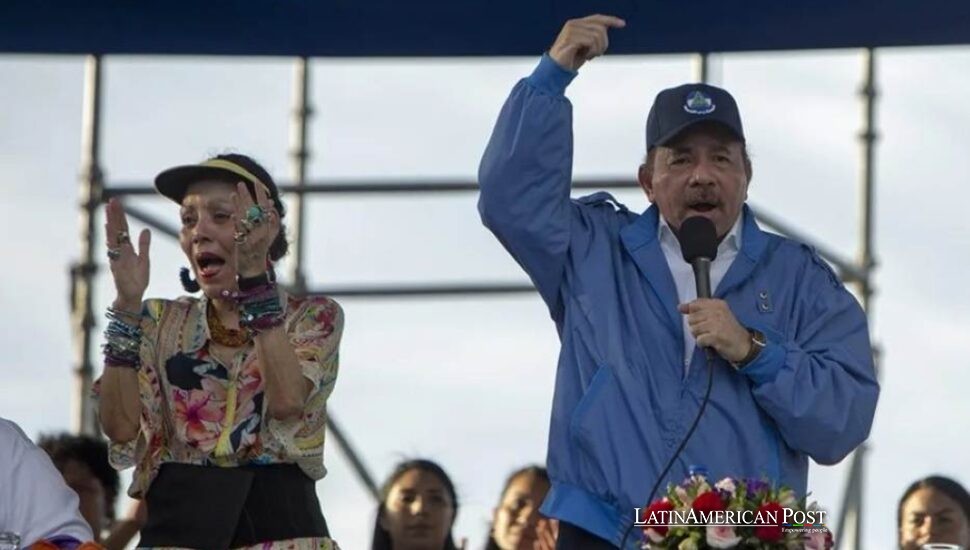
Daniel Ortega’s threat to end meaningful elections in Nicaragua completes a long democratic demolition, built through court rulings, jailed challengers, stripped citizenship, and a family presidency that now treats political competition itself as foreign sabotage rather than a constitutional right.
The Ballot Box Becomes a Prop
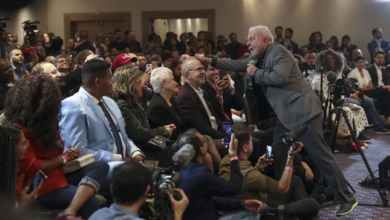
At a rally marking the 47th anniversary of the Sandinista revolution, Daniel Ortega used the language of liberation to lock a door. “There will be no more elections here,” the 80-year-old co-president said, according to EFE, so the opposition could not “capture” the government. It was the clearest description yet of a system that has spent years making defeat impossible. Ortega has ruled since 2007, and a constitutional rewrite elevated his wife, Rosario Murillo, from vice president to co-president in 2025.
Then came the clarification, which clarified almost nothing. National Assembly president Gustavo Porras said elections would continue under a new constitutional framework, but not elections open to “coup plotters,” “traitors to the homeland,” or organizations supported from abroad, EFE reported. Parliament had announced plans to revise the Constitution and other laws. The distinction is tactical, not democratic. Ortega proposed eliminating elections that could remove him. Porras proposed keeping elections after eliminating anyone capable of winning them.
For families divided by exile, that wordplay is not academic. An election can be a date circled on a calendar, a hope that return may someday be safe. If the government preserves the ballot while outlawing alternation, it preserves only the choreography. Citizens may still stand in line, but the result will have been decided before polling stations open.
Nicaragua knows the difference because it has lived the opposite. In 1990, an election removed the Sandinistas from power and helped move a war-battered country into democratic transition. Ortega lost. Power changed hands without another revolution. A movement born claiming national liberation now argues that the nation cannot be trusted to choose another government.
When Bigger Margins Mean Smaller Choice
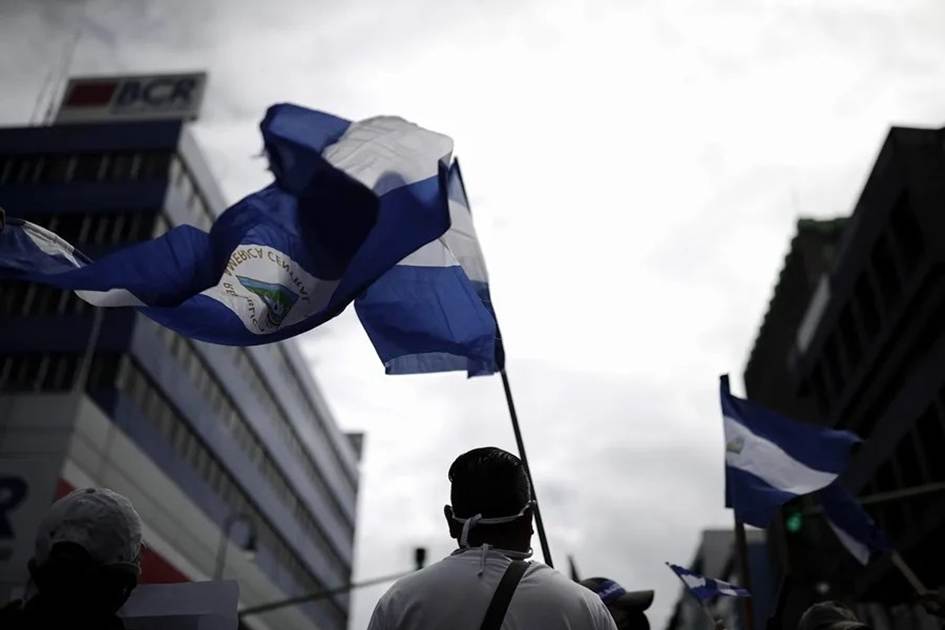
The numbers tell the story with indecent neatness. Ortega returned in 2006 with 37.99 percent after a pact with former President Arnoldo Alemán helped lower the threshold for a first-round victory to 35 percent. Eduardo Montealegre received 28.3 percent and José Rizo 27.1 percent. Together, the two leading candidates to Ortega’s right drew 55.4 percent, though votes are not mechanically transferable. Ortega came back without majority support because his opponents split and the rules had changed.
In 2009, Sandinista-aligned judges declared “inapplicable” the constitutional provision barring consecutive reelection. Ortega officially won in 2011 with 62.46 percent against Fabio Gadea Mantilla’s 31 percent. The Inter-American Court of Human Rights later found that the process lacked integrity, favored Ortega’s reelection, and offered no effective judicial remedy. The court issued its judgment on October 16, 2024, and announced it publicly in January 2025, not January 2026 as some accounts stated.
By 2016, the government had barred observers from the Organization of American States, the European Union, and the Carter Center, while allied institutions neutralized the principal opposition force. By 2021, seven opposition presidential hopefuls had been jailed. Ortega and Murillo were credited with 75.87 percent. The OAS concluded that the election was neither free, fair, nor transparent and lacked democratic legitimacy.
Read those figures in sequence: 37.99 percent, 62.46 percent, 75.87 percent. The official share rose by 37.88 percentage points while competition collapsed. That does not prove every Ortega voter was coerced or invented. It shows why percentages cannot establish consent when courts alter eligibility, observers are excluded, parties are dismantled, and challengers are imprisoned. The larger the proclaimed mandate, the smaller the public’s menu.
This is the fraud of authoritarian elections. They keep democracy’s vocabulary while removing its verbs. Campaigning becomes praising. Voting becomes confirming. Winning means belonging to the government, while losing becomes evidence of treason. A ballot without possible turnover is a receipt issued by power to itself.
The family structure sharpens the contradiction. Murillo became vice president in 2017 and co-president through the 2025 reform. The revolution that overthrew the Somoza family dynasty now rests formally in a married couple’s hands. Nicaragua has moved from party dominance toward household rule, where legitimacy and the state’s voice pass through one family circle. The old Sandinista maxim was that anything could happen except the Front losing power. Ortega is turning that boast into constitutional design.
Sovereignty Cannot Cancel Citizenship
The anti-imperialist defense draws from real history. U.S. Marines intervened in Nicaragua during the early twentieth century. Washington treated Anastasio Somoza as a close ally, and the International Court of Justice later found that U.S. support for the Contras violated nonintervention. Nicaraguans do not need lectures telling them foreign power is imaginary. It lives in political memory and the name of Augusto C. Sandino himself.
But foreign interference does not give an incumbent permanent ownership of the republic. Ortega collapses outside coercion, domestic criticism, and electoral competition into one accusation. Once treated as identical, every opponent becomes an imperial agent and every independent institution a beachhead. Sovereignty stops meaning the people’s right to govern themselves. It becomes the rulers’ right to govern without challenge.
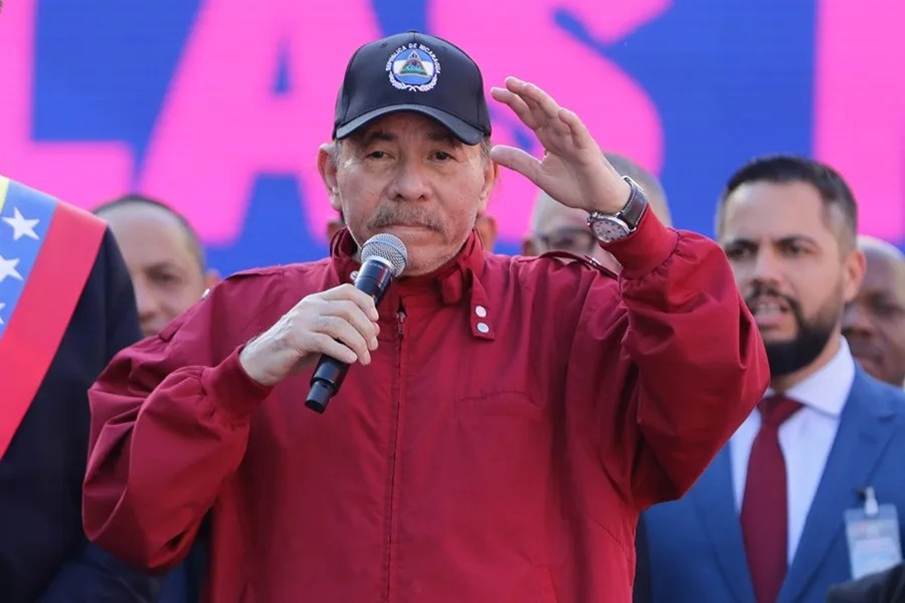
The stripping of nationality makes that logic literal. The Ortega-Murillo government has declared 452 Nicaraguans “traitors to the homeland” and taken away their citizenship, according to EFE. Among them are writers Sergio Ramírez and Gioconda Belli and bishops Rolando Álvarez and Silvio Báez. A government that can erase a novelist or priest from the legal nation is deciding not only who may vote, but who may belong.
Citizenship is not a medal for obedience. It is the shelter that lets a person criticize a president, publish a poem, organize a party, or leave without losing the right to return. In a region where exile has often been politics’ second chamber, denationalization turns disagreement into civil death. The passport disappears first. Then property, work, family access, and confidence that birthplace cannot be revoked.
Costa Rica and Guatemala rejected Ortega’s announcement, Panama recalled its ambassador for consultations, and the Dominican Republic said ending elections denied representative democracy. U.S. Secretary of State Marco Rubio urged international pressure. Managua answered with the old grammar of servility and empire, then invoked the 1987 Esquipulas agreements as a defense of noninterference.
That invocation turns Central American memory upside down. Esquipulas defended sovereignty, but it also joined peace to reconciliation, democratization, and free elections. The accords emerged from a region tired of proxy wars and strongmen, not from a desire to guarantee permanent tenure. To cite Esquipulas while closing competition is to keep the frame and burn the photograph.
Foreign governments should avoid the swagger that lets Ortega pose as Sandino facing another occupation. Pressure must be regional, legally precise, and centered on Nicaraguans’ rights. A managed acclamation should not be recognized as an election, and political participation cannot be criminalized through elastic accusations of treason. The United Nations human rights chief warned this week that Nicaragua’s civic space is nearly closed. Silence is not respect for sovereignty.
A ballot is a small object. Folded paper, cheap ink, a box watched by tired neighbors. In Central America, though, it carries an immense promise: governments can leave without countries burning. Ortega now argues that peace requires one couple never to lose. Nicaragua’s own history says the opposite. Peace begins when rulers accept that the nation belongs to citizens, including those who vote them out.
Also Read: Cuba Blackouts Turn Havana Beaches Into the Summer’s Last Resort