Latin American Footballers Outsmart Time as Science Extends Elite Careers
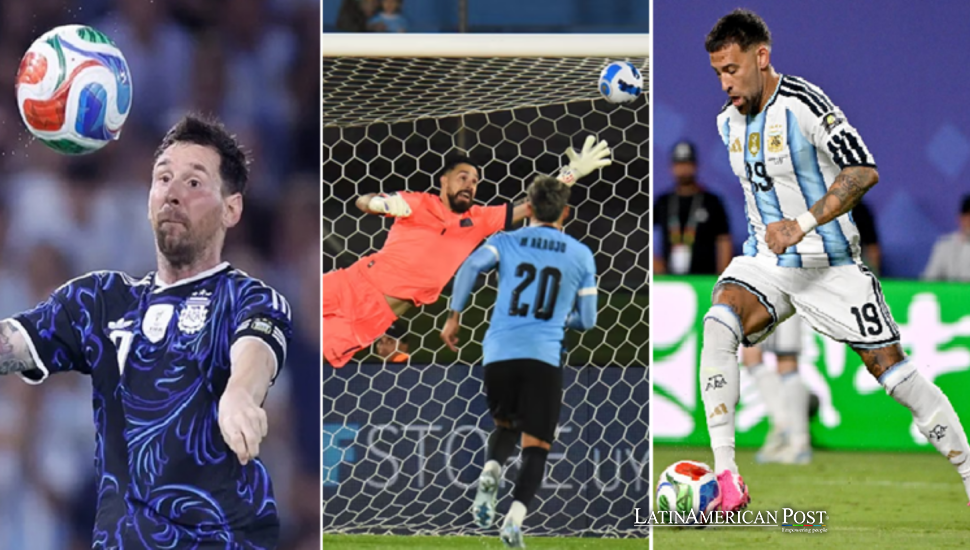
At the 2026 World Cup, aging stars from Latin America showed that football has not extended physical prime so much as elite usefulness, combining sports science, positional intelligence, money, and tactical restraint to keep once-impossible careers alive longer than expected.
The Goodbye That Refused to Arrive
The camera found Lionel Messi walking again. Not lost. Not resting, exactly. Watching.
At 39, he moved through Argentina’s World Cup semifinal against England as if the match were a crowded room and he alone knew where the door would open. England led. Time thinned. Then Messi found Enzo Fernández for the equalizer and delivered the ball that Lautaro Martínez headed home for a 2-1 comeback. Argentina reached a second consecutive final, and the oldest outfield player ever to appear in a men’s World Cup semifinal had supplied both assists.
That scene would have sounded improbable in 2018. After Argentina’s 4-3 loss to France, a television commentator predicted that Messi had probably played his last World Cup. He was 31, once treated as the beginning of the exit ramp for an attacker. Four years later, he lifted the trophy in Qatar. Four years after that, he was still bending knockout matches.
Tracking data reveals Messi’s decline is strategic, with 64.8% of his distance at or below 7 km/h, showing how aging is managed tactically.
Nicolás Otamendi, 38, offered the defensive version of the bargain. He read danger early and lent authority to a back line that could not ask him to win every race. Enzo Fernández, Julián Álvarez, and Alexis Mac Allister supplied younger legs. Messi and Otamendi supplied old eyes.
The collective approach is key, with tactics evolving so veterans can contribute without mimicking their younger selves, maintaining longevity.
Age Has a Position and a Price
With seven squad members already 40 and others reaching that age, the variation by position and individual circumstances encourages curiosity and appreciation for athlete diversity in longevity.
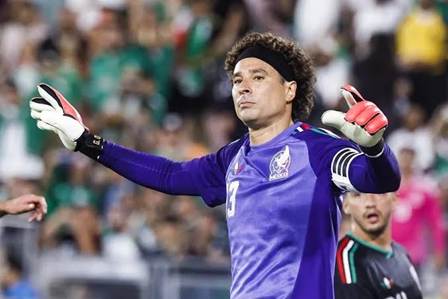
Ochoa was 40 when Mexico gave him the final 12 minutes of a 3-0 group-stage victory over Czechia at the Azteca. The appearance made him the oldest Latin American player to take the field at the tournament and placed a sixth World Cup on his record. He was no longer Mexico’s first choice. Still, the captain’s armband came with him, and the stadium rose for a man whose career had become part of Mexican World Cup memory.
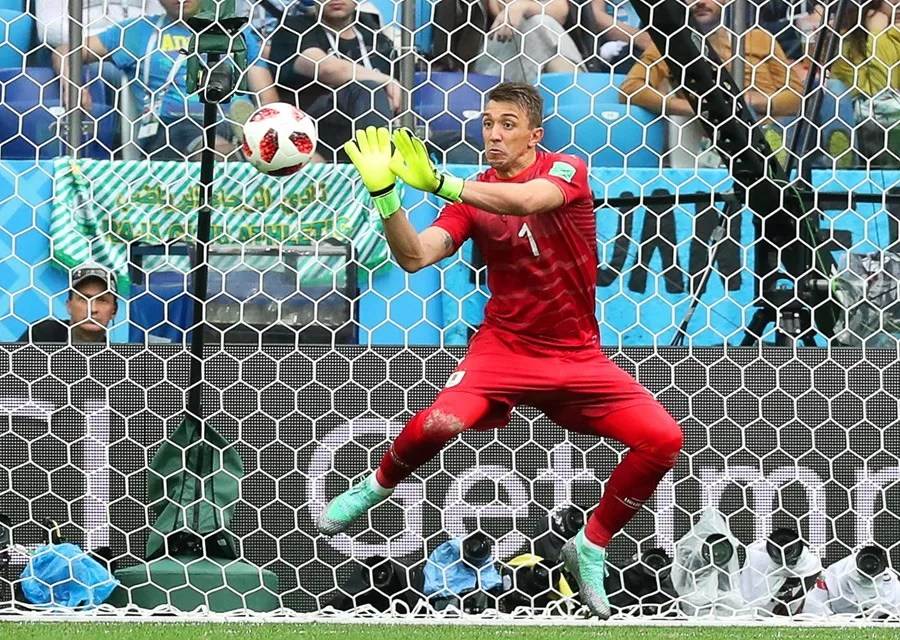
Fernando Muslera’s ending was rougher. At 39, he started Uruguay’s three group matches, and four goals went past him as the team collected two points and went home. His errors were not the sole cause of his elimination, but they exposed the limits of longevity. Experience can calm a defense. It cannot guarantee secure hands when body and game arrive half a beat apart.
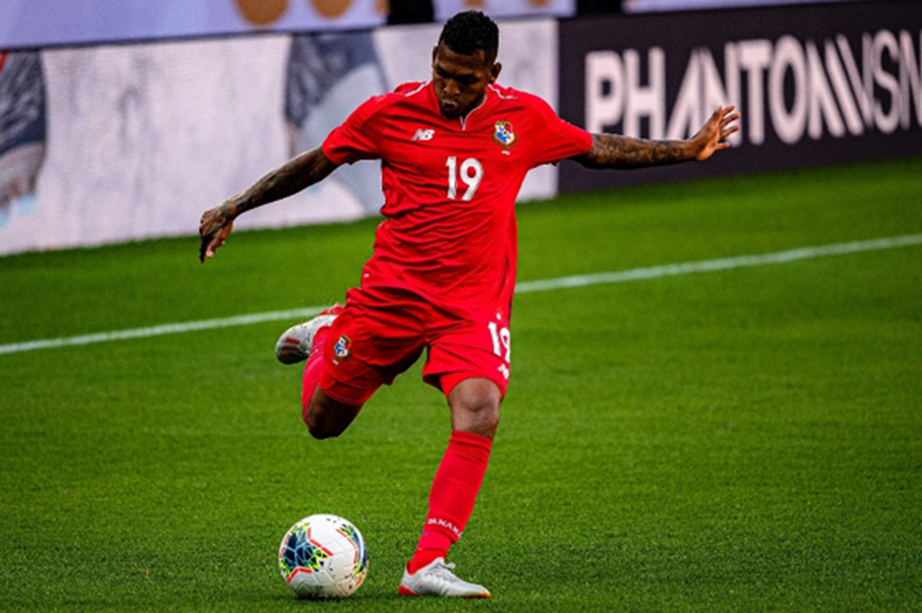
Panama’s Alberto Quintero, 38, entered briefly from the bench, becoming one of the tournament’s oldest outfield players. Brazil’s Weverton and Paraguay’s Gatito Fernández, also 38, remained unused squad members. One veteran received an Azteca farewell. Another carried a starting role that turned painful. Others served as insurance and counsel. Age did not produce one kind of value.
A peer-reviewed 2019 study in Frontiers in Psychology examined 16,062 player-season observations from the UEFA Champions League between 1992-93 and 2017-18. Average age rose from 24.9 to 26.5; goalkeepers and center-backs tended to be older than attackers, and market values generally peaked between 26 and 30.
Those findings require restraint. A player could appear in the database across several seasons, and squad membership did not prove individual peak performance. A later Frontiers in Psychology study used major award nominations as another imperfect proxy. In its retired-player sample, the proxy placed peak ages around 27 for forwards and midfielders, 29 for defenders, and 31 for goalkeepers.
Modern football has not clearly shifted the body’s physical prime into the late 30s. It has widened the distance between peak athleticism and the end of elite usefulness.
Before GPS, Greatness Changed Shape
Latin America’s past complicates any story in which earlier stars burned out at 30 because science had not arrived.
Pelé became a world champion at 17, but he was not finished when youth left him. At 29 in Mexico 1970, he scored four goals and registered six assists, still the record for one World Cup. The young Pelé had been an eruption. The mature Pelé drew defenders, released teammates, and organized space. He adapted decades before clubs charted every acceleration on a tablet.
Diego Maradona’s most famous summit came at 25 in Mexico 1986, close to where modern studies place an average forward’s peak. He was fouled 53 times, a record that captures the violence creative players endured as much as his dominance. Yet he led Napoli to another Italian title at 29 and Argentina to the 1990 World Cup final. Injuries, suspensions, health problems, and the era’s brutality shaped his decline alongside age.
Tostão offers a starker comparison. A detached retina forced the thinking forward of Brazil’s 1970 champions to retire at 26. His career did not end because an old body faded. Medicine and risk left no safe route forward. Earlier retirement could reflect injury, limited rehabilitation, or danger, not an earlier biological expiration date.
A 2021 Frontiers in Psychology study analyzed 1,981 players nominated for major awards from 1956 through 2019. Average nomination age rose by almost three years compared with the early 1960s and reached 28.4 in 2018-19. The measure cannot prove that modern stars age more slowly, but it suggests elite recognition is arriving later and lasting longer.
Pelé and Maradona do not prove that old generations retired early. They show that greatness always could change form. What changed was the capacity of institutions to observe that transformation, protect it, and plan around it.
The Unequal Science of Staying
The uneven access to science and resources shapes athlete longevity, fostering awareness and respect for the disparities that influence career spans across regions and individuals. Inside a modern training center, aging leaves traces. GPS units record sprint distance, acceleration, braking, and workload. Medical staff compares sleep, soreness, injuries, and recovery. A 39-year-old who played Sunday does not need the same Tuesday as a healthy reserve of 22.
A 2024 narrative review in Sports Health argued that extended-career athletes require individualized load management, especially around prior injuries, pain, strength, recovery, and sudden workload spikes. It offered a model, not proof, that any gadget creates longevity. Cryotherapy can become expensive theater when the fundamentals are poor. Planning, nutrition, sleep, rehabilitation, and timely rest still do the heavy work.
A 2025 Journal of Human Kinetics study followed the recorded pathways of 3,467 retired Portuguese players whose careers stretched from 1960 to 2018. Their average retirement age was 32.7, and the researchers emphasized the need for long-term management and adaptation. Longevity is accumulated over years, not purchased in a single season.
It is purchased partly, though. Messi and Ronaldo have private specialists, advanced recovery systems, and clubs with commercial reasons to preserve global brands. A lesser-known 34-year-old may receive a shorter contract and a quicker goodbye. Science extends careers unevenly because football distributes science unevenly.
That inequality is sharp in Latin America. The region develops talent through neighborhood clubs, municipal fields, family sacrifice, and academies that often survive by selling teenagers abroad. Rich European teams then acquire the player and the opportunity to manage his body with deeper medical staff and better data. Latin America exports youth. Wealthier football economies refine longevity.
Messi’s body is therefore an Argentine story and a transnational project. Rosario gave him his first grammar of the game. Barcelona supplied decades of elite infrastructure. Miami altered the weekly demands. Argentina learned to protect its remaining accelerations with runners. The result belongs to no single laboratory.
For supporters, the effect is larger than physiology. World Cups mark private time across Latin America. People remember where they worked, who was alive, whether the family had migrated, when Maradona carried Argentina, when Ochoa stopped Brazil, when Messi finally lifted the cup. A veteran returns carrying previous versions of the audience.
Still, sentiment cannot become a selection policy. Muslera showed that a long résumé does not stop a ball. Ochoa showed that honor can coexist with a reduced role. Quintero, Weverton, and Gatito showed that veteran value may live on the bench. Messi showed the rarest case, an aging attacker still trusted to decide the largest match.
The lesson is not that 40 is the new 30. Age has become more specific. Position, injuries, money, tactics, coaching, and willingness to change shape how long elite usefulness survives after physical prime.
Messi walks because he cannot and should not chase everything. Then he sees the opening. The old legs move briefly. The pass arrives. For Latin American footballers, aging’s future may begin there, not in defeating time, but in learning exactly which moments still deserve a sprint.
Also Read: Argentina and England Kick Open the World Cup’s Malvinas Vault