Honduras Farm Planted Sunflowers for Cows and Harvested 70,000 Annual Visitors Instead
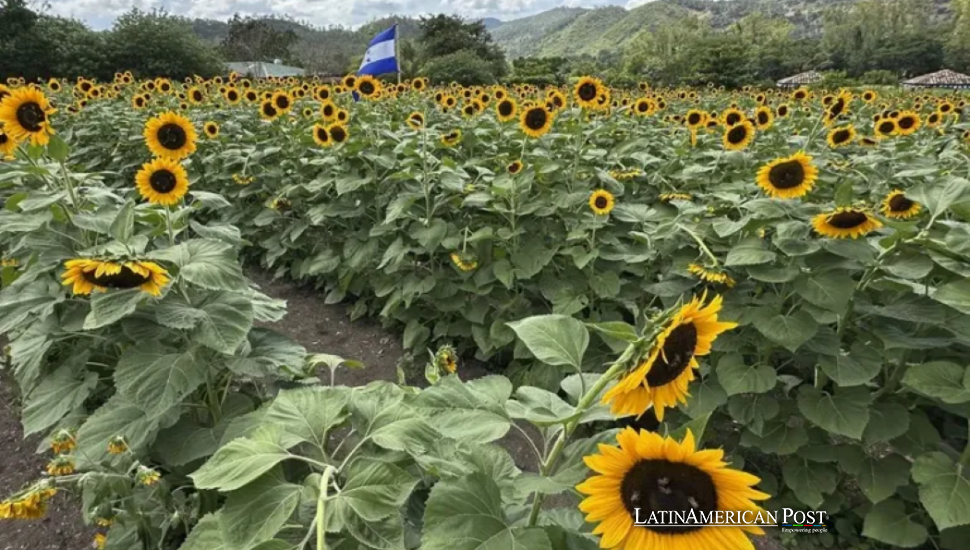
At Copán Ruinas, a family’s drought response became a sunflower attraction drawing mostly Honduran visitors. Behind the photographs lie dairy cows, carefully staggered plantings, and a business learning to make thirteen days of flowering support something that lasts much longer.
The Cows Came First
The flowers were supposed to feed the cows. Keeping them fed was the practical problem facing Raúl Cueva’s family in 2020, when drought threatened their dairy production in western Honduras. Tobacco and milk were familiar businesses. A field that people would travel to photograph was not the original plan.
Then came Eta and Iota. Their rains damaged the family’s corn and sorghum that November, Cueva recalled in an interview with EFE. The first sunflower plot escaped those rains. By December it was flowering, arriving, in the family’s telling, like a Christmas gift.
“We had to reinvent ourselves,” Cueva told EFE.
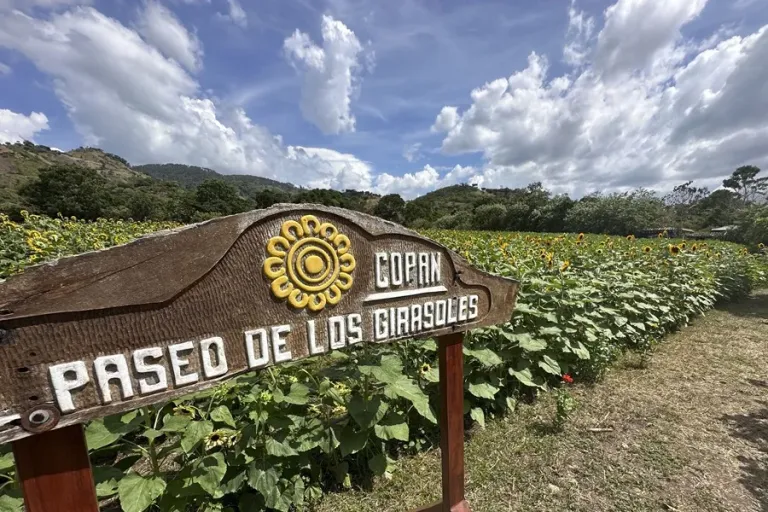
A daughter and nieces began sharing the flowers on social media. Their contribution changed the crop’s possibilities: instead of feeding livestock, it could bring customers to the farm. The experiment became El Paseo de los Girasoles. A restaurant and café followed, alongside a craft shop and horseback rides.
The difference is what the family can now sell. Instead of harvesting those plants for cattle, the family can earn from visitors. A photograph can lead to lunch or a horseback ride. The flowers give them a reason to arrive; the services give them a reason to stay.
Yet the photographs tell only part of the story. Milk production remains the main activity, Cueva told EFE. Tourism comes second. The family has added another business to its land rather than simply trading agriculture for a more photogenic occupation.
Diversification gives the family more ways to earn from its existing land. It also keeps those earnings from being tied to the weather. A damaged sunflower crop could also discourage visitors, making this an adaptation to agricultural uncertainty rather than an escape from it.
Keeping the Yellow on Schedule
About five hectares are divided into eight sunflower plots, each with roughly 7,000 plants, according to Cueva. Multiply those figures, and you get about 56,000 plants. But multiplication alone misses the point: visitors are not promised every flower at once.
Since April 2021, the family has planted every 15 days, Cueva told EFE, scheduling successive plots to maintain flowering throughout the year. A flower’s finest display lasts about 13 days. The attraction therefore depends less on one enormous bloom than on repeatedly preparing its successor.
At that pace, roughly 24 planting rounds fit into a year. What looks permanent in photographs is actually a succession of short displays requiring continual farm work.
That makes the planting calendar part of the hospitality business. A spectacular field might draw visitors briefly; staggered flowering gives the restaurant, café and riding activities a reason to remain destinations beyond that first burst of color.
Cueva describes 30,000 to 35,000 flowers over a season. For early October’s Semana Morazánica, he expects 12,000 to 14,000 across two plots. Those figures cover different periods and aren’t interchangeable measures of how many sunflowers a visitor will find.
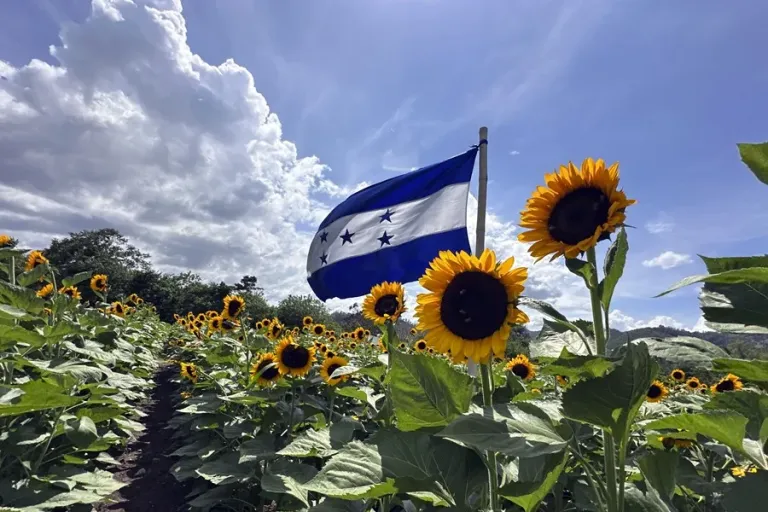
During the September independence celebrations, EFE reported at least two plots in full bloom, with a blue-and-white Honduran flag among the plants. The holiday marked 205 years since independence from Spain on September 15, 1821. The next flowering is being timed for another opportunity to travel.
Semana Morazánica is an annual holiday intended to encourage domestic tourism. At this farm, that purpose becomes a practical calculation: flowers need to reach their best when people have time to see them. A holiday can supply an audience, but it cannot postpone a fading bloom.
More Than a Photograph
Cueva estimates that the attraction receives 70,000 visits annually, mostly from Hondurans. Divided across a year, that is roughly 192 visits daily. The calculation provides scale, not a description of actual daily attendance or how concentrated visits are around holidays.
The nationality of those visitors matters. Domestic leisure, organized around the country’s own calendar, is central to the farm’s market. The enterprise is not simply waiting for foreign travelers to discover it. Hondurans already account for most of the people arriving to enjoy these fields.
Attendance alone cannot establish profitability. EFE’s account provides no revenue, operating cost, or employment figures. The restaurant and other services offer ways to earn from a visit, but 70,000 arrivals do not tell us what remains after the work of welcoming them and maintaining the crops.
The family is also developing meliponiculture, the keeping of stingless bees for honey. Alongside the sunflower plantings, the project adds another agricultural activity to a place whose appeal still depends on what grows and lives there, rather than scenery alone.
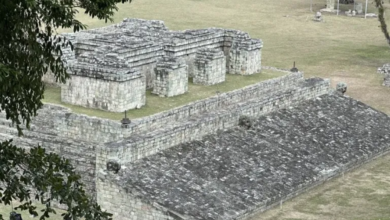
Another calendar now offers a possibility. According to EFE, Copán Ruinas plans commemorations through September 2027, marking 1,600 years since the arrival of its first Maya king, K’inich Yax K’uk’ Mo’. Cueva hopes those activities will bring more visitors to the farm. The opportunity extends beyond the next holiday weekend.
The connection is modest but meaningful: a town remembering its ancient history can also draw attention to families making a living in its present. At El Paseo de los Girasoles, that present still includes milk production. The flowers changed the farm’s prospects without erasing the reason they were planted.
Also Read: Chile Hunts Crypto Fortunes as Organized Crime Tests State Power