Montevideo City Torque Crashes Sudamericana Semifinals with Cinderella Drama and Famous Relatives
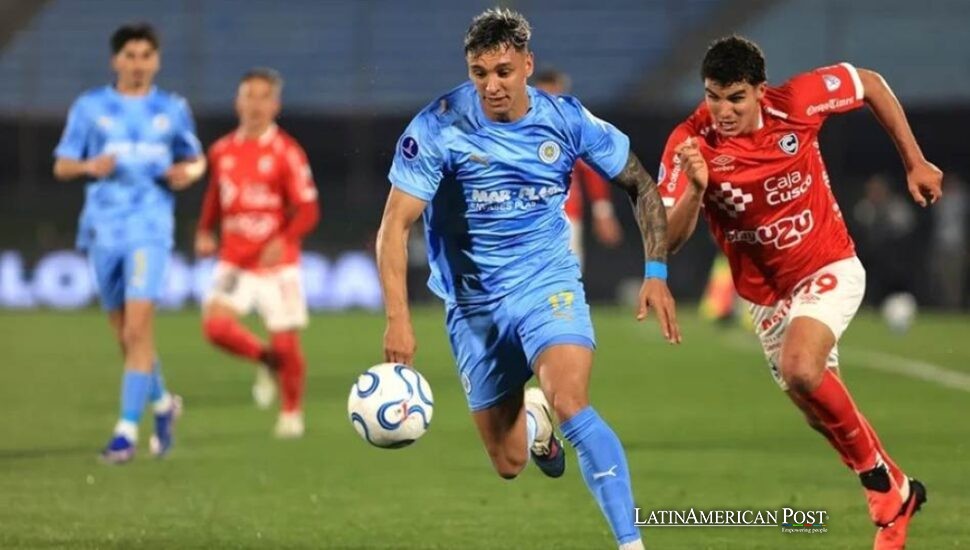
Montevideo City Torque has reached its first continental semifinal after overturning Cienciano’s two-goal advantage. Uruguay’s surprise package carries a mechanical name, modest honors and some recognizable alumni, but this Cinderella story also comes with powerful relatives in Manchester City’s family.
Three Goals, One Introduction
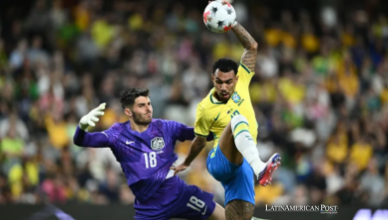
At the moment, a penalty shootout seemed inevitable; Salomón Rodríguez slipped Nahuel Da Silva through on goal. Da Silva beat Ítalo Espinoza, and Montevideo City Torque had something no corporate affiliation could guarantee: its first continental semifinal. Three goals had erased a two-goal deficit and kept an unfamiliar badge alive.
According to EFE’s match report, Torque’s 3-0 victory on September 17, 2026, reversed the previous week’s 2-0 defeat in Cusco. Marcelo Méndez’s team will face Atlético Mineiro. Uruguay’s representative in the Sudamericana’s final four is not Peñarol or Nacional, but a club that has not yet celebrated its nineteenth birthday.
Readers wondering whether they missed several decades of Torque glory can relax—no forgotten Libertadores trophies to dig out of the attic. There is, however, considerably more to this team than a surprise result and a shirt resembling Manchester City’s.
The comeback required patience before it supplied drama. Franco Torgnascioli saved a dangerous Marcos Martinich free kick before Rodríguez opened the scoring after a scramble in the 39th minute. In the 57th minute, the striker headed in Esteban Obregón’s cross. Only then had Torque drawn level across the two games, EFE reported.
The arithmetic explains the tension. A two-goal victory offered penalties, not passage. A third would remove the shootout, provided Torque conceded nothing. Da Silva’s stoppage-time finish therefore did more than decorate a comfortable home win: it changed who advanced.
Rodríguez scored twice and supplied the decisive assist, directly contributing to all three goals. The tournament figures accompanying EFE’s report put him on seven goals, two clear of Gabriel Barbosa and Rodrigo Contreras. Nearly 29 percent of his scoring total arrived in this comeback. His most consequential contribution, though, may have been the pass.
Another celebrated underdog stood on the other side, too. Cienciano beat River Plate to win the 2003 Sudamericana, four years before Torque existed. The Peruvians were not merely obstacles in somebody else’s fairy tale. They were trying to revive one of their own.
The Mechanic Got There First
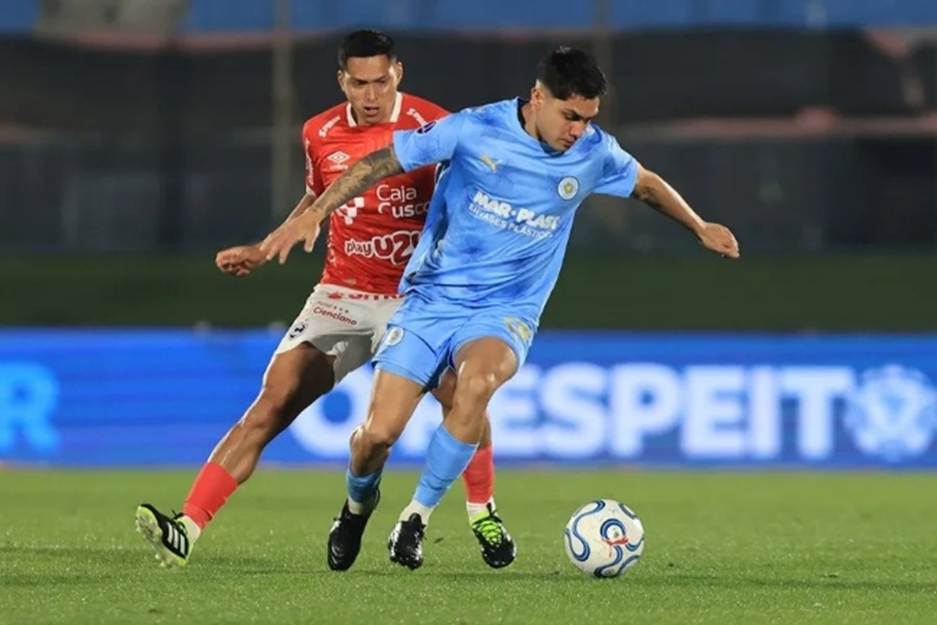
Torque means the turning effect of a force. Marcelo Yaurreche, an electromechanical technician, proposed the name and helped establish the club with Uruguayan businessman Raúl Aquino. Founded in December 2007, it was called Club Atlético Torque long before the City branding arrived.
The mechanic beat the marketing department to it.
In a 2013 interview with El Observador, Yaurreche recalled recruiting players whom established professional clubs had overlooked, including a supermarket worker, a delivery driver and a fruit seller. Players raised money for clothing through a raffle. Early training took place at night because many still needed their day jobs.
That history matters. This was not a club invented fully formed by a multinational company. It began with people assembling a team from available players, spare hours, and a conviction that they could do something together.
City Football Group acquired Torque in 2017; it adopted the current name in January 2020. Its later academy brought training pitches, medical facilities and a shared base for senior and youth teams. CFG now states that its ownership is held in a blind trust under CONMEBOL regulations.
So, yes, this Cinderella has unusually well-connected relatives. Manchester City’s budget is not automatically Torque’s budget, and ownership alone cannot establish how its payroll compares with opponents. But the academy and recruitment network complicate the romance of an impoverished outsider. Small in tradition does not necessarily mean small in resources.
What have they actually won? Their honors include the third-tier championship in 2011-12 and professional second-division titles in 2017 and 2019, plus that division’s Torneo Competencia in 2024. They have never won Uruguay’s overall top-flight championship or a senior continental title.
Nor was the ascent uninterrupted. Relegation followed their first top-flight season in 2018; they went down again in 2023 and returned through promotion in 2024. Those reversals make this semifinal more striking than the branding suggests. Affiliation did not purchase immunity from the league table.
Earlier continental appearances supplied experience without a breakthrough. Torque reached the Sudamericana group stage in 2021, then lost on penalties to Barcelona of Ecuador in the opening qualifying round of the 2022 Libertadores. This is therefore not its first passport stamp. It is the first time an international campaign has lasted into the final four.
As for Uruguay’s familiar giants, Peñarol and Nacional have eight Libertadores titles between them, five and three respectively. Both qualified for the 2026 Libertadores, the continent’s premier club competition. Torque’s Sudamericana campaign follows a different route, not a reserved seat stolen from either rival.
The surprise is not that Uruguay has other clubs. It is that this young one is building an international story of its own.
Familiar Players, Unfamiliar Badge
Start with Valentín “Taty” Castellanos. He played for Torque before joining New York City FC in 2018, won the MLS Golden Boot and MLS Cup in 2021, and scored four goals for Girona against Real Madrid in 2023. That last detail usually helps jog the memory.
He also made his senior Argentina debut against Chile in September 2024. Torque was a stop on that journey, not the sole author of his development. Nevertheless, a club unfamiliar to many viewers has already helped provide a route toward one of international soccer’s most demanding teams.
Uruguay also has a direct connection. The Uruguayan Football Association records four senior international appearances for Diego Arismendi between 2008 and 2014. The former Nacional midfielder later joined Torque in 2020. Those were senior caps, not youth appearances, although they preceded his time with the club.
These careers reveal another dimension of the project. Torque can be a competitive team in Uruguay and a staging post for players moving elsewhere. Those functions can reinforce each other through recruitment and development. They can also create tension: selling a successful player is not the same achievement as keeping a successful team.
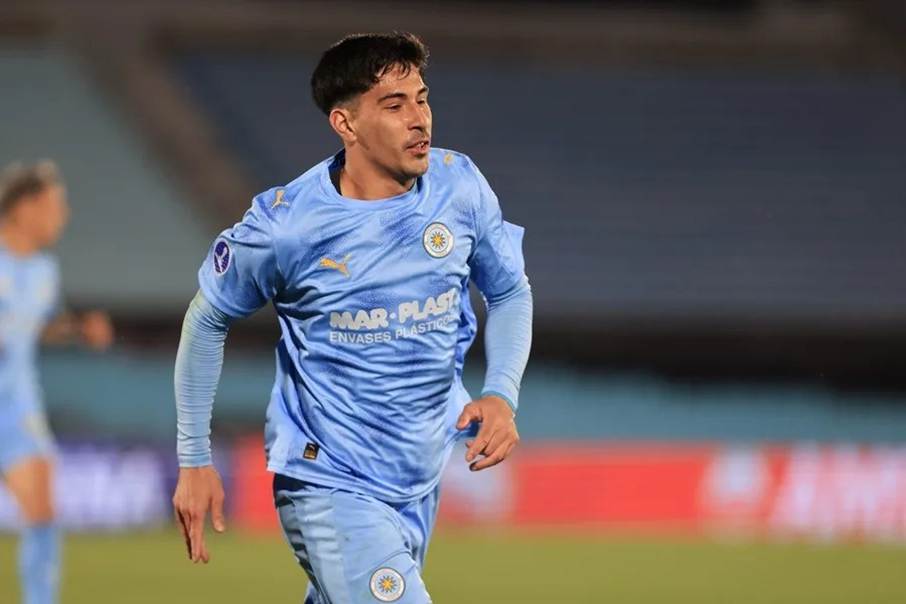
For supporters, Thursday supplied something less transferable. Rodríguez’s finishes, Obregón’s delivery and Da Silva’s decisive run now belong to the club’s sporting memory. A network can move a player between teams; it cannot move the experience of watching that goal into another club’s history.
This run is not happening in isolation. EFE identifies Torque as the Uruguayan Clausura leader. Domestic form offers another reason to take the team seriously, although leading one phase is not equivalent to winning the national championship.
Next comes Atlético Mineiro, last year’s Sudamericana runner-up. EFE’s schedule lists the first leg in Belo Horizonte on October 14 and the return in Montevideo on October 21. The prize is a place in the November 21 final in Barranquilla.
Nobody needs to pretend Torque emerged without help to enjoy this. The backing is real. So were the relegations, the two-goal deficit, and the finish that erased it. For a club named after turning force, making the continent turn its head is a reasonable start.
Also Read: Colombian Soccer Rolls Out the Red Carpet but Cannot Turn Back Time