Argentina Confronts a Whale Death Mystery Where Patagonia’s Ocean Giants Begin Life
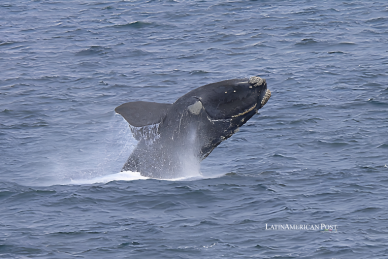
Hundreds of southern right whale deaths along Argentina’s Patagonian coast have unsettled a crucial breeding ground. As scientists investigate a possible bacterial infection, sharply lower whale counts raise urgent questions about calf survival, though they have not yet confirmed a population collapse.
A Nursery Under Investigation
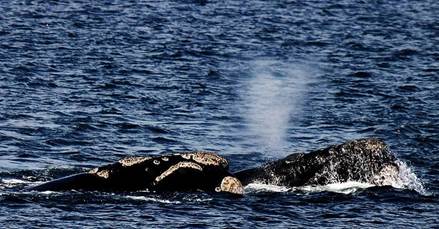
They arrive to mate, give birth, and stay close to their young. Off Chubut, southern right whales turn the waters around Península Valdés and Puerto Madryn into a seasonal nursery between June and November. This year, the shoreline has also become a place where scientists must account for the dead.
EFE reports hundreds of deaths in recent months, with calves especially affected. Provincial authorities and research teams are investigating the losses. The location makes them particularly consequential: this is not simply a stretch of ocean whales cross, but a place where the next generation begins.
A calf normally stays with its mother during its first year. The relationship behind each census entry is therefore prolonged and demanding. A death in these waters is not merely one fewer animal on a survey; it is a life cut short inside the habitat where that dependence is supposed to be sustained.
“This area forms part of the heart of its critical habitat,” Matías Arrigazzi, a biodiversity specialist with Greenpeace Argentina, told EFE. He described waters essential for mating, raising calves and interactions between mothers and their young.
Investigators are examining a possible bacterial infection. In a statement reported by EFE, authorities said a bacterium commonly present in seawater could cause systemic illness in calves. They also said they had not identified evidence linking the recorded deaths to human activity.
Those are provisional findings, not a completed explanation. A possible pathogen is not yet a demonstrated cause of the wider mortality event. Likewise, the absence of identified evidence of human involvement should not be stretched into a claim that every environmental influence has been excluded.
The Numbers Need a Denominator
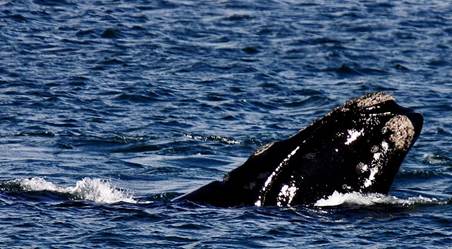
September’s first census of the 2026 season counted 1,375 whales, including 409 calves, according to Cesimar-Conicet, the Center for the Study of Marine Systems. In 2025, the count reached a record 2,110, with approximately 800 calves.
On paper, that is 735 fewer whales, a 34.8 percent decrease. The calf count is down by roughly 391, or 48.9 percent. Calves represented about 37.9 percent of the previous count, compared with 29.7 percent this year, a difference of approximately eight percentage points.
The young therefore account for just over half the numerical gap between the two counts, despite making up considerably less than half of either total. That makes the calf figures particularly important to examine. It does not explain why they changed.
Most importantly, 735 fewer whales counted does not mean 735 whales died. Nor does the difference of roughly 391 calves establish a calf death toll. A census records animals present and detected during a survey. Mortality measures deaths across a defined population and period.
The comparison also sets a first seasonal census against a record year. Without matching survey dates, coverage, and counting methods, the percentages describe the reported observations, not a proven population trend. Arrival and departure patterns could affect a snapshot; these figures alone cannot establish whether they did.
Nor can researchers calculate a reliable calf mortality rate by treating the 409 observed calves as all those born during the season. The relevant denominator would require an estimate of births or calves at risk across the same period as the deaths. That number is not provided.
This is not statistical fussiness. Confusing an incomplete count with a mortality rate could either exaggerate the damage or conceal it.
The Memory in These Waters
The concern did not begin this year. Data presented to the International Whaling Commission’s Scientific Committee recorded 482 dead southern right whales at Península Valdés between 2003 and 2011, with calves accounting for the vast majority. That history establishes repeated vulnerability, not a diagnosis for 2026.
Earlier investigations considered food availability, toxic algae, and attacks by kelp gulls. Those possibilities belong to earlier research, not to a confirmed explanation of the present deaths. Similar losses in the same place need not have the same cause.
The whales also carry a longer history. Commercial hunting pushed the species close to extinction. Argentina declared the southern right whale a National Natural Monument in 1984. Its presence supports whale watching around Puerto Madryn and Península Valdés.
Here, a living whale belongs to more than a conservation chart. It is part of the region’s visitor economy and its public identity. That connection makes calf survival a local concern without reducing an animal’s future to the price of seeing it.
Females commonly return to calving grounds at intervals of around three years, and maternal attachment to those places is strong. Such fidelity means these bays are not interchangeable accommodation. They hold the continuity between one generation’s migration and the next.
Arrigazzi told EFE that protecting the quality of the marine environment was the best guarantee of the species’ future. His argument does not settle the bacterial hypothesis. It explains why a mortality event here matters beyond the bodies already recovered.
The census can tell Argentina how many whales were seen. The investigation must establish why so many died. Between those tasks lies the future of a nursery where arrival has long carried the promise of another beginning.