Brazil’s Lula Reopens an Old Argument About Who Sets Latin America’s Terms
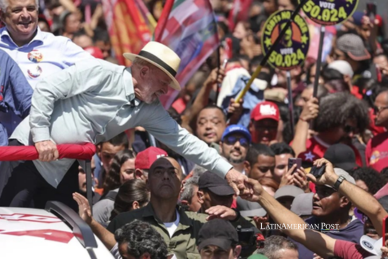
Lula’s complaint about Latin American deference to Washington has reopened an old regional argument. Behind the campaign rhetoric lie concrete questions about trade, medicine, security, and elections, and how much room governments retain to negotiate with their most powerful partners.
The Argument Behind the Handshake
The handshake was not the issue. The conditions attached to it were. In an interview reported by EFE on September 30, 2026, Lula criticized what he called an “inferiority complex” among Latin American presidents toward Washington while describing his relationship with Donald Trump as respectful. He said personal affection was unnecessary for conducting relations between states.
He was answering a question about the Shield of the Americas, a security alliance Trump promoted without Brazilian or Mexican membership. Lula also singled out former Argentine President Carlos Menem as an example of excessive deference. That was his characterization, not a finding about what motivated every decision of Menem’s government.
His account also included conversations with China’s Xi Jinping and a warning to Trump against interference in Brazil’s election. That presents diplomatic contact as a working relationship rather than personal loyalty. The distinction leaves room for governments to negotiate, cooperate and disagree with the same partner.
The alliance’s March 7 proclamation calls for coordinating action against cartels and training partner militaries. It also seeks to exclude hostile influences from outside the hemisphere. These are declared security objectives. Whether participation restricts a country’s independence depends on the agreements and obligations involved, not simply on a president appearing beside Trump.
The historical background includes something more concrete than diplomatic manners. A March 31, 1964, State Department telegram approved preparations to assist forces opposing Brazilian President João Goulart. It specified fuel tankers, a naval task force, and roughly 110 tons of ammunition and equipment for a possible airlift. The document records contingency planning, not proof that every proposed shipment arrived. It nevertheless establishes U.S. preparations to support Goulart’s opponents.
Sovereignty by the Tablet
Another example begins not with a warship but with medicine. In May 2007, Lula’s government issued a compulsory license for efavirenz, an HIV treatment patented by Merck. The measure authorized generic supplies without the patent holder’s consent while retaining a royalty payment. Negotiations had already produced a proposed reduction from $1.59 to $1.10 per dose; Indian generics cost about 45 cents.
Against the original price, 45 cents represented a reduction of approximately 72 percent. Against Merck’s revised offer, it was about 59 percent. Neither calculation, by itself, measures total program savings: procurement, royalties and production costs also matter. A South Center retrospective estimated savings of $103.5 million during 2007–2012, approximately 58 percent of the resources otherwise required.
Merck objected and warned about implications for investment. The disagreement was over prices, patent rights and access to treatment, not whether Brazilians liked Americans. For patients relying on publicly supplied medicine, the consequence was practical. Brazil used a legal instrument and alternative suppliers to change the purchasing terms. This was negotiation through institutions, rather than personal rapport.
Today’s commercial relationships complicate any simple choice between Washington and Beijing. The Brazil-China Business Council, using Brazilian government data, reported $100 billion in exports to China in 2025, accounting for 28.7 percent of Brazil’s goods exports. The United States accounted for 10.8 percent. China’s share was therefore about 2.7 times larger.
But the composition matters. The United States purchased 16 percent of Brazil’s manufacturing exports, compared with China’s 11.7 percent. China was especially important for agriculture and extraction. These markets are not interchangeable: stronger commodity sales to one buyer do not necessarily replace an industrial customer elsewhere. Diversification concerns products and customers, not merely the number of flags around a negotiating table.
Pressure and the Polling Booth
The tariff dispute supplies a recent example of politics entering commercial terms. Trump’s July 30, 2025, executive order imposed an additional 40 percent duty on covered Brazilian products. Its stated rationale included alleged censorship affecting U.S. companies and what Washington described as political persecution of Jair Bolsonaro. Those were the administration’s allegations, not independent findings.
The order expressly contemplated changing tariffs if Brazil sufficiently aligned with U.S. demands. That establishes a documented connection between trade pressure and disputed domestic decisions. It does not, by itself, establish Lula’s separate allegation that the Bolsonaro family was responsible for Washington’s measures. The mechanism and the accusation require different evidence.
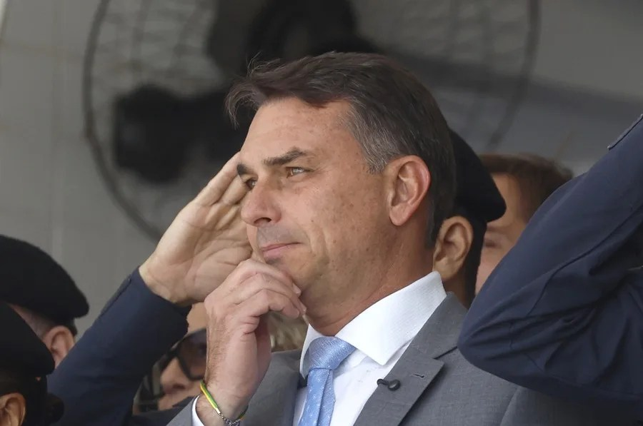
None of this turns polling into a referendum on sovereignty. EFE’s September 28 account of a Quaest survey recorded Lula at 39 percent and Flávio Bolsonaro at 34 percent for the first round, with 42 percent apiece in a hypothetical runoff. EFE reported 2,400 nationwide interviews conducted September 24–27 and a two-point margin of error.
The survey also recorded 49 percent disapproval of Lula’s government and 46 percent approval. These measures describe different questions, not contradictory electorates. Someone can prefer a candidate while disapproving of his administration. Nor can interviews completed before Wednesday establish a response to Wednesday’s remarks. The figures measure stated preferences at that moment, not election outcomes.
Lula has placed an old regional concern inside a contemporary campaign. The documentary record offers specific cases of outside pressure and negotiated alternatives. The unresolved question is how particular arrangements distribute authority, costs, and benefits. For a patient collecting medicine or a worker whose employer needs export orders, those terms reach well beyond the presidential handshake.