El Salvador’s Prison Reforms Offer Hope, But Families Still Demand Justice
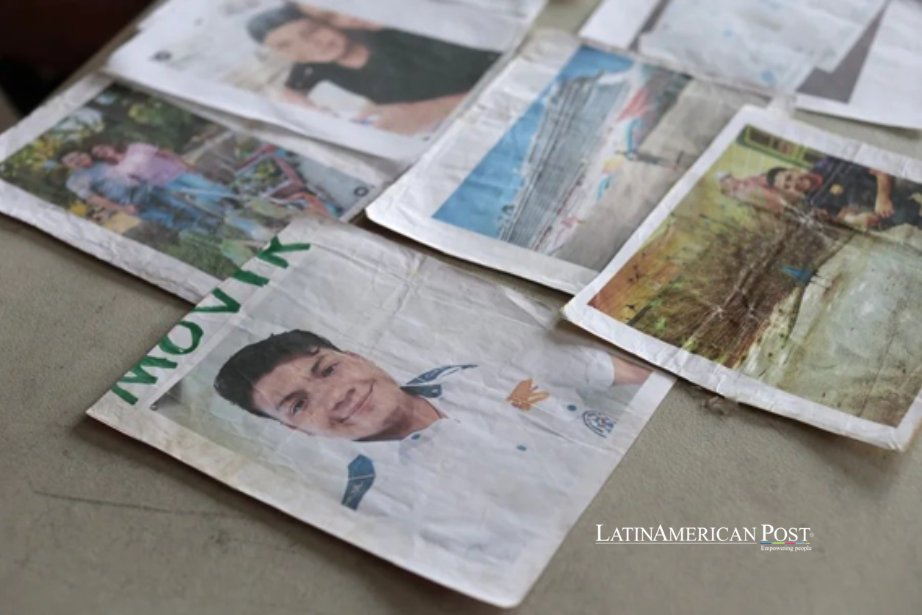
Parents in El Salvador who once feared gangs now wait for news from prisons holding their sons. A proposed review offers hope, but families demanding fair trials want more than reduced punishment for crimes they insist their children never committed.
Two Sons, Two Different Fears
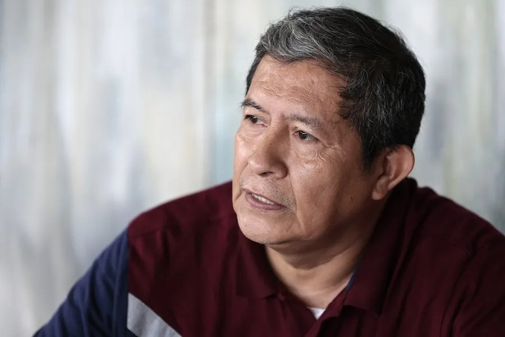
Reynaldo Santos taught his children to avoid criminals and earn an honest living. In 2017, his eldest son followed that advice by reporting gang members who wanted to commandeer his motorcycle.
The next day, he had to leave.
“Either he left, or they could kill him,” Santos told EFE. Years later, another son disappeared from the family’s daily life, this time into state custody.
Police arrested Jonathan Santos Castillo at home on December 26, 2022. His father says the arrest report noted that officers found nothing linking him to gangs and that there was no arrest warrant. Santos remembers one officer declaring his son “clean” before taking him away for investigation.
“We were victims of criminal groups, and today we are victims of the government,” he told EFE.
For this family from Soyapango, the accusation of gang collaboration reverses its account of surviving gang rule. Santos believes the neighborhood’s violent reputation has helped turn residents into suspects. He argues that living where criminals exercised power does not make someone part of their organization.
His older son’s experience exposes the difficulty hidden inside the word “collaboration.” A demand for a motorcycle could carry a death threat. Any serious investigation must distinguish willing assistance from coercion, proximity, and conduct that never occurred. Those distinctions require examining individual actions.
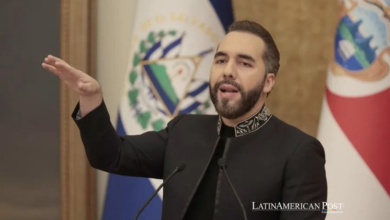
President Nayib Bukele’s government argues that its emergency crackdown restored territorial control and sharply reduced violence. Its popularity reflects relief after years of gang intimidation. Santos’s account shows why people demanding protection from gangs can also demand protection against wrongful imprisonment.
The state of exception has operated since March 2022, suspending constitutional safeguards while authorities arrested more than 96,000 people. Rights organizations have received over 6,400 complaints of abuses, and the government has acknowledged detaining innocent people.
Those complaints cannot produce a reliable wrongful detention rate: they concern alleged abuses and are not equivalent to completed judicial findings. But the acknowledged mistakes make an effective correction process essential.
What the Percentages Leave Out
Bukele’s proposed prison benefits have raised expectations because families see a possible opening after years of confinement.
The scale needs careful reading.
His chart classified 96,457 prisoners in gang-related categories: 42,125 full members and 25,910 members not yet formally initiated, followed by 17,793 habitual voluntary collaborators and 10,629 occasional collaborators. These are the government’s classifications; the chart does not establish the evidence or judicial outcome in every case.
The occasional category represents about 11 percent of that total. Bukele has suggested approximately half could qualify for benefits, estimating around 5,000 people. That would amount to roughly 5.2 percent of everyone represented in his chart. The proposal therefore concerns a small minority, despite the prominence of the 50 percent figure.
EFE reported that eligible prisoners could enter Cero Ocio, a public service work program that offers a route to conditional release. This describes a mechanism for reducing confinement, not an announcement that the people selected were wrongly accused.
For parents asserting innocence, that distinction reaches beyond legal terminology. Returning home under a punishment framework can leave the original accusation unresolved. A family seeking an examination of the evidence is asking a different question from whether a prisoner has earned a benefit.
Bukele has also insisted, in remarks reported by EFE, that no gang member will ever be freed. That promise makes classification decisive. If a person was incorrectly placed in a more serious category, a review confined to occasional collaborators might never reach the underlying mistake.
An honest review therefore needs to test the categories themselves. The arithmetic explains how many might benefit; it cannot determine who belongs behind bars.
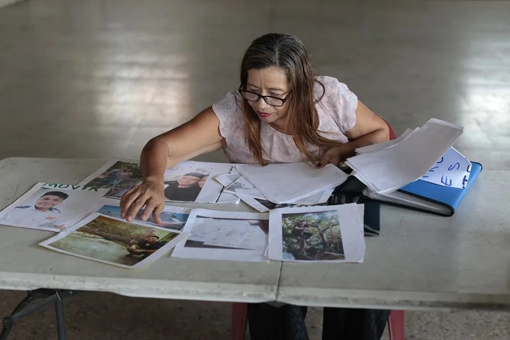
A Mother’s News From Prison
Josefina Elías has not seen her son René Campos since June 2023. He was preparing to obtain additional merchant mariner licenses when authorities arrested him as an alleged collaborator, she told EFE.
She believes his address in a stigmatized part of Ilopango made him vulnerable. More than three years later, she knows his circumstances from taking packages of necessities to the prison.
Officials tell her that he has changed cells but remains in the same sector. She describes these fragments as her only proof of life.
They cannot tell her what he looks like, whether he is well, or what he would say if allowed to speak to her.
Elías also says public defense officials lost documents she submitted to demonstrate her son’s community ties. Such records cannot settle guilt or innocence on their own, but losing them obstructs a family already struggling to make an individual life visible within an enormous caseload.
Legislative reforms permitting mass trials heighten that concern. Trying alleged criminal networks together does not remove the need to establish each defendant’s responsibility and allow a meaningful defense. Efficiency cannot answer whether this particular man committed this particular offense.
For Jonathan, nearly four years have passed since his arrest. For René, professional preparation has given way to prolonged confinement. Their parents seek decisions based on evidence, with enough access to challenge it.
“My son cannot defend himself,” Elías told EFE. “But here I am, as his mother, fighting for him.”