Argentina Balanced Its Books. Pope Leo Asks Who Picked Up the Tab
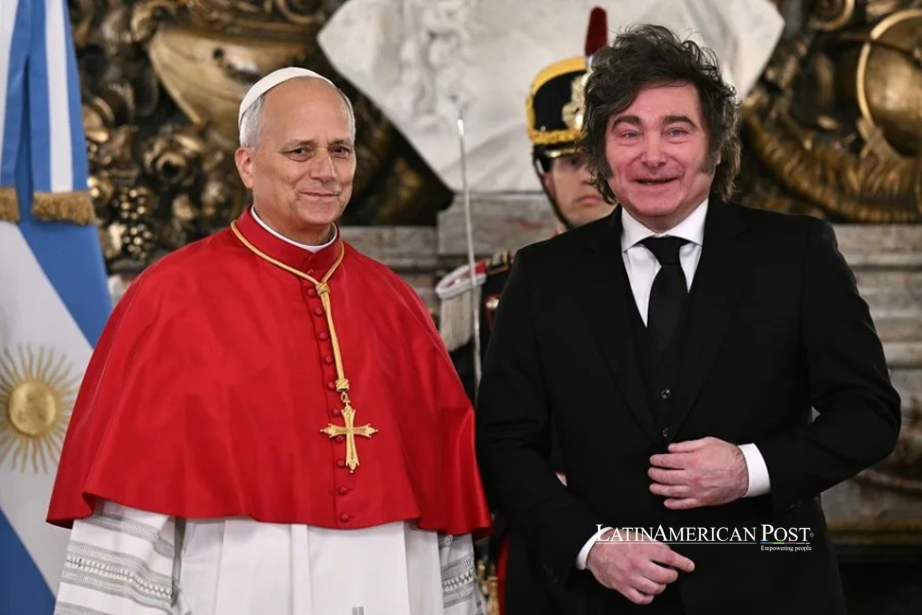
Pope Leo XIV arrived in Argentina as the government ran a surplus and retirees marched for help buying medicine. Javier Milei’s chainsaw helped slow inflation. For those on the minimum pension, one cut came from leaving a single number alone.
The Wednesday Regulars
Lidia Duarte had been going to the Wednesday pensioners’ march outside Argentina’s Congress for a decade by the time she spoke to EFE in May 2025. She was 72. Police had chased the retirees, hit them, and gassed them more than once, she said. What brought her back was the trouble she had paying for four meals a day and her medication. “I can’t make it to the end of the month,” she said.
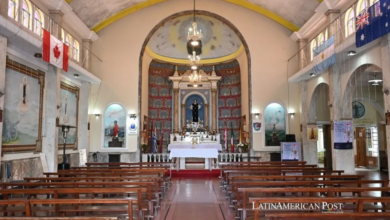
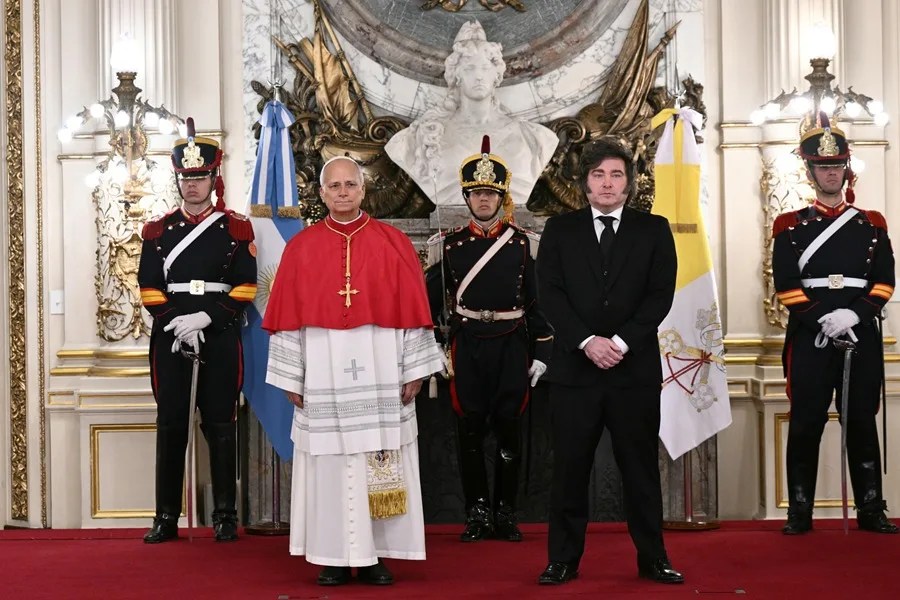
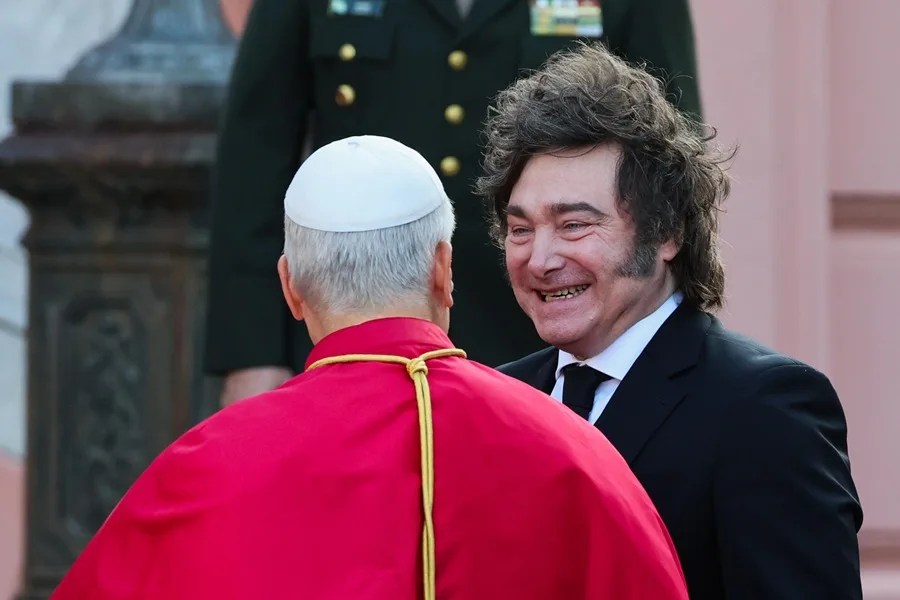
On Sunday in Buenos Aires, Pope Leo XIV spoke about people like Duarte with President Javier Milei sitting beside him. The setting was the capital’s old central post office, now a cultural center. It once bore the name of Néstor Kirchner, the Peronist former president. Milei renamed it Palacio Libertad. From its stage, the first pope to visit Argentina in 39 years asked his audience to consider the elderly who had spent their working lives building the country.
“The economy must serve the person,” Leo said in remarks reported by EFE. He spoke favorably of private enterprise and called for investment in education and research. When he told those who hold power to recognize its limits, the applause obliged him to repeat himself.
At a campaign rally in La Plata in 2023, Milei hoisted a chainsaw above his head. The motosierra was his promise to take on what he called Argentina’s political caste. Years of inflation gave him a receptive audience. Argentina’s government had repeatedly turned to the central bank to finance its deficits. Workers could set aside money on payday and find, by the time a bill came due, that the pesos no longer covered it.
What the Chainsaw Delivered
Once in office, Milei halted public works and squeezed transfers to the provinces. Cutting spending reduced the Treasury’s need for freshly printed pesos. In the first nine months of 2026, the national government took in enough to cover its spending, including interest, with about 0.3% of gross domestic product left over.
Consumer prices jumped 25.5% in December 2023 alone, the month Milei took office and sharply devalued the peso. At that rate, a 100-peso bill tucked away for a month lost a fifth of its buying power. In September 2026, prices rose 1.9%. A paycheck held its value longer, welcome relief even for workers whose wages had yet to catch up.
Argentina’s poverty figures trace the uneven recovery. In the 31 urban areas surveyed by the national statistics agency, 52.9% of people lived below the poverty line in the first half of 2024. By the second half of 2025, that share had fallen to 28.2%. Slower inflation helped. Milei also increased Argentina’s child allowance, which helped some families get back above the poverty line. In the first half of 2026, poverty rose again, to 32.3%, as incomes fell behind the cost of essentials.
Finding a job with a regular paycheck had become harder. By July, Argentina had roughly 32,300 fewer registered employers than in November 2023, according to Argentina’s Center for Political Economy. Its tally of registered jobs, including domestic work, fell by nearly 466,000. Construction alone lost about one in six payroll positions. Suspending a road project saves the Treasury money. It also leaves the people who were building the road looking for work.
Banks could see where the strain was greatest. In August, 12.8% of household loan balances were delinquent, against 3.8% for businesses. Slower inflation makes the next grocery bill a little more predictable. A family that borrowed to cover last month’s still owes the money.
The Number That Never Moved
A minimum pension comes in two parts. The base payment now rises with inflation. A supplement for those at the bottom has stayed at 70,000 pesos since March 2024. Every month that prices went up, leaving that figure untouched saved the Treasury money in real terms. A retiree could get a raise on paper and still come up short at the pharmacy.
From August through October this year, the minimum pension, supplement included, bought 19.2% less than it had in the final quarter of 2023, the research center calculated. Pensions paid without the supplement lost 1.2% over the same period. The decision to freeze the bonus concentrated the losses among people with the smallest checks. By October, keeping the supplement in step with the base pension would have made it worth nearly 227,000 pesos.
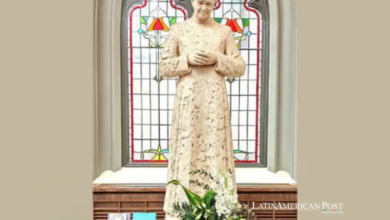
Buenos Aires Archbishop Jorge García Cuerva had already spoken up for retirees and people with disabilities before Leo arrived. On Sunday, Milei praised the archbishop’s predecessor, Pope Francis, as “the most important Argentine in history.” Leo’s itinerary included a stop before Monday’s Mass at a home for people with disabilities in Claypole, south of the capital. Francis used to say Mass there. He asked seminarians to spend a month working with residents before ordination.
Outside Congress, the retirees had long been clear about what they wanted. One demand was full coverage for their medicines. Another required nothing from the Treasury. Duarte wanted the people who saw her on those Wednesdays to respect “the years we’ve worked, the gray hair, the dignity.”