Dominican Republic Guards Its Border as Haiti’s Gangs Tax the Grocery Run
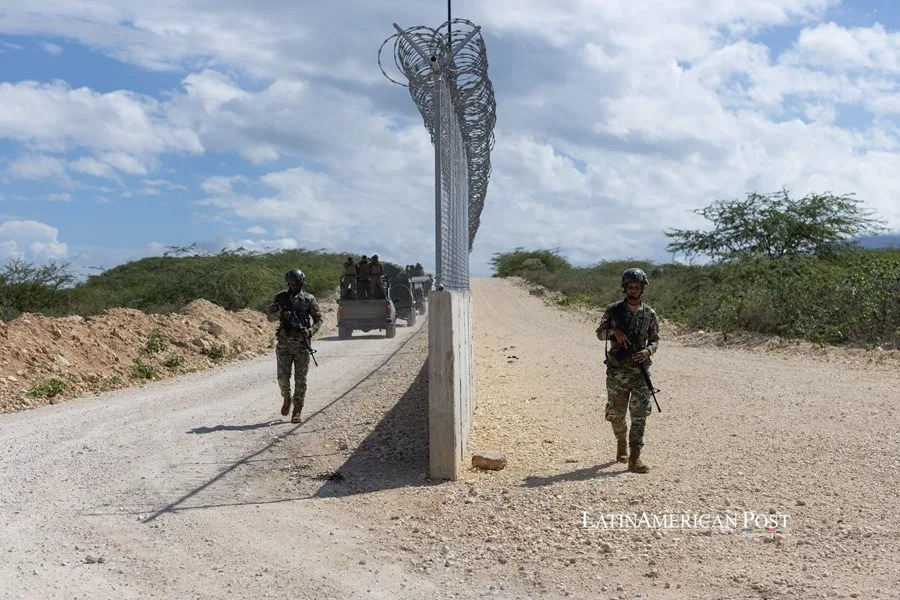
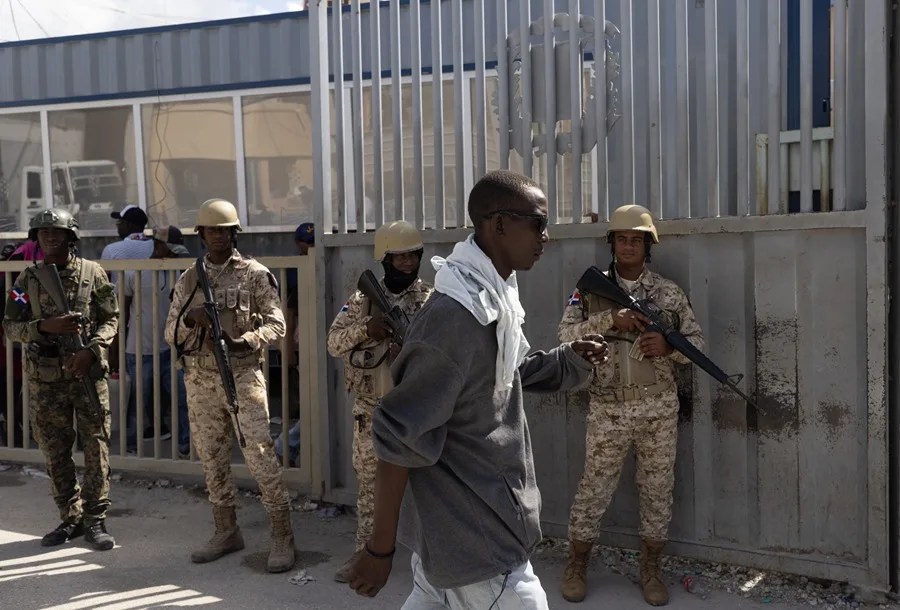
In Jimaní, Dominican soldiers guard the border and Haitian workers load goods for Port-au-Prince. The capital lies just 60 kilometers away. Part of what a shopper pays for food there can go to the armed men who control the road.
Where Peter Finds a Day’s Work
Peter lives in Fond Parisien, Haiti. Anyone looking for him during the working day might have better luck in another country. “I spend more time here, really, offering to help load whatever comes along,” the young Haitian told EFE in Jimaní. The Dominican town of about 13,000 is the border crossing closest to Port-au-Prince. Traders come from the capital to buy food and other goods they can sell back home.
On a map, Haiti’s National Route 8 runs from the crossing at Malpasse through Fond Parisien and Croix-des-Bouquets to the capital. Peter describes it in stretches. In his town, he said, local self-defense brigades have kept the gangs out. Beyond it, armed groups decide who gets through and what they pay. Traffic on the route was restricted to Haitian citizens and vehicles when EFE visited. Buyers were still making the trip to Jimaní daily.
The gangs that control most of Port-au-Prince charge a toll on those loads of food. For the merchant who has already paid a supplier and hired someone like Peter to load the goods, the choice is an unhappy one. Absorb the charge, and there is less cash for the next buying trip. Pass it on, and a household in the capital helps pay the gang when it buys its groceries. From the Dominican side, either trip looks like an ordinary sale.
One Island, Two Independence Days
The two countries that share Hispaniola came to independence 40 years apart. Haiti won its freedom from France in 1804 after a revolution led by enslaved and formerly enslaved people. In 1822, Haitian President Jean-Pierre Boyer brought the formerly Spanish east under his government and abolished slavery there. For people held in bondage in the east, the arrival of Haitian rule meant emancipation. For those seeking a separate republic, rule from Port-au-Prince became the grievance around which they organized.
On February 27, 1844, rebels in Santo Domingo proclaimed the Dominican Republic. The declaration ended 22 years of rule by a single government on the island. Haitian armies made several attempts to retake the east, fighting into the 1850s. Each February, Dominicans celebrate a national birthday that marks a break with the country next door. A president in Santo Domingo who promises to defend the frontier can draw on that founding story, even when the people most vulnerable across it are Haitians themselves.
In 1937, Dominican dictator Rafael Trujillo ordered the massacre of Haitians in the northern borderlands. Dominican forces killed thousands that October, among them Dominicans of Haitian descent. Survivors fled to Haiti from towns where families had long traded, farmed, and married across the boundary. A line that people had crossed for work or a visit became a place parents had to get their children across alive.
After Haiti’s 2010 earthquake, injured Haitians came through Jimaní for medical treatment, and relief supplies traveled in the other direction. In 2023, Dominican President Luis Abinader closed the border over an irrigation canal under construction on the Haitian side of the shared Dajabón River. The argument was over water on the northern frontier. The closure reached Jimaní in the south. A merchant there could lose a customer to a decision in Santo Domingo just as surely as to a gunman on the Haitian highway.
The General’s Side of the Fence
On October 18, gangs ambushed four Salvadoran soldiers serving with the international Gang Suppression Force in Croix-des-Bouquets, on the outskirts of Port-au-Prince. The four were still missing when EFE reported. Salvadoran President Nayib Bukele sent more than 2,000 troops to Haiti to help find them. The Salvadorans went on to fight the gangs directly. The full scope of their assignment in Haiti remained unclear. For merchants traveling through Croix-des-Bouquets, the question extends beyond what foreign soldiers can accomplish while they are there. Who will control the road after they leave?
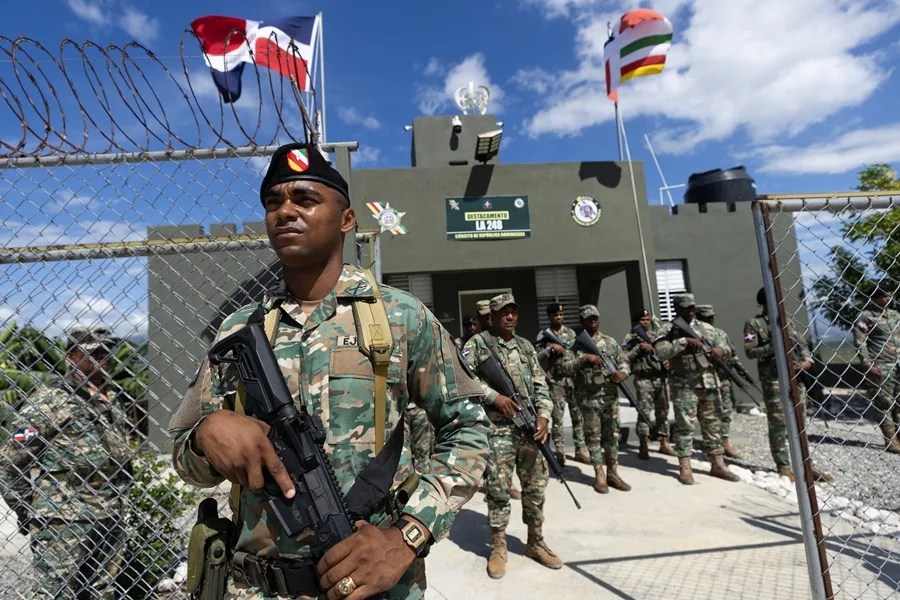
A week after the ambush, on October 25, Abinader said he had reinforced the southern frontier with two battalions, heavy equipment and artillery. The Dominican army and the country’s specialized border security corps already maintained a permanent presence there. Their responsibilities stretch across several provinces. In Jimaní, their assignment is to protect a town whose merchants still depend on keeping the crossing open to the country where the four Salvadoran soldiers went missing.
“When people in the capital talk about the border, they focus only on the crossings,” Brig. Gen. Freddy Rafael Soto Thormann, commander of the Dominican Army’s Fifth Infantry Brigade, told EFE. The land boundary stretches 391 kilometers, about 243 miles. At Jimaní, eight of a planned 22 kilometers of fencing are complete, a little over a third of the local project. Drones and electronic surveillance supplement the fence and patrols.
“The border is secure,” the general said of the Dominican side. At the crossing, EFE found people buying, selling and loading trucks within sight of soldiers. The remaining 14 kilometers of fence at Jimaní could all go up without changing the price a Haitian merchant has to pay a gang farther down Route 8. Peter can tell when his part of a job is done. The load is on the truck. A family in Port-au-Prince finds out what the rest of that journey cost when it goes shopping for dinner.