Colombia Watched Cartagena’s Supermarket Siege. One Mother Recognized Her Daughter.
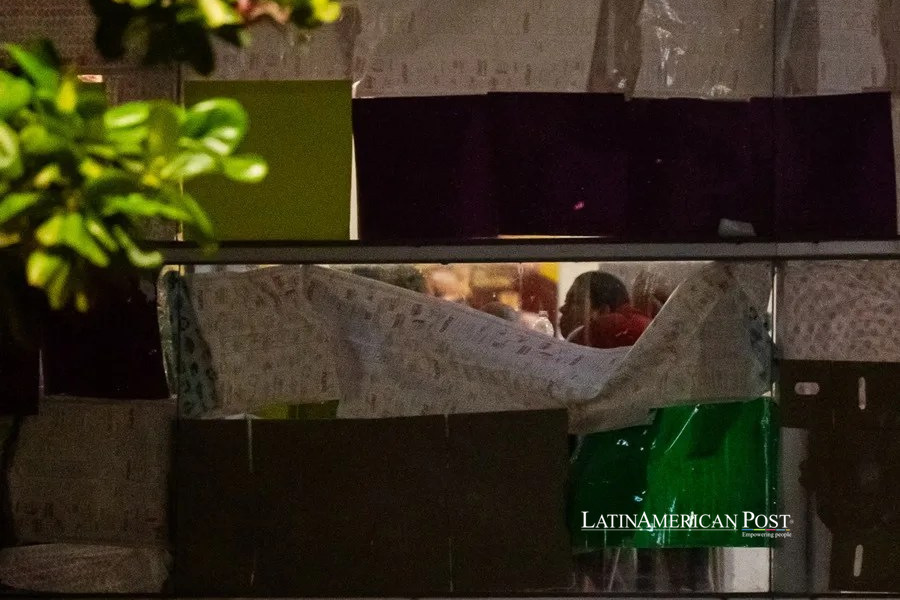
When an armored truck robbery failed in Cartagena, gunmen held supermarket workers and shoppers for more than 16 hours. Colombia has a long history of kidnapping. This time, families outside the store could recognize their loved ones through a window.
The Woman in the Red Blouse
Zuley Marimón López had been on the job at Pollos Bucaneros, a chicken restaurant, for barely a week. On Tuesday, she was due at work at seven. Later that morning, her husband alerted her mother to a video from the Éxito supermarket in Cartagena’s La Castellana neighborhood. Three women sat together at a window. Ludis López could tell which one was Zuley, her 36-year-old daughter and the mother of two children. She was wearing a red blouse. “They’ve got her tied up,” López told reporters.
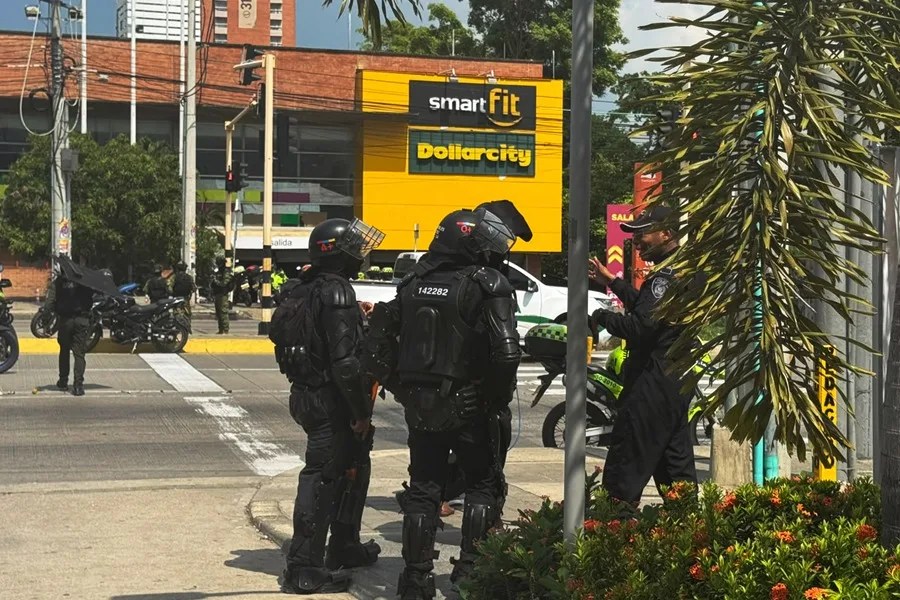
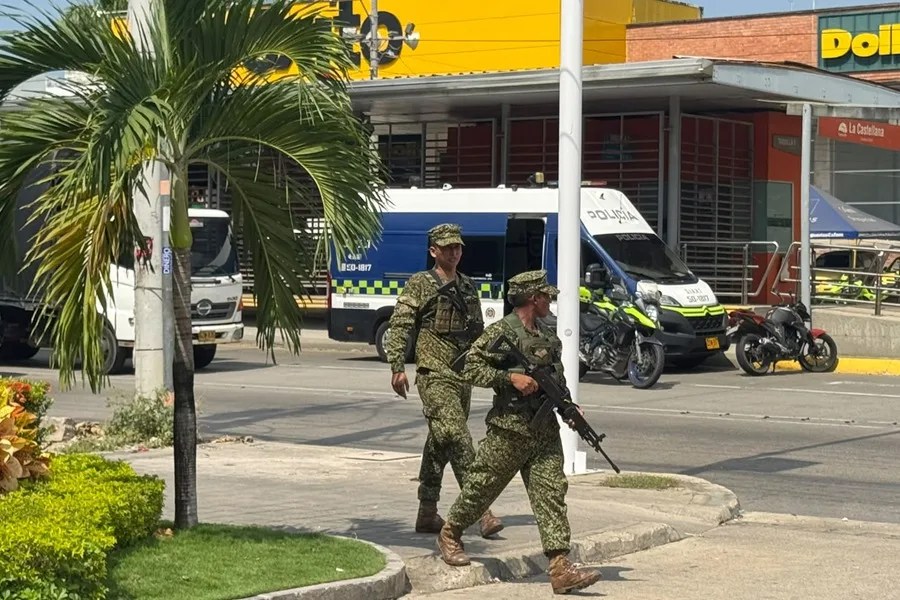
At about eight that morning, gunmen had tried to rob an armored truck collecting cash. When the robbery failed, they took refuge in the supermarket and seized the people within reach. President Abelardo de la Espriella put the initial number of captives at 30. Some came out during the day. EFE reported that at least 20 had remained in captivity. At 1:30 a.m. Wednesday, the president announced that police and military personnel had rescued everyone still inside. One of the gunmen died in the operation. Authorities arrested four others.
EFE described the siege as a “suceso casi inédito,” an almost unprecedented event. The word “almost” matters in Colombia. People have been abducted by the dozens before, some from places as familiar as the church where they attended Sunday Mass. What had few parallels was the way this unfolded. The gunmen had set out that morning to steal money. By nightfall, the president was in Cartagena and police were appealing over loudspeakers for them to let a supermarket’s worth of strangers go.
Where the Captives Went
In May 1999, ELN guerrillas interrupted Mass at La María church in Cali. They told worshippers there was a bomb and directed them into two trucks. Some parishioners made it home that day. The last of them returned in December. For more than six months, people who knew exactly where a relative would be on Sunday morning had to depend on the guerrillas for word on where that person was and what it would cost to bring them home.
Colombia’s Truth Commission counted about 50,770 kidnapping victims in connection with the armed conflict from 1990 through 2018. Even that figure, the commission concluded, fell short because so many cases went unrecorded. Its scope helps explain the shock in Cartagena. Those decades taught families what it meant for someone to be carried off. At the Éxito, a mother could identify her own child on a video, tell a reporter where she was sitting and still have no way to help her across the distance between the window and the street.
The date invited another comparison. Tuesday, November 24, was the tenth anniversary of the final peace accord between the government and the FARC guerrillas. Cartagena had hosted the signing of an earlier version. The distinction between wartime kidnapping and what happened at the supermarket mattered on that anniversary. The accord committed a particular insurgency to lay down its arms. By the president’s own account, the men who took Zuley and the others captive were robbers whose attempt to get away had gone wrong.
The Calls Before Dawn
De la Espriella arrived that evening from Villavicencio, where an attack the previous day had wounded 23 people. He said he authorized the rescue after reaching Cartagena. In a video posted on X, he called the operation “absolutely impeccable.” He promised a “lethal response” to anyone who tried to bring the state and working Colombians to their knees. His account dwelt on the gunmen’s final refusal to surrender. For families outside the store, some of the most consequential moments came during the long hours while police were still talking.
Around two in the afternoon, the gunmen let a 76-year-old retiree go. She shopped for groceries on Tuesdays and Thursdays. Her daughter Sandra had spoken with her that morning and spent nearly six hours waiting for news. By the time Sandra talked to Noticias Caracol, her older sister had reached their mother and could say she was all right. Other families would wait almost half a day longer for the same assurance.
Some of the 5.5 million travelers Cartagena receives in a year felt the disruption before they even reached the city. Authorities temporarily suspended landings at Rafael Núñez airport while security aircraft operated nearby. The airport could announce when flights were back to normal. There was no comparable timetable on Avenida Pedro de Heredia, where relatives waited through the evening, close enough to hear the authorities asking the gunmen to surrender.
A recording from outside the store caught the moment Alicia Oyola heard from her son. People around her repeated his name, Kevin, as she took the call. Had he gotten out? He was still inside, he told her. They were all right and had been allowed to use their phones. For the first time in hours, his mother could tell him herself where she was. “I’m out here,” she said. “I’ll wait for you here.”