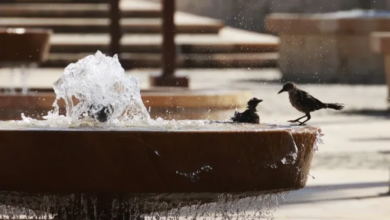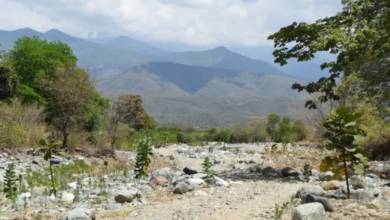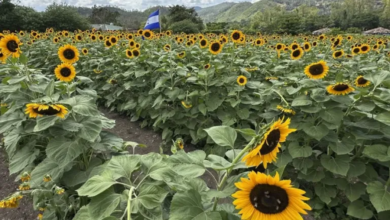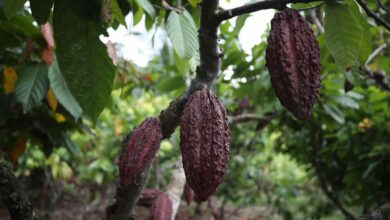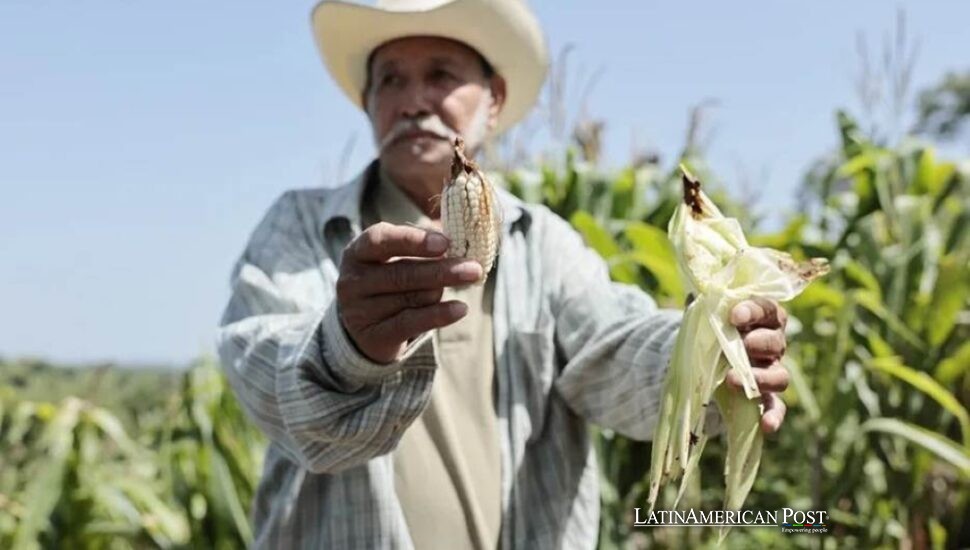
In San Esteban Catarina, farmers who planted with faith now walk through brittle cornfields. El Niño has erased harvests, income, and certainty, exposing how climate shocks strike hardest where small producers live one failed season away from hunger and debt.
When Three Fields Become One
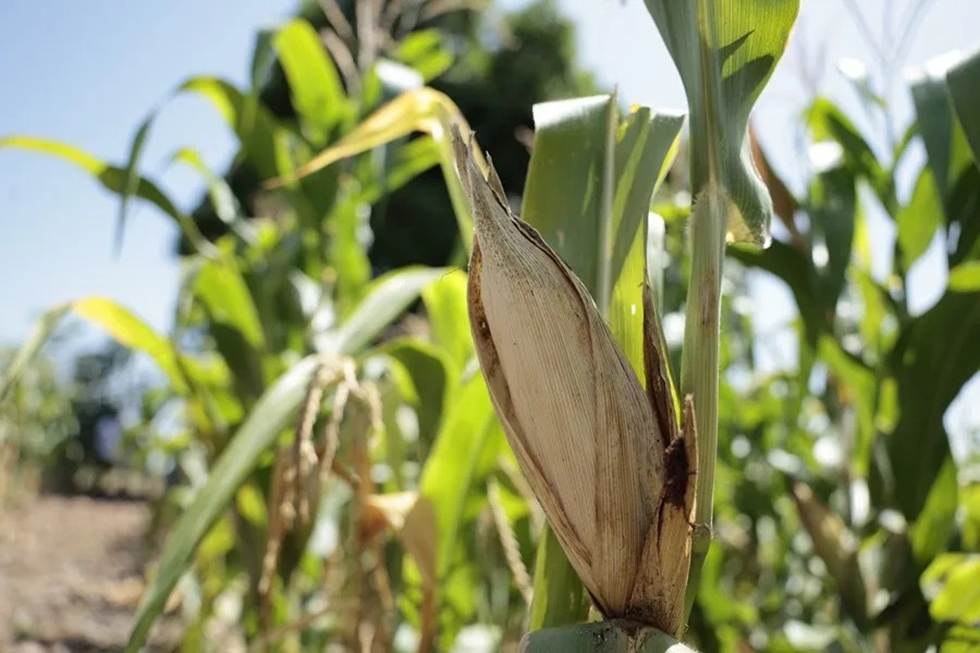
Ramón García walks his cornfields slowly now. At 72, he knows what healthy maize should look like in August: tall, green, heavy with promise. Instead, the stalks around San Esteban Catarina stand dry beneath a punishing sun, their ears small or empty.
García planted three and a half manzanas this year. Three were lost. Drought destroyed nearly 86 percent of his planted land before the crop could become income, food, or seed for another season.
He had expected about 300 quintals of corn. Now he hopes for 10, a shortfall of roughly 97 percent. Compared with the 230 quintals he harvested in 2025, this year’s likely yield represents a collapse of almost 96 percent.
The arithmetic describes a household, not a spreadsheet. García invested more than $3,000 in seed, labor, land preparation, and cultivation. At best, he may recover $200 by selling dried stalks as animal feed, less than 7 percent of his investment before valuing his own labor.
“We who live only from agriculture put our hope in the harvest, after God, and if there is no little harvest, we are ruined,” García told EFE.
The rainy season normally runs from May through November, yet extreme heat and missing rainfall have burned through fields in San Vicente, about 37 miles from San Salvador. García said only farms near low-lying drainage areas retained enough moisture and nighttime dew to hold on.
He speaks of God because faith gives him a language for powerlessness. But drought cannot remain only a matter of divine will when public policy determines who receives water, credit, seed, insurance, and emergency support.
A Harvest Crisis Larger Than One Town
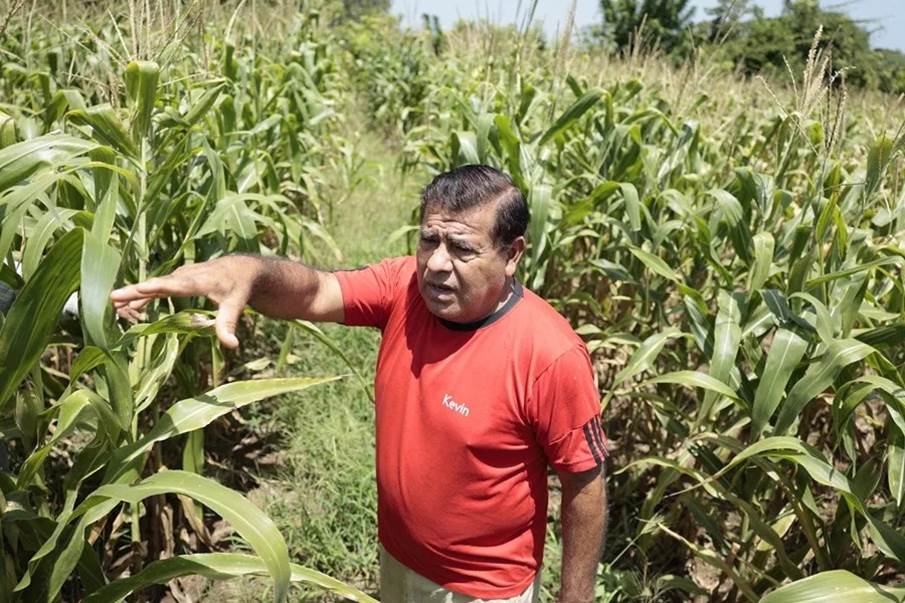
Adolfo Palacios planted two manzanas. He lost one and a half, or 75 percent of his crop. He remembers only three good storms where he lives.
“Today the drought has harmed all of us. In general, it has affected everyone. But that is life in the countryside,” he told EFE.
That resignation is familiar across rural Latin America, where farmers are praised for endurance while absorbing risks urban consumers rarely see. When rain fails, the producer loses first. Months later, the failure reaches markets through higher prices, scarcer staples, and greater dependence on imports.
Luis Treminio, president of CAMPO, the Salvadoran Chamber of Small and Medium Agricultural Producers, told EFE that nearly 6.9 million quintals of corn, beans, and sorghum could be at risk, representing all planting planned for August and September.
Corn and beans form the ordinary architecture of meals and rural income. When production and household earnings fall together, food insecurity arrives from two directions: less food is available, and families have less money to buy it.
Civil Protection placed El Salvador under a red alert for drought, citing El Niño, extended dry periods, abnormal heat, and the transition toward the dry season. Authorities estimate a 20 to 40 percent probability of at least one nationwide meteorological drought event during August and part of September.
That probability can sound reassuring because it is below 50 percent. In García’s field, however, the damage is not hypothetical. A national forecast measures a defined event across the country. It does not cancel out severe local drought already destroying farms.
The warning for late 2026 and early 2027 is graver. The World Meteorological Organization expects El Niño to strengthen rapidly, with central and eastern equatorial Pacific waters warming more than 2 degrees Celsius above normal. Poverty, irrigation access, storage, credit, and state capacity will determine who suffers most.
Red Alerts Must Reach the Soil
Declaring an alert is the correct first step. It directs attention toward water and food security and acknowledges that waiting for total crop failure would be indefensible. Yet a red alert cannot become a banner hanging over fields without practical consequence.
For farmers like García and Palacios, preparation must mean immediate crop assessments, emergency cash support, affordable credit restructuring, animal feed, drought-tolerant seed, and help preserving grain for household consumption and the next planting. Water planning must prioritize rural communities, not only municipal systems.
The state must separate short-term rescue from long-term adaptation. El Niño will pass. Climate volatility will not. Small producers cannot remain dependent on rainfall alone while each failed season pushes them closer to abandoning the land. Community reservoirs, efficient irrigation, soil conservation, usable weather information, and crop insurance are food-security infrastructure.
There is a regional consequence too. When Central American harvests shrink, governments often compensate with dollar-priced imports. That can protect urban supply while weakening local producers. Emergency trade may be necessary, but it should not quietly replace Salvadoran agriculture.
García still wants to plant again if rain arrives before the season ends. “We will keep planting. We will not give up,” he told EFE.
His persistence is moving, but it should not excuse institutional complacency. Rural courage has carried El Salvador through war, migration, price shocks, and storms. It cannot manufacture rain or refinance a lost harvest.
In San Esteban Catarina, the corn is already dry. The country’s real test is whether help reaches the farmers before hope is the only crop left standing.
Also Read: Paraguay Demands Brazil Return Cannons from Latin America’s Bloodiest War