Argentine Paredes Earned FIFA’s Ten-Match Reckoning After World Cup Fury
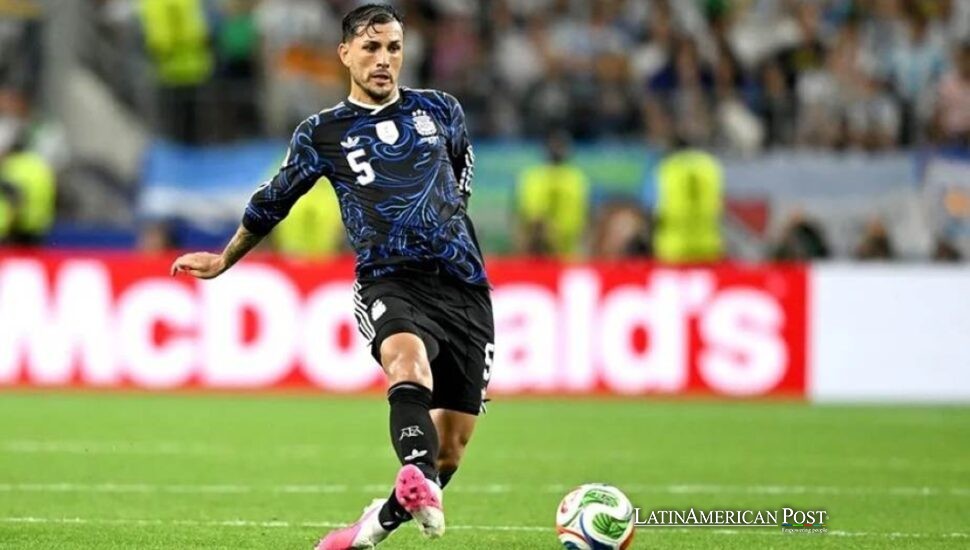
Leandro Paredes calls his ten-match suspension excessive, yet FIFA’s own code and the sequence after Argentina’s World Cup final defeat suggest otherwise. Punishing repeated aggression protects football’s spectacle, its opponents, and the Argentine shirt from a damaging culture of excuses.
The Claim of Unequal Punishment
Back at Boca Juniors, after a 1-0 victory over Lanús, Leandro Paredes finally said what many Argentine supporters expected him to say. The punishment was too much. “It seems excessive,” he told reporters in remarks carried by EFE, pointing to Gavi’s one-match suspension and claiming the Spaniard had punched him in the chest. An appeal, he said, should bring the ten-game ban down.
His frustration is understandable. Ten international matches can feel like a small sporting lifetime, especially for a veteran midfielder whose remaining years with the national team are finite. The $90,000 fine is substantial too. Yet discomfort is not evidence of injustice, and Paredes’s comparison with Gavi leaves out the most important part of the case: FIFA did not charge them with equivalent conduct.
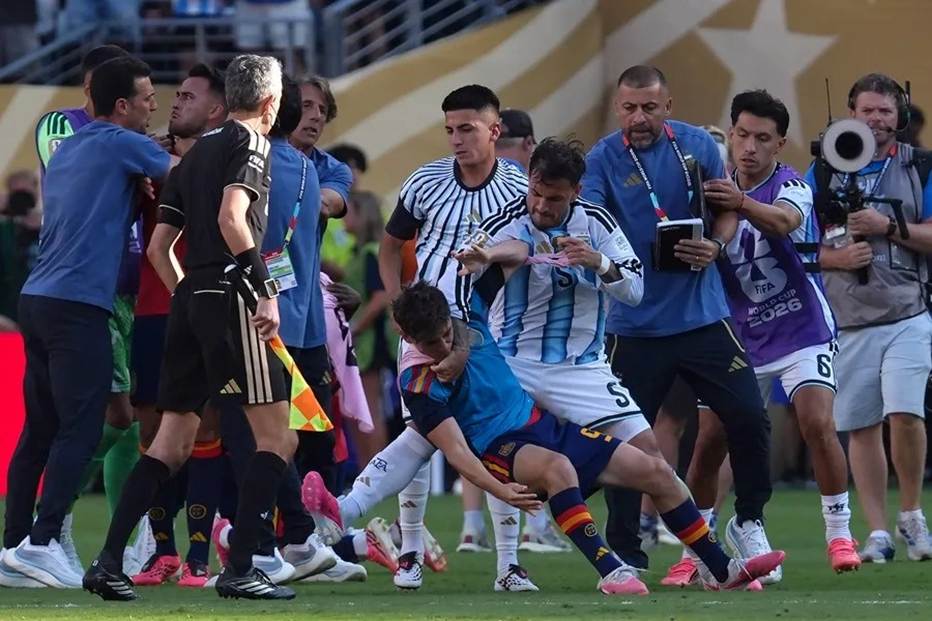
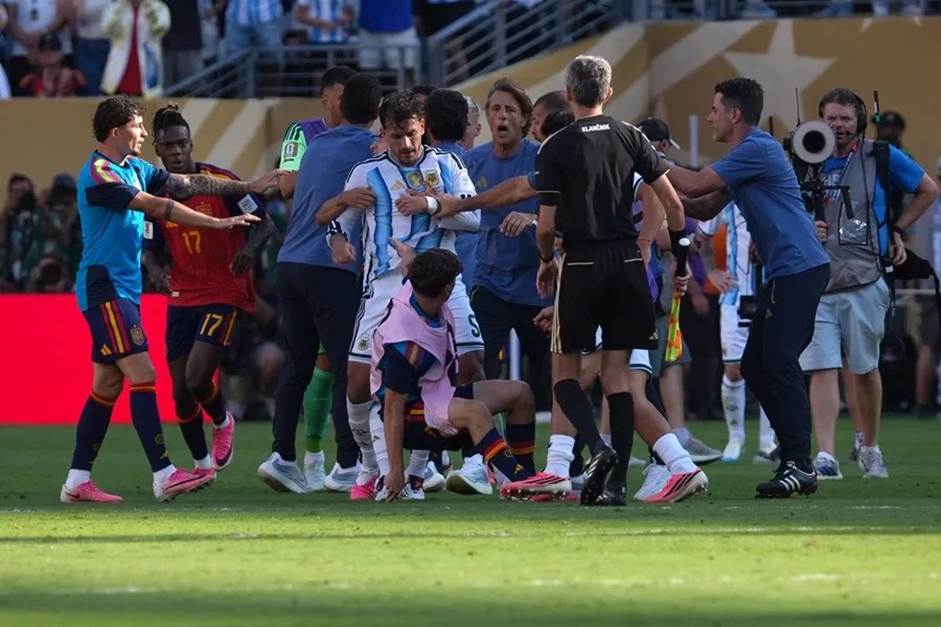
Reuters reported that Paredes faced three assault counts. Gavi faced one count of unsporting behavior. Video and disciplinary reporting described Paredes grabbing Eric García by the throat and pushing Gavi to the ground after Spain’s 1-0 extra-time victory in the World Cup final. Gavi’s retaliation deserved punishment, and he received a one-match ban and a $30,000 fine. But one punishable act does not erase several others. It certainly does not make every participant equally responsible.
That difference is decisive. Paredes’s argument reduces the scene to one chest punch, as though everything before and after it disappeared. It did not. Provocation may mitigate a sanction, and the appeal process should examine every angle carefully. It cannot become a moral eraser. A veteran player remains responsible for what he does next, especially after the final whistle, when no tackle, tactical emergency, or competitive necessity can explain the aggression.
The Code Makes Ten Look Less Extraordinary
FIFA’s 2026 Disciplinary Code requires at least three matches for assault against an opponent, including punching, kicking, spitting, or hitting. Since Paredes reportedly faced three assault counts, the minimums could already suggest nine matches if each count were treated separately. FIFA has not yet published the full reasoned decision, so that arithmetic is illustrative rather than conclusive. Still, it shows that ten matches are not detached from the written rules.
The committee also differentiated among those involved. Nahuel Molina received seven matches and a $90,000 fine. Thiago Almada and Gavi each received one match and $30,000 fines. Argentina assistant Roberto Ayala received three matches. Those gradations weaken the idea of an indiscriminate crackdown on the losing team. They suggest an attempt, however imperfect, to distinguish the number and seriousness of the acts.
Paredes is entitled to challenge that assessment. The Argentine Football Association can request the detailed reasoning, appeal to FIFA’s Appeals Committee, and ultimately seek review by the Court of Arbitration for Sport. Due process is not softness. It is what makes a hard sanction legitimate. If the video record or legal classification is wrong, the penalty should change. If the three counts stand, the ten-match punishment should stand with them.
Nor is this a ban from football. Paredes remains available to Boca Juniors because the suspension applies to matches against Argentina. FIFA has also accepted the AFA’s request to let the sanctioned players serve their penalties in Class A friendlies, not only competitive fixtures. That concession significantly reduces the sporting damage and makes the sanction more corrective than destructive.
Argentina’s Shirt Deserves Better
There is a temptation in Río de la Plata football to romanticize “aguante,” the capacity to endure, confront, and never retreat. At its best, that tradition creates brave teams and supporters who turn stadiums into collective memory. At its worst, it excuses the belief that defeat must be answered physically, that composure is weakness, and that aggression proves loyalty.
That is precisely why FIFA was right to act firmly. Argentina did not lose an ordinary friendly. It lost the World Cup final on football’s largest stage. The moment demanded anguish, dignity, and the painful discipline of watching another team celebrate. Instead, several players and a staff member helped turn the closing images into a brawl. The offense was not that Argentines cared too much. It was that professionals entrusted with the national shirt allowed disappointment to become violence.
This matters beyond appearances. Opponents must be able to celebrate without being struck. Officials cannot treat post-match assaults as emotional debris once the trophy ceremony begins. The final whistle ends the contest, not the obligation to behave.
Gavi himself reportedly argued that Paredes should not be suspended, describing physical aggression as part of football. That defense is well-intentioned but wrong. Football is a contact sport governed by rules, time, and competitive purpose. Grabbing a throat or throwing an opponent down after the match has ended is not physical play. It is precisely what the rules exist to separate from play.
Argentina’s football history is too rich to need excuses. The country gave the world artists of audacity, intelligence, and competitive ferocity. None of that is diminished by demanding restraint. In fact, restraint protects greatness from becoming caricature.
Paredes may sincerely believe Gavi’s punishment proves a double standard. The available record points instead to different conduct and different charges. His appeal should be heard. FIFA should publish its reasoning. Transparency matters, especially when a sanction may close a veteran’s international career.
But based on the evidence now available, ten matches are severe for a reason. The punishment tells every player that losing control after losing a final is not another form of passion. It is misconduct, counted act by act. The Argentine shirt deserves defenders on the field, not avengers after the whistle.
Also Read: Brazilian Dos Santos Hurdles into Latin America’s World Record Club